ITMO, which has long been known as one of Russia’s leading universities in the field of IT, is now actively involved in research and projects in the field of IT. What prompted the establishment of the Institute of Applied Mathematics?
As of now, there are several global challenges that stand before science as a whole and our university in particular. One of them has to do with AI.
AI, in the current common sense of the word – I’m talking about image generation via neural networks and so on – is cool, but it’s not something that we’d want to limit ourselves to. The hype around neural networks is dying down, which is well known. This is why it’s just natural that we need to move on and create AI-based systems that can solve more complex tasks.
Fundamentally, one of the problems is that right now nobody really knows how exactly AI operates. We know that it involves some computational processes and various big data, but there’s no hard evidence that some specific process occurs in some specific way. And this, in turn, leads to a whole new range of issues, including those that have to do with security. If it’s image generation that we’re talking about – if you ask a neural to create your portrait, there’s almost now chance that something will go terribly wrong. But what if the same neural network is used in a driverless car? In this case, there is a completely different level of risk that calls for a lot more attention. And this is why we need a pool of hard data that can be used to explain the inner workings of AI.
Our task, as we see it, lies in the development of such a mathematical database that would provide the evidence that’s essential for the development of AI.
Businesses, even major tech businesses, can’t invest a lot of resources in research, especially in the field of mathematics. So, it’s quite logical to solve such a task at a university. At the same time, we understand that in this day and age, even though mathematics is perceived as a fundamental subject and the “mother of all sciences,” we have to consider the application of our research.
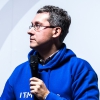
Dr. Alexey Bobtsov. Credit: ITMO University
What exactly do you mean by “mathematical database”? And how will it help develop AI?
AI has already long been around andthis field has passed several stages. For one, statistical machine learning was invented in the early 70s, when the famous work by Vladimir Vapnik and Alexey Chervonenkis was published. Tellingly, it was a purely mathematical study on probability theory and mathematical statistics. Why didn’t it make an impact then? Because there wasn’t a computational knowledge pool like we have today. And now, everything is the just other way around: we no longer care about theory and focus on computing, often even without analyzing algorithms and computational processes.
With the help of mathematics, we can optimize the existing algorithms and create new ones. A good example is DeepSeek, which was many times cheaper to develop and is no less effective than its counterparts thanks to a different fundamental approach. There are other examples, as well; I have a few in my experience. When you come up with an idea, you need to test it – so you begin modeling in MatLab and often understand that you can’t make it work with your first attempt. But instead of analyzing everything, looking for inaccuracies in your approach, and checking every equation, you begin using brute force, feeding specific data so that your graphs work fine. But this is not the way to go.
It’s impossible to pick the right key without thinking about the shape of the lock.
By the way, students often ask us to teach them to code while saying that they don’t need maths, and this is a huge pain for teachers. This has been going for over 20 years, no less, but practice shows that basic programming knowledge will only help you stay relevant until you’re 30-35 years old. If they don’t have good fundamental training, the relevance of such specialists is just temporary.
Credit: ITMO University
And what do you think should be part of such fundamental training?
It’s simple. If it’s AI that we’re talking about, let’s consider the AI360: ML Native program. The students there are not just taught programming languages; they’re also trained in serious math. At the least, this includes a good amount of linear algebra, as programmers work with bodies of data. There’s also mathematical analysis, optimization methods, including differential equations, difference equations, and other mathematical subjects, as well.
Will the new institute focus on AI only?
As of today, artificial intelligence is our most important and desired focus. But not the only one. First and foremost, we see the institute’s purpose in supporting all of ITMO’s departments that do R&D in the field of AI. We’ll focus on base-level tasks, sharing our knowledge with colleagues who focus on development.
But apart from focusing on the topic of AI, we’d also like to eventually create labs for the needs of various ITMO faculties – upon their demand.
It can work as follows: for example, we have the Faculty of Secure Information Technologies, and they do cryptography, which is a mathematical subject. What they lack from the standpoint of cryptography at the fundamental level can be offset via such a lab. Why is this relevant? Specialists from the Faculty of Secure Information Technologies understand each other but not the language of other mathematicians, and we’ll help them do it. This is important because the absence of a common language impedes researchers. Hence, it is reasonable for mathematicians to work together but be attached to different faculties. And the faculty, in turn, would invite them to work on their projects, including those commissioned by industrial partners.
There are also teams of robotics specialists who work with lots of maths: differential equations, difference equations, stability theory. They might also need more mathematical expertise. We are ready to invite mathematicians for these tasks, and not just from among ITMO faculty. This model of cooperation is good for mathematicians, as well, as they will be able to see how their work is applied in practice.
These are just a few examples. If there’s interest, we’ll be ready to work with our colleagues from the fields of chemistry and physics. I like the term “diffusing technology” – ITMO once made IT such a subject. And now we see that IT, and AI in particular, is applied in all fields.
Photo by Kirill Dzhenzerukha / ITMO Mediaportal
You’ve already mentioned the training of students. As I understand, the institute will feature not just a research track, but also an educational one. How will it be organized?
What is the problem of many academic institutions? They lack new blood from among the youth and students. And every scientist who wants to grow needs access to young personnel who can help them solve research tasks. If you conduct research in an environment where you have students, you can always find such help.
This is why we will definitely develop both the research and the educational track. We will offer educational courses for students, which will be taught by experts with good fundamental knowledge and experience in research.
What’s more, we’ve already been approached regarding training for school students and school teachers. We will consider this, as well.
Who will work at the institute? Who will it collaborate with?
ITMO has good specialists with strong expertise, but the institute will not limit its collaborations to the university staff only. For example, we already made arrangements with specialists from Saint Petersburg State University’s Mathematics and Mechanics Faculty. We are also considering forming a common structure with the St. Petersburg branch of the Steklov Mathematical Institute (PDMI RAS). Such a collaboration appeals to them, as we have students who may be interested in doing their PhD research there. And they have strong expertise in mathematics. But these are just plans for the future.
As for international collaboration, we can pursue a network format: invite lecturers to our seminars and do joint publications. There are also opportunities for collaborating with the industry. To businesses, we can offer our expertise and personnel. And we already have the example of our robotics specialists – graduates of the Robotics and Artificial Intelligence program who took up leading positions in a team at Sberbank that focuses on frontier research and development. This is an example of collaboration with a major industrial partner in which a university and a company don’t just implement a joint educational program, but also develop technologies together.
Photo by Kirill Dzhenzerukha / ITMO Mediaportal
What will be the main result of the launch of the new institute, as you see it?
In the future, I’d like ITMO to be associated with not just IT, but also mathematics. This is already coming to life: we conduct research, students win competitions, but as of now, we have a long way to go. And I would like to facilitate and systemize our work in this direction.
I believe that this is something that the university can well accomplish. What is ITMO famous for? For solving the tasks that we take on. In the 90s, who would’ve thought that ITMO would make it big in IT? Nobody. Even though we had the fundamentals to build on. There were faculties that could develop in this direction, specialists like Vladimir Parfenov from the Department of Computational Technology. And yet the university was associated only with optics and precision mechanics. But then, ITMO made a huge leap in IT. What does this tell us? That we can change, and change quickly.
The Institute of Applied Mathematics is yet another new ambition that can help ITMO make it big not just within our city, but also on a national level. Which is why we want to make a qualitative leap in this field from the standpoint of research and training of new personnel.