Please tell us something about yourself.
I’m Amani, a PhD student and research engineer at ITMO University specializing in materials science and metallurgy. My research focuses on developing next-generation lithium-ion battery materials to improve performance and safety for consumer electronics. I work across the full R&D cycle – from material synthesis and characterization to prototype testing.
How would you introduce metallurgy to someone who has never heard of the term before?
Metallurgy is the science and technology of metals. Simply put, it involves everything from extracting metals from the earth to processing them and improving their properties to make them stronger, lighter, or more durable for everyday use.
Think of a blacksmith shaping a tool: that’s ancient metallurgy. Today, metallurgists use advanced scientific methods to design the aluminum in smartphones, the steel in cars, and even materials used in spacecraft. In essence, metallurgy is both the art and science of making metals useful for the modern world.
What sparked your interest in this field?
My interest began early in life while growing up in Algeria, a country rich in mineral resources such as iron and phosphate. Seeing how these raw materials played a crucial role in the national economy made me curious about how they are transformed into useful products. I became fascinated by the science behind converting raw ore into advanced materials that power modern technology. That curiosity gradually evolved into a passion for materials engineering.
What drew you to pursue your PhD abroad, and why did this program feel like the right fit?
I chose to pursue my PhD abroad to gain access to highly specialized research and world-class laboratory facilities. While my education in Algeria gave me a strong foundation, I wanted deeper exposure to advanced energy storage research, particularly next-generation lithium batteries.
ITMO offered exactly what I was looking for: a dedicated research group focused on cutting-edge battery materials, along with the infrastructure to prototype and test new solutions. Coming here allowed me to move from aspiring to be a researcher to becoming one with strong practical and scientific expertise.
Are there any metals or alloys that fascinate you more than others, and why?
I’m particularly fascinated by metal oxides. Although they aren’t alloys in the traditional sense, they play a crucial role in materials science. What makes them so intriguing is their versatility: small changes in composition or structure can significantly alter their electrical, catalytic, or optical properties.
This is especially important in energy storage. Many lithium-ion battery cathodes are complex metal oxides, and understanding how they transport ions, manage charge, and maintain stability is key to improving battery capacity and lifespan. Much of my PhD research focuses on studying and engineering these materials.

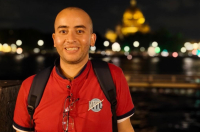
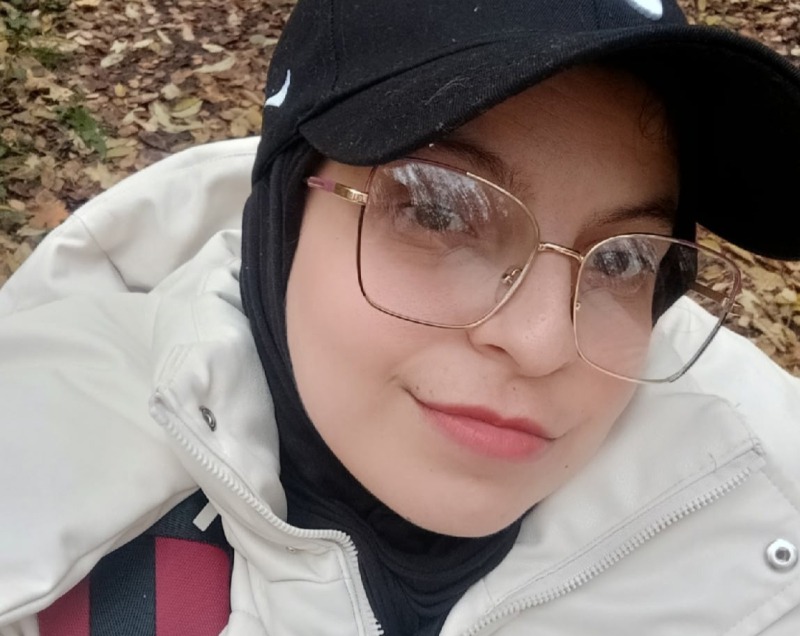
Azaizia in St. Petersburg. Photo courtesy of the subject

Azaizia in St. Petersburg. Photo courtesy of the subject
What do you think of St. Petersburg? Do you have any favorite spots?
St. Petersburg truly feels like my dream city, especially in the summer. The atmosphere during the white nights is magical. One of my favorite routines is sitting by the river with a cup of coffee, simply enjoying the sunlight and calm energy of the city. Those moments help me recharge and often spark inspiration during my studies.
Have you tried Russian food? Any favorites?
Yes, absolutely. Living here has allowed me to try many traditional dishes. Pelmeni have become my go-to comfort food, and on the dessert side, I was pleasantly surprised by how much I enjoy medovik – the layered honey cake is delicious.
Have you made international friends? Any memorable experiences?
Definitely, one of the most rewarding aspects of studying at ITMO is meeting people from all over the world, including students from Africa, the Middle East, and Asia. One of my closest friends is Jan Si, a fellow PhD student from China. We bonded over our shared academic interests and often explore the cultural side of the city together. Attending opera performances at the Mariinsky Theatre has been a particularly memorable experience.
Are you living in one of ITMO’s dormitories? How has that experience been?
Yes, I live in an ITMO dormitory in the city center, and the experience has been very positive. The location is convenient, about a 10-minute walk from the metro and close to both the university and my laboratory.
The dorm itself is clean, modern, and well-maintained, with shared spaces such as study rooms and game areas. On weekends, I often spend time in the game room and have even picked up billiards as a hobby. Overall, the housing has made it easy for me to settle in and focus on my research.
What are your hobbies outside of academics?
I like to maintain a balance between work and personal life. In winter, I focus on speed and agility training at the gym and enjoy watching movies to relax. During summer, I prefer being outdoors, traveling outside the city, or spending quiet time by the river. St. Petersburg’s changing seasons make it easy to enjoy both indoor and outdoor activities.

Azaizia with her friend Jan Si at the Mariinsky Theatre. Photo courtesy of the subject
What are your goals after graduation?
My main goal is to establish myself as an independent researcher in materials science for energy storage, while also contributing to education. In the short term, I plan to continue working in my current laboratory to complete my PhD project on next-generation lithium batteries, publish my findings, and ensure continuity of the research.
In the long term, I hope to lead my own research group at a university or research-focused institution. I want to drive innovation in battery technology while mentoring students. For me, research and teaching are deeply connected; advancing science and shaping future engineers go hand in hand.
If you could give one piece of advice to students in Algeria interested in materials science, what would it be?
Start by observing the materials around you. Algeria’s rich mineral resources are a natural starting point. Experiment, learn through hands-on experience, and don’t hesitate to connect with the global scientific community. Your background and perspective are your strengths; use them to contribute to materials science on an international level.