Hello Daniel! Please introduce yourself to our readers.
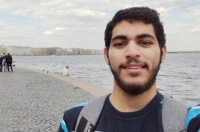
Hello everyone! My name is Daniel Samuel Guevara Nuñez. I am 19 years old, almost 20. I’m from Ecuador, from a small town on the south coast called Machala. It's a very warm place.
What first sparked your interest in cybersecurity?
Since I was a child, I always loved my computer. I knew I could do great things with it, even more as I was growing up and technology was improving simultaneously. I realized how important cybersecurity is when I learned about real cyberattacks affecting companies and our data. That was the moment I understood that protecting information and building secure systems was something meaningful.
Why did you choose to study cybersecurity abroad, and what made ITMO stand out for you?
Higher study opportunities in Ecuador are not very good, and I think that studying in another country, far away from home, is like living another life without being born again! You learn so many new things. ITMO seemed to me the best option since I saw that it is one of the best technology universities in Russia. I have also seen its achievements, which caught my attention a lot.
When friends or family back home ask what cybersecurity is, how do you usually explain it in simple terms?
I usually explain cybersecurity as the protection of computers, phones, and online information from hackers and digital threats. Just like we lock our doors to protect our homes, cybersecurity helps protect our data, passwords, bank accounts, and personal information from being stolen or damaged.
What’s a common myth about cybersecurity that you’d love to debunk?
Many people believe that if they have nothing to hide, they don’t need cybersecurity. I disagree with that idea – anyone can be a target. Hackers often look for the easiest vulnerabilities, not necessarily the biggest organizations. Cybersecurity is important for everyone.

Daniel with his friends in St. Petersburg. Photo courtesy of the subject

Daniel with Viviana, a Bachelor’s student of infochemistry at ITMO, at a marathon in St. Petersburg. Photo courtesy of the subject
What types of cyberthreats or digital risks worry you most in today’s world?
It has to be the growing sophistication of phishing and social engineering attacks. Many people are unaware of how easily they can be manipulated into sharing sensitive information. These threats exploit human psychology, not just technical vulnerabilities, which makes them especially dangerous.
What was your first impression of St. Petersburg?
It felt like an open-air museum! The architecture, the canals, and the historical atmosphere made the city look almost cinematic. I was especially impressed by how rich the cultural life is, from museums to theaters and academic institutions.
If you could go back in time and talk to yourself on your first day in Russia, what would you say?
I would tell him to take advantage of that year of studying Russian because things will get hard in the first year of Bachelor's, but also not to worry because we’ve got that Latin spark in us! We can fight against the world even if everything seems to be lost.
Moving from Ecuador to Russia is a big change. What was the biggest cultural adjustment for you?
It was the attitude of the people. In Ecuador and most Latin American countries, people are very cheerful. Here, everyone seems to live in their own world. It is acceptable, of course, but I miss the ease with which we could laugh with a stranger and make friends.

Daniel shares his transition from Ecuador to Russia through the change in his ID card. Photo courtesy of the subject
Has living in Russia changed the way you think about technology, privacy, or digital security?
Not significantly, because I was already aware of the risks and challenges related to technology and digital security before coming to Russia. However, living here reinforced my understanding of how important cybersecurity is in different digital environments. It confirmed my belief that protecting information and ensuring digital privacy are global concerns, not limited to one country.
When you’re not dealing with networks, code, or security systems, how do you like to unwind?
I usually like to play on the computer, but now that even studying requires me to use the computer, it feels like I never rest. So honestly, I like to listen to music while walking down the street, even if it's just going to the store, I’ll be listening to music. Music is something that reminds me of home. If you see me on the street, most likely I will be with my headphones on.
Have you found any favorite Russian food or traditions yet?
Not really. I respect most cultures, but being honest, even taking away the bad things that Ecuador may have, the food and traditions there have no point of comparison. If I had the choice to be born again, I would choose to be born in Ecuador.
What advice would you give to students from Ecuador or Latin America who are considering studying at ITMO?
I would tell them that the experience is challenging but worth it. Moving from Latin America to Russia requires courage, adaptability, and resilience. However, the academic level and the international experience can open many doors. Be patient with yourself, stay consistent, and don’t hesitate to ask for help when needed. Adapting takes time, but the experience can significantly expand both professional and personal growth. Those who are disciplined, curious, and proactive will benefit the most from what ITMO has to offer.