“The Nobel Assembly at Karolinska Institutet has decided to award the 2025 Nobel Prize in Physiology or Medicine to Mary E. Brunkow, Fred Ramsdell, and Shimon Sakaguchi for their discoveries concerning peripheral immune tolerance,” reads the Nobel Committee’s press release.
As the press release notes further, the three researchers identified “the immune system’s security guards” – regulatory T cells, which protect the human body from its own immune cells. “Their discoveries have been decisive for our understanding of how the immune system functions and why we do not all develop serious autoimmune diseases,” said Olle Kämpe, chair of the Nobel Committee.
Simply put, the scientists’ findings created the foundation of our current understanding of how the immune system tells apart “friendly” and “hostile” cells. Previously, it was believed that immune tolerance (i.e. the specific resistance to certain antigens; a state necessary for protection against autoimmune diseases, as it prevents attacks on the organism’s own tissues and allows it to coexist with beneficial microflora and food proteins) develops by destroying potentially harmful immune cells. But in 1995, Sakaguchi determined that the immune system is more complex – and discovered a class of cells that protect the body from autoimmune disease: regulatory T cells (or Tregs).
Mary E. Brunkow, Fred Ramsdell, and Shimon Sakaguchi. Credit: nobelprize.org
In 2001, Brunkow and Ramsdell discovered a mutation in the FOXP3 gene while studying mice. Later, they demonstrated that mutations in the human equivalent of that gene cause a severe autoimmune disease. Two years later, Sakaguchi combined the two discoveries by proving that FOXP3 regulates the development of cells that he had identified in 1995.
Thus, the scientists had, independent of each other, figured out that regulatory T cells play a crucial role in preventing autoimmune diseases. Their research demonstrated that mutations in the FOXP3 gene cause a loss of these cells and eventually – the development of major immune tolerance disorders. Their work made it possible to understand the nature of many autoimmune diseases and paved the way for new treatments of ailments like type 1 diabetes, multiple sclerosis, and cancer.
According to Oleg Kuchur, a senior researcher at ITMO’s Center for Molecular and Biological Technologies, immunology is, in a way, a “star on the night sky of the Nobel Prize.” Awards in this field are quite common – almost once a decade starting in the 20th century. Indeed, back in 1908, one of the first Nobel Prizes was awarded for achievements in immunology, particularly the discovery of phagocytosis – a process in which immune cells capture and consume foreign particles (such as bacteria or viruses). The laureates were the Russian scientist Ilya Mechnikov and the German physician Paul Ehrlich. Their discoveries provided the groundwork for modern immunology and many therapeutic methods that are still in use today. The works of Mary E. Brunkow, Fred Ramsdell, and Shimon Sakaguchi, too, have become a step on our path to understanding the immune system and learning to fight dangerous diseases.
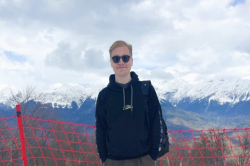
Oleg Kuchur. Photo by Dmitry Grigoryev / ITMO.NEWS
“This discovery proved that the immune system not only attacks external components, but it also holds back our own cells. Why is that important to medicine and to us all? Because it explains the nature of highly complex and harmful autoimmune diseases, such as multiple sclerosis, type 1 diabetes, rheumatoid arthritis, and systemic lupus erythematosus. Now we know that they are in some degree connected to faulty functioning of regulatory T cells or the hyperactivation of immune cells (e.g. T helpers or T killers). As a researcher in the field of oncology, I can say that this is important both for tumor treatments and for immunotherapy strategies. As it turns out, tumors can ‘recruit’ T cells and use them to suppress the immune system’s response. Modern immunotherapy methods, which have emerged thanks to the works of current and previous Nobel Prize laureates, work by removing these blocks from T cells and allowing the immune response to continue,” explains Oleg Kuchur.
Scientists at ITMO, too, conduct research into the functioning of immune cells. For instance, such studies are carried out by the university’s experimental oncology group. As Dr. Kuchur notes, they are currently working on a project at the intersection of chemodynamic and immunotherapy – more specifically, they are developing “metallated” antibodies that could deliver copper compounds to cells of breast cancer tumors, lymphomas, neuroblastomas, and others. Then, by reconstituting copper with the help of acetylcysteine or ascorbates, the scientists hope to destroy the tumors via directed formation of active forms of oxygen, which can damage the membranes and DNA of tumors; in the meantime, the “shuttles” (antibodies) would prevent damage to nearby healthy tissue. The study will continue for the next three years.