AI is a tool for businesses, not designers
In the 2000s, the web design market in Russia was booming. Businesses were taking to the internet and they needed specialists who would create the digital storefronts for their products. In the next decade, the demand kept growing: new services and apps kept popping up, while companies built their social media presence – providing designers with plenty of work. After 2015, the number of digital products grew even more and so did the demand for graphic designers who’d be capable of ensuring the continuous and stable functioning of user services.
At that time, designers were increasingly hired to perform standardized tasks, such as designing an image gallery based on a common template; novel and original designs were required less and less. Most often, the designer would need to take a standard solution and adapt it to the client’s request.
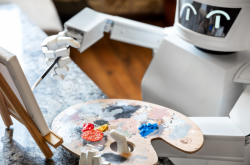
In recent years, the demand for designers began to decline because of the global economic factors and the popularity of AI solutions. In order to survive, businesses started to save resources by delegating generic tasks to AI. And in the coming years, this trend is likely to continue: AI will keep "stealing" routine work from designers. However, the generic tasks will be replaced by those that neural networks are yet unable to tackle.
Now, designers will be asked to deal mainly with issues that have no ready-made solutions. In order to solve them, they’ll have to create something new; most often, at the intersection of several branches of design or even other fields. This will change – and is already changing – the focus and skill set of successful designers.
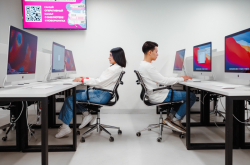
At ITMO, product designers can get their education through the joint online Master’s program with Netology. In the program, students learn to analyze user experience, design digital products, and create user-friendly interfaces. Over the course of their studies, students master the skills necessary to conduct studies and interviews, collect and process data, analyze economic efficiency of digital services, as well as acquire the skills needed to design user interfaces, manage projects and teams.
Seniority – the crucial quality for designers in the age of AI
One of such crucial skills is seniority; by that I mean the ability to see the problem, formulate it, and find a solution by synthesizing approaches and tools from various fields or transforming the problem.
In my opinion, in order to have this “seniority,” designers need to have:
- their key specialization, the one where they possess deep knowledge;
- a wide professional awareness of other areas of expertise.
For instance, a designer could be a UX/UI specialist but also have some expertise in branding and visual identity, and have some basic knowledge of programming and working with neural networks. Senior specialists can work with products on all levels, set tasks to other specialists – and assemble the “parts” produced by them into a single solution. Typically, such specialists have extensive experience as staffers and freelancers, with various types of products, and maybe even in different countries. Such designers will have already completed their paths from junior to middle and then to senior level.
Today, however, when businesses delegate junior-level tasks to AI, fledgling designers don’t have the opportunity to follow this standard path. As the definition of seniority changes, we need to teach this seniority to designers from the very start.

Photo by Anastasia Kechina / ITMO Mediaportal
Such future seniors will gain their expertise with AI: it will provide answers to any questions that appear over the course of working on a project and offer additional insights into related fields. That’s why it’s important not to fight with AI now, but embrace these tools and learn to use them.
However, in order to become a sought-after specialist, this isn’t enough. Future seniors need to have knowledge in various fields, be able to work under conditions of uncertainty and in interdisciplinary teams and assemble products by bringing together the tools and approaches from different specializations. It’s important to understand that for designers, their key tools will be not AI services, but cognitive tools, design thinking, as well as cross-cutting methods and technologies used in different fields. In their work, such specialists will need to focus on original ideas, instead of universal solutions.
How to become a senior designer
First, it’s important to understand that you’ll have to keep learning something new. Without this constant growth, acquiring new skills, and polishing the skills you have, it’s impossible to become a professional. You should also work on your thinking process: master cognitive techniques and methods for processing information, producing solutions, and managing your time.
This means you need to build your skills in these areas:
- design;
- motion design;
- digital identity;
- digital branding;
- management fundamentals;
- working with neural networks.
In the coming years, the way we teach design will transform, too. In the future, designers will need to not only learn to use such tools as Figma, Adobe Illustrator, InDesign, and others, but also to employ design thinking. That’s why the demand for a classic academic education will likely keep growing.

Photo by Anna Vinogradova / ITMO Mediaportal
This article is based on a lecture by Sergey Gurov, a specialist with 20 years of experience in design, a lecturer at Bang Bang Education, a co-founder of the OSNOVA workshops, and author of the Moloko++ Telegram channel. The lecture was organized by ITMO Product Design Community of the Faculty of Technological Management and Innovations, which aims to create a comfortable environment where students can communicate with experienced designers. Meetings are held once a month and are announced in the community’s Telegram channel.