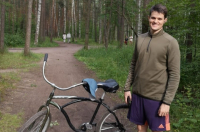
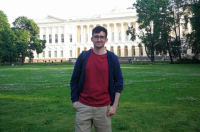
Please introduce yourself to our readers. Where are you from, and what did you study before coming to ITMO?
My name is Muhammad Aris Septanugroho, and I’m from Bogor, Indonesia. Bogor is located on the island of Java, near Jakarta, the capital of Indonesia. Before coming to ITMO, I studied at a vocational high school.
What are you studying at ITMO now?
I’m currently studying neurotechnologies and programming. I’m really enjoying my studies so far. Before coming here, I already had an educational background in computer science as well as several years of experience in the industry. Because of that, some of what I study now is familiar to me. At the same time, the program has introduced me to completely new areas.
For example, I’m now learning about the combination of neurotechnology and artificial intelligence, which makes the program much more exciting for me.
What has been your favorite subject so far?
During my first year, one subject that particularly stood out to me was prompt engineering. It is a relatively new field that has become especially prominent with the rapid development of AI over the past couple of years. I think it will be very important for future technological advances.
What I particularly like about it is how closely it reflects what is currently happening in the industry. By the time we graduate, having knowledge in areas like this can help us better meet the needs of the job market.

Photo courtesy of the subject
You've been a pretty active member of ITMO's student clubs – can you tell us a bit about that?
The many clubs and events are actually one of the things I like most about ITMO. By participating in them, you can get a sense of the latest developments in the industry and discover technologies that might not necessarily be covered in your regular university courses.
I became interested in ITMO's clubs even before officially starting my degree, when I was taking the Foundation Program. One of the events I attended focused on learning the Rust programming language. I found it really interesting because Rust is a modern programming language that isn't commonly taught at universities. Usually, we encounter languages such as C++, Python, or Java.
That's one of the most exciting things about these communities for me: they give me opportunities to learn something new.
Another community I've been involved with is the Decentralized Club, where we learn about Web3 technologies, cryptocurrencies, blockchain, and related topics. I had attended similar events in Indonesia, but I had never really had the opportunity to dive deeply into the field.
Is starting your own project or company something you'd like to pursue in the future?
Yes, definitely. I really enjoy creating things. I also attended ITMO Startup Night, where I met people who shared the same passion and were excited about building their own companies and products.
I've already spent a lot of time developing my technical skills, particularly coding, and now that I've entered this new stage of my studies, entrepreneurship is one of the areas I'd like to develop further before I graduate.
How did you apply to ITMO, and why did you choose the university?
At first, I was what you could call a scholarship hunter. I really enjoyed researching scholarships that would allow me to study abroad. That's how I discovered an opportunity offered by the Russian government to students from different countries, including Indonesia.
When choosing a university, I did a lot of research. I initially had around six options from different parts of Russia, but ITMO was my first choice. One thing that stood out to me was the Neurotechnologies and Programming program. I couldn't really find the same specialization at the other universities I considered.
Photo courtesy of the subject
You've also participated in hackathons since coming to ITMO. What do you enjoy about them?
Hackathons are something I've enjoyed for a long time. I participated in them back in Indonesia as well. I don't always win, of course, but every time I participate, I feel like I improve.
During a hackathon, you're under pressure to build a solution to a problem within a very short period of time. Here in Russia, I've found many hackathons organized by different companies. In one of the hackathons I participated in, my team took third place.
Does ITMO provide any support for students who want to participate in hackathons?
Last year, I mainly funded my participation myself. For example, when I reached the finals of a hackathon in Moscow, I covered my own transportation and accommodation.
However, I later learned that there are opportunities to receive funding from ITMO if you register your participation through the university's system and your application is accepted. ITMO also helps by sharing information about these opportunities.
What is it like participating in hackathons with Russian teammates?
This is actually an interesting part of the experience. At a hackathon, you don't only have to build an application; you also have to present it, and presentations here are usually in Russian.
I admit that my Russian isn't very strong yet. I’m at A2 level, but that hasn't stopped me from participating. Instead, we divide the responsibilities within the team. For example, I can focus on building the software or developing the project, while my Russian teammates can help with the presentation or take on business development roles.
How do you like St. Petersburg? Have you had the chance to explore the city and its surroundings?
I love St. Petersburg. It's one of the most aesthetically beautiful cities I've ever visited. I really like the architecture and the buildings, and even the people here are very stylish.
One of my favorite places I've visited is Vyborg. I first went there on an excursion with my classmates while I was studying in the Foundation Program. It's around two hours away by train, and I really liked its architecture and landscape. It feels quite different from St. Petersburg and has a very European atmosphere.

Photo courtesy of the subject

Photo courtesy of the subject
What do you like to do in your free time?
Outside of IT, I really like cooking. Interestingly, I never cooked before moving to Russia because my mom would always prepare meals at home. Once I came here, I realized that if I wanted to eat what I liked while also managing my budget, I needed to learn how to cook. So during my first months here, I started experimenting and looking up different recipes.
I like experimenting with different dishes and flavors, particularly spicy food. One of the dishes I enjoy making is fried chicken with Chinese-style seasoning.
Finally, what advice would you give to international students who are preparing to come to Russia and study at ITMO?
At first, it can be difficult to adapt to a new environment, especially because of the language and communicating with local people. My main advice is simple: be proactive and be the first to approach others.
It's also much easier to make friends through activities you genuinely enjoy. You can join clubs or programs such as ITMO's Buddy System, where you can meet people from different countries as well as local students.
As for studying, it's completely fine to start from zero. Some students come directly from high school and encounter their field for the first time. It might feel difficult at first, but if you already know what major you're going to study, I recommend learning some of the basics by yourself before your classes begin.