Young people are the most active users of AI assistants. A study by Mediascope shows that 68% of people aged between 18 and 24 use AI for their routine tasks. More often, students opt to consume information more efficiently – they watch online lectures, consume content at a faster speed, and even use AI to perform their practical and laboratory assignments.
Top universities in Russia are striving to adapt to the change. Daria Kozlova, the Director for Strategic Development at ITMO, believes that the era of translational education and particularly conventional lectures has come to an end. The changes also affect self-training and evaluation – both are now often trusted to AI. However, the results of the educational process should be reviewed using natural intelligence. This means that practice and evaluation should be separated in the educational process. While the first can be performed by AI, the second – exclusively by people. In these circumstances, lecturers have to bear a heavy burden as they have to review courses and practical tasks.
“The scenario in which a lecturer creates a task using ChatGPT and a student uses ChatGPT to solve it doesn’t work for us. We see much more value in a project-based approach when the task per se implies trying to use AI – for example, to find errors, adapt, or finalize your assignment. This is a massive change we’re already witnessing today. Leading universities began to consider switching from the translational approach to the one that better explains this method,” says Daria Kozlova.

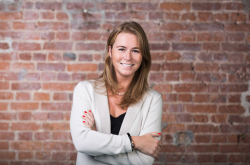
Daria Kozlova. Photo by Stepan Yatsko / photo.roscongress.org
As for educational support, ITMO lecturers have already been practicing using AI to optimize their routine tasks, for example, preparing curricula. This way, they are able to free up their valuable time.
“The industry will define the limits of efficient AI application. Today’s students likely can’t set these limits themselves because they are greatly tempted to offload many tasks and lab assignments to AI. In the context of the industry, where efficiency is at a premium, it’s always clear when AI involvement increases productivity and when it doesn’t. When it comes to AI in higher education in general, I believe we need to accumulate as many best practices and cases of AI application as we can; we need to focus on modernization, changing curricula and homework assignments, as well as exchanging experience with other universities – this will help the entire higher education system in the country,” adds Daria Kozlova.
Dmitry Livanov, the Rector of MIPT, also shared his experience of using AI at university. He believes that banning AI assistants will not produce educational results; instead, it will prompt students to use AI covertly.
“We never saw texts as a crucial outcome of student activities. All significant results are produced in the lab and texts only provide their descriptions. If a student’s research work in a team supervised by a professor has an in-depth, detailed AI resume, we commend that. Yes, conventional home assignments and tests have become obsolete, but all bans only stimulate cheating,” says Dmitry Livanov.

Dmitry Livanov. Photo by Stepan Yatsko / photo.roscongress.org
MIPT already offers courses where using AI as a research tool is mandatory. With neural networks, it’s possible to extract and analyze large amounts of information and cut down the time spent on routine tasks. Such courses are delivered by lecturers who want to grow and share their experience and vision with students.
In order to promote this approach, leading Russian universities partner with corporations and tech companies to create educational products on AI implementation for lecturers in central and regional universities. For instance, the dedicated course by ITMO and Alfa-Bank is quite in demand, as shared by Marat Ismagulov, the head of HR at Alfa-Bank. The course’s second cohort graduated in St. Petersburg in late 2025 and included over 160 lecturers from 30 Russian cities, from beginners to experienced AI users.