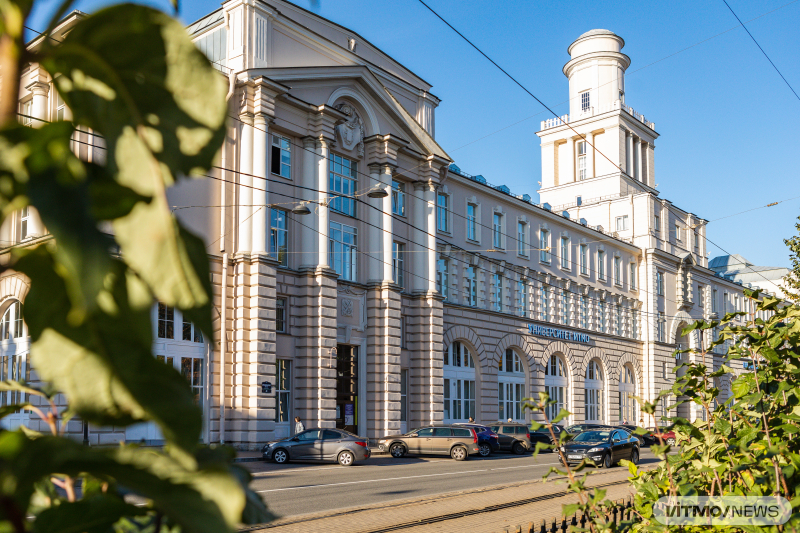
As part of its additional competition, the Ministry of Science and Higher Education will subsidize 2.81 billion rubles to create eight types of scientific equipment to replace imports at Russian laboratories. Evaluation criteria included ten factors, including the team’s experience, patents and equipment-related projects, and the project’s readiness for further production and implementation in Russia. ITMO University’s application scored 65.05 points.
Following the selection results, ITMO University is set to receive a subsidy of 180 million rubles in two stages: 20 million rubles in 2026 and 80 million rubles each in 2027 and 2028. These funds will be used to build a high-tech spectrophotometer.
“The device will be useful in physics, chemistry, biology, medicine, materials science, and ecology – essentially in any field of study where scientists need to measure substance composition. It can be used to determine the concentration of DNA and proteins in a sample or detect whether it has viable cells. Once the prototype is ready, it’ll be tested by the experts at the Research and Educational Center for Photonics and Optical IT and the Faculty of Biotechnologies. Our industrial partner is SINTOL, a supplier of advanced equipment to biolaboratories; the company is interested in launching the new spectrophotometer on the Russian market,” says Nikolai Belashenkov, a PhD in physics and mathematics at ITMO University.

A prototype spectrophotometer. Photo by Nikolai Belashenkov
The competition was conducted as part of the federal project on the development of national civil instrumentation for scientific purposes. Applying research organizations and universities ought to have had an industrial partner that would oversee the development of the equipment and set up its mass production. Out of 11 applications, eight projects from six universities and scientific organizations were selected as winners. Among those selected were National Research Nuclear University MEPhI, Moscow Institute of Physics and Technology, Bauman Moscow State Technical University, ITMO University, and others.