Worldwide, liver diseases cause around 2 million deaths every year, most of which due to the progression of fibrosis – the accumulation of connective tissue at the site of dead liver cells, which makes it difficult for the organ to function efficiently. Furthermore, liver fibrosis can be a major factor for more serious conditions such as cirrhosis and cancer. Apart from chronic diseases, there are also acute ones, which can occur in response to drug overdose or intoxication, for instance.
Most of the commonly prescribed methods treat only symptoms, without restoring damaged tissue. Therefore, researchers are looking for a way to influence liver cells at the molecular level and trigger its regeneration. One of the promising approaches relies on the use of microRNAs, small molecules that can control several genes simultaneously. The main drawback, however, is their instability in the bloodstream, which can be overcome by using nanocarriers for their delivery.
As a solution, a research team from Privolzhsky Research Medical University and ITMO University have proposed a new delivery system for microRNAs based on nanoparticles made of biocompatible polylactide (polylactic acid) polymers that can be used to treat acute and chronic liver pathologies and simultaneously stimulate the organ’s regeneration.
Since liver conditions result in decreased microRNA-200a, which normally protects cells from the damaging effect of oxidative stress, the scientists opted for an artificial copy of the molecule as an active substance for their study.
“The microRNA-200a nanoplatform we developed not only shields liver cells from damage but also removes connective tissue, as well as restores cell division and thereby the organ’s function. In the long term, the technology can be used for various liver disorders, both acute and chronic. Next, we plan to develop a high-tech drug to treat various socially significant liver diseases based on our platform,” Svetlana Rodimova, a researcher at Privolzhsky Research Medical University’s Institute of Experimental Oncology and Biomedical Technologies.

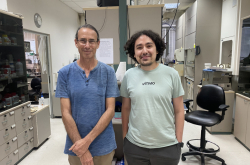
Svetlana Rodimova next to a CLSM 880 confocal and FLIM. The researcher is holding an ex vivo liver tissue sample, which the authors are examining under the LSM 880 microscope. Photo by Privolzhsky Research Medical University’s Institute of Experimental Oncology and Biomedical Technologies and Volga District Medical Center of the Federal Medical and Biological Agency

The co-authors of the study at ITMO (left to right): Konstantin Arabuli, Lidia Mikhailova, and Mikhail Zyuzin. Photo by Danila Poperekov / the press office of ITMO’s Faculty of Physics
The approach was tested on rats with acute liver injuries and progressive fibrosis. The experiment showed that the targeted delivery of microRNA-200a using polylactide nanoparticles can stop liver cell death after the first injection; in case of chronic diseases, the therapy does not only prevent connective tissue-deteriorating processes but also reverses fibrosis by two stages. This effect is achieved by the released microRNA-200a, which neutralizes oxidative stress at the cellular level and multiplies liver cell division to the normal stage.
“Our task was to develop therapeutic RNA carriers aimed at treating liver fibrosis and acute liver failure in rats. For that, we synthesized polylactic acid nanoparticles and loaded them with therapeutic microRNAs; then, our colleagues injected the ready-to-use substances to experimental animals with induced pathologies. The loading of RNAs into carriers is a complex and highly responsive process. Delivering a molecule into a cell isn’t enough; it’s important to maintain its stability and activity by making sure that it is released specifically into the cytosol. That’s why we meticulously selected the appropriate loading strategy that wouldn’t damage RNAs,” notes Mikhail Zyuzin, a senior researcher at ITMO’s Faculty of Physics.

A schematic of microRNA-200a nanoparticles’ effect on liver regeneration properties. After an intraperitoneal injection, the nanoscale miRNA-200a platform reaches the liver through the portal vein. The stages to follow are: (1) the capture of nanoparticles by hepatocytes; (2) nanoparticles enter endosomes; (3) endolysosomal fusion; (4) the degradation of nanoparticles with released microRNA-200a; (5) microRNA-200a loaded in the RISC complex; (6) activation of the defense mechanism that prevents oxidative stress and restores the organ’s function. Credit: Rodimova et al. / Biomaterials, 2026
The study also involved researchers from the I.M. Sechenov First Moscow State Medical University, Volga District Medical Center of the Federal Medical and Biological Agency, and Nizhny Novgorod Regional Clinical Oncology Center.
The article is supported by the Russian Science Foundation