Contents
- Wave-particle duality
- Spin and Pauli exclusion principle
- Uncertainty principle
- Schrödinger equation
- Quantum entanglement
- Feynman's breakthroughs in quantum electrodynamics
- Shor's algorithm
- Unsolved problems in quantum mechanics
Wave-particle duality
What is it? The theory states that any quantum object – an elementary particle – can exhibit characteristics of both a wave and a particle under varying conditions. It is most vividly illustrated by light particles, also known as photons. Light as a stream of photons demonstrates wave-like behavior during diffraction (the bending of waves as they go around obstacles) and interference (the increase/decrease of an amplitude of two and more given waves as they overlap). The corpuscular properties of light are manifested, for example, during the photoelectric effect when incident light “knocks out” electrons from matter.
Applications in science and technology. The concept, which was postulated by Louis de Broglie in 1924, cemented the position of the new field and opened the door for other fundamental principles of quantum physics – e.g., the photoelectric effect and lasers without which medical biosensors, solar panels, and other optical technologies would simply not exist.
“The concept demonstrates that the quantum world is fundamentally different from the classical one – but, nevertheless, is possible to study. What’s more, the quantum phenomenon can be described, preferably by the terms of conventional physics. The wave-particle duality does not allow us to calculate quantum effects per se but more so makes it possible to interpret the results of these calculations,” explains Sergey Popruzhenko, DSc in physics and mathematics and a researcher at the Joint Institute for Nuclear Research.
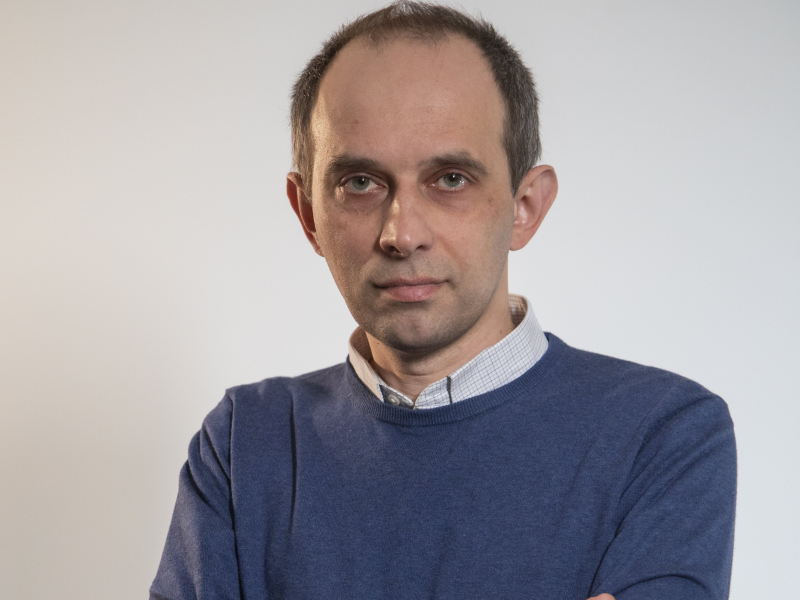
Sergey Popruzhenko, DSc in physics and mathematics and a researcher at the Joint Institute for Nuclear Research. Photo courtesy of the subject
Spin and Pauli exclusion principle
What is it? We have learned that elementary particles can exhibit both particle- and wave-like properties. Now imagine a basin full of water. If you throw a ball into the water, it will create waves on its surface. They will hit the basin’s walls but won’t go beyond its premises. And so do particles: they are limited within a wave space until they are found and measured. If you make a hole in the basin, the water will start to drain through it, forming a circular vortex. As those on the water, matter waves “rotate” counter-clockwise or clockwise – the spatial orientation of a particle is called spin.
Depending on the type of their spin, particles can be either fermions (half-integer spin) or bosons (integer spin). Fermions make up most of the matter, while bosons mediate the interactions between them. In other words, fermions are the “bricks” of the material world, whereas bosons – the cement. Thanks to bosons, which also include light quanta (photons), we can feel and see everything that surrounds us. However, no two identical fermions can occupy the same space position while being in the same quantum state – they will start to repel one another; but this does not apply to bosons. This pattern, which was first described by Austrian physicist Wolfgang Pauli, grew to become a fundamental principle of quantum mechanics and was named the Pauli exclusion principle.
Applications in science and technology. A particle’s spin can be compared to binary code, but instead of zeroes and ones, it uses the rotation direction – up or down – for coding information. Therefore, the effect plays a vital role in the development of transistors, optical chips, quantum computers, and other similar technologies. The Pauli exclusion principle is fundamental to modern electronics that relies on electrons, or fermions, according to the spin theory. To a large extent, it also paved the way for maglev trains that levitate over guideways.
“The concept of a spin is pivotal for working with polarized particles, which are extremely useful in the search for new particles that further expand physics beyond the Standard Model. One candidate are the hypothetical particles called axions that we will need to operate next-gen accelerators, which will come after the Large Hadron Collider,” explains Dmitry Karlovets, DSc in physics and mathematics and an associate researcher at ITMO’s Faculty of Physics.

Dmitry Karlovets, DSc in physics and mathematics and an associate researcher at ITMO’s Faculty of Physics. Photo by Dmitry Grigoryev / ITMO NEWS
Uncertainty principle
What is it? This principle states that it is impossible to simultaneously and accurately measure complementary sequences of physical characteristics in particles, such as their position and momentum, amplitude and phase of the electromagnetic wave. Due to that, particles that have a pulse and energy are delocalized in space – i.e. they are scattered around the universe and exist eternally. On the contrary, particles with a given location and time have no definite pulses and energy.
As a rule, scientists use approximate values to investigate decay or radiation, but this approach does not allow them to monitor the dynamics of these processes and conduct experiments when sensors are placed close to the effect under study.
Applications in science and technology. The concept is omnipresent in modern technologies. It is taken into consideration when building any type of electronics owing to the fact that it is a fundamental principle of particle behavior, including that of electrons.
Moreover, the team behind the international project LIGO referred to this exact principle when advancing their interferometer and setting up the behavior of light beams; as a result, they managed to register gravitational waves from the merger of two black holes in 2015. By studying these billions-year-old waves, scientists can find out what happened in the early days of the universe and perhaps even during the Big Bang. According to Dmitry Karlovets, this discovery can be seen as something of a time machine.
Schrödinger equation
What is it? Erwin Schrödinger was the first to quantitatively describe the “delocalization” or “smearing” of a quantum object in space. His famous equation marks the beginning of the wave function that is used to describe any quantum system or its evolution and predict the possible location or pulses of particles. This approach allowed scientists to bridge the gap between the conventional descriptions of electromagnetic fields and the quantum world of massive particles. That is, physicists obtained a kind of a “translator” that helps them describe the world hidden from our senses in the language of mathematics.
Applications in science and technology. The Schrödinger equation is a starting point for understanding how electrons behave in different structures and materials, which is vital for developing electronics, namely smartphones, computers, microchips, biosensors, etc. It also has a part in building quantum technologies, including computers, communication and encryption systems. Additionally, the wave equation is employed in quantum chemistry to calculate the energy levels of molecules and atoms when designing novel materials and medicine.
Quantum entanglement
What is it? In this phenomenon, the state of each particle in a group cannot be described independently. Here is an example. A pair of chocolates, milk and dark, are put in two separate boxes and mailed to different cities. When you open a box and see the milk chocolate inside, you instantly understand that the dark one is in another box. But in the quantum world, until the boxes are opened, inside them will be not the chocolates, but their superpositions as if the chocolates were constantly switching from milk to dark. This transition only stops when you open the box: the chocolate turns either milk or dark and its counterpart "appears" in the other box. Similarly, unmeasured particles exist in the state of superposition, and only when measured, they take on one of possible states, causing others to disappear. This is called wave function collapse. A particle’s state cannot be predicted – we can only estimate the likelihood of measurement results.
Applications in science and technology. Producing entangled states became a routine task for scientists. “What started as a philosophical debate about the foundations of quantum mechanics is now an engineering resource,” says Dmitry Naumov, DSc in physics and mathematics and the deputy head of the Dzhelepov Laboratory of Nuclear Problems at the Joint Institute for Nuclear Research. The phenomenon of quantum entanglement underlines quantum teleportation and cryptography, metrology, as well as the development of secure communication channels and next-gen types of sensors.
“The quantum entanglement theory takes its roots in the debates between Albert Einstein and Niels Bohr. At that time, Einstein believed that entanglement points to the incompleteness of quantum mechanics, but almost half a century later, in the 1960s, John Bell demonstrated that it can be experimentally proven, though he thought of it as more of a philosophical concept. But his idea bore fruit: Artur Ekert applied it to the problems of quantum cryptography and teleportation, and Alain Aspect, John Clauser, and Anton Zeilinger were awarded the 2022 Nobel Prize in Physics for their pioneering experiments,” adds Dmitry Naumov.

Dmitry Naumov, DSc in physics and mathematics and the deputy head of the Dzhelepov Laboratory of Nuclear Problems at the Joint Institute for Nuclear Research. Photo courtesy of the subject
Feynman's breakthroughs in quantum electrodynamics
What is it? Richard Feynman was one of the fathers of quantum electrodynamics – a branch of science that studies particle birth and transformations, interactions between elementary particles and electromagnetic fields, radiation and matter (emission, absorption, and scattering) and between charged particles. In particular, Richard Feynman developed diagrams to illustrate the evolution of particle systems, which are helpful in visualizing what was before and after an interaction without calculating trajectories and speed. Furthermore, the physicist proposed the parton model of a nucleon.
Applications in science and technology. Prof. Feynman's works remain the backbone for designing most quantum technologies: computers, radars, communication and encryption devices; they were also beneficial for modern spectroscopy methods.
“Spectroscopy is the lifeblood of our civilization. A major portion of our knowledge about nature and the universe was obtained thanks to spectroscopy. It helps us look into stars, galaxy clusters, and clouds in interstellar space. The chemical composition of any substance can be determined by analyzing its radiation spectrum. Spectroscopy is also used in medicine to diagnose cancer and in pharmaceutics to analyze the composition of medications,” concludes Emil Akhmedov, DSc in physics and mathematics and the head of the Department of Theoretical Physics at Moscow Institute of Physics and Technology.
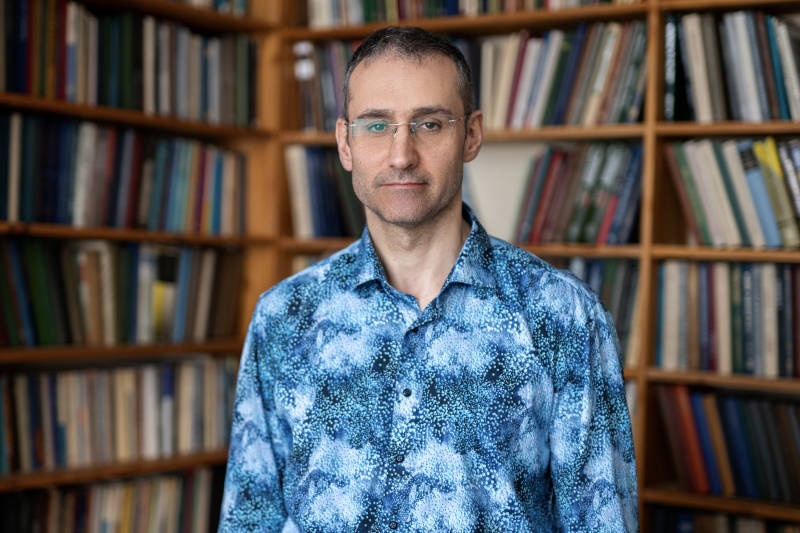
Emil Akhmedov, DSc in physics and mathematics and the head of the Department of Theoretical Physics at Moscow Institute of Physics and Technology. Photo courtesy of the subject
Shor's algorithm
What is it? In his equation, mathematician Peter Shor showed that quantum computers can be used to factor a large number into primes quickly and with the energy of up to 1,000 J, which is 335 times less than it takes to boil a liter of water in a kettle. The scientist’s principle for data processing is based on the behavioral features of qubits – units of information in quantum computing – that can take on several values simultaneously and be in a state of quantum entanglement. This quantum solution to the classical mathematical problem made it possible to “trick” the long-standing computing system.
Applications in science and technology. In the 1990s, the algorithm drew increasing attention among technological companies to quantum computers. Before it appeared, quantum computing seemed to be a beautiful but abstract idea of how quantum computers can surpass classic computers. As emphasized by Dmitry Naumov, the algorithm caused a “quantum” race among corporations – not unlike those in space exploration and nuclear arms in the 20th century. At the same time, researchers began developing equipment for quantum calculations to model new materials, chemical reactions, and medications.
Unsolved problems in quantum mechanics
One of the biggest unsolved theoretical problems in quantum mechanics concerns the detailed description of wave function collapse when a superpositioned particle transitions into a particle defined in time and space and exhibiting specific characteristics. Additionally, the problem of the observer remains a debatable topic.
Physicists also continue working on the fundamental question of human existence: how the universe works. One by one, theories developed over the last half-century are being dismissed. For instance, this is happening to string theory, supersymmetry, and other concepts of the Standard Model, which causes many researchers to leave science, according to Dmitry Karlovets. All this can lead to a worldview crisis in the coming decades. The tension also comes from revisiting the principles of collider design and experiments, including the development of advanced acceleration methods (e.g. lasers or next-gen accelerators).
Speaking of applied research, physicists are also working to reach quantum supremacy and develop quantum computers that can replace the conventional ones. In this regard, they attempt to scale up quantum networks and figure out the practical uses for qubits and qutrits.
Other applied problems include a quest for new high-temperature superconductors, reducing the cost of their manufacturing, and formulating a theory that would explain the phenomenon of high-temperature superconductivity. Equally, researchers are working with the issue of controlling individual atoms and molecules and studying chemical reactions at the attosecond level, i.e. a unit of time equal to one quintillionth of a second or 10-18. Physicists also have an interest in working with particles at mesoscopic scales – a realm between macroscopic and microscopic scales where particles are studied not individually or as an array, but as a small cluster. A few examples are: the analysis of the behavior of a pair of entangled photons or a pair of electrons in electron microscopes.
The article is based on presentations at the international conference in theoretical physics Quantum Weeks that took place in July 2025 at ITMO University’s Faculty of Physics. At the conference, participants discussed topical issues of quantum optics, nuclear physics, astrophysics, particle physics, and other fields. The event welcomed 90 participants – scientists and students, as well as 14 lecturers from Russian universities.