The complexity of sentences in general
When we talk about Russian punctuation, we can’t avoid mentioning Russian sentences in general. One thought = one sentence? This might work in English, but not necessarily in Russian.
We sure love lengthy texts. Why bother with a bunch of short sentences when you can put all the details into one?
For example,
«Я проснулся, позавтракал, вышел из дома, встретил друга, мы немного поговорили, а потом пошли в университет».
“I woke up, had breakfast, left the house, met a friend, we talked for a while, and then went to university.”
In English, this would probably be split into several sentences, but in Russian, it looks perfectly normal.
Commas that keep puzzling you
Complex sentences require lots of commas to separate one thought from another. In Russian, they’re often used more generously than in English.
For example, when a sentence contains a clause introduced by что (“that”), Russian requires a comma, whereas English doesn’t:
«Я знаю, что ты занят».
“I know that you’re busy.”
Dashes to the rescue
Sometimes commas just aren’t enough. That’s when we get out our secret weapons – dashes. In Russian, they can even be used instead of verbs, which is hard to imagine in English:
«Книга – источник знаний».
“A book is a source of knowledge.”
Little fir trees as quotation marks
Another peculiar difference from English is that we use guillemets, or «ёлочки» (“little fir trees”), instead of the quotation marks you’re probably used to:
Он сказал: «Я скоро вернусь».
He said, “I’ll be back soon.”
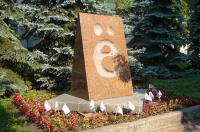
They’re called ёлочки because the quotation marks look a little like tiny fir trees. Also, notice how in these examples, the full stop lands inside the English quotation marks but outside the Russian guillemets. This is another punctuation nuance to keep in mind.
Learning Russian with ITMO
Don’t worry if Russian punctuation – or Russian in general – seems confusing at first. At ITMO, international students can learn the language as part of their university experience, with plenty of resources and activities to help you get started.
For more reassurance, check out our articles with tips and experiences from fellow international students, or pick up some useful vocabulary for the season.