Golden Autumn
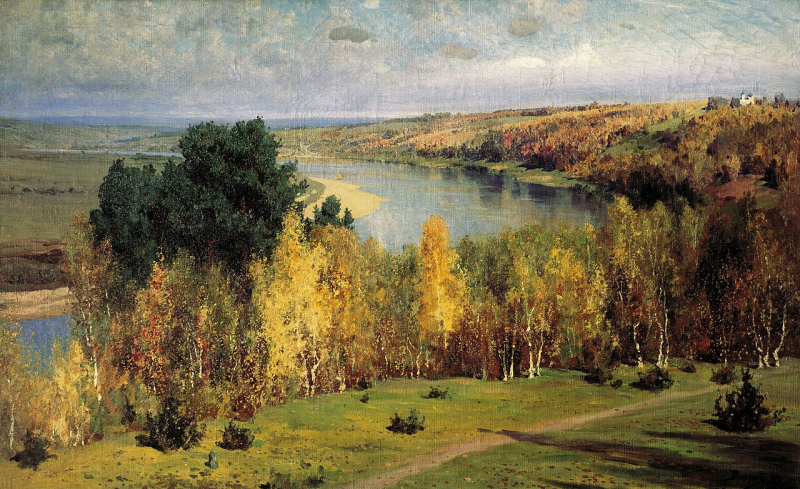
Golden Autumn by Vasily Polenov, 1893, Polenovo (Tula Region, Russia). Credit: Wikimedia Commons (public domain) / CC-PD-Mark
Artist: Vasily Polenov
Year of creation: 1893
Exhibited at: Polenovo (Tula Oblast, Russia)
Crowned Knight of Beauty by his contemporaries, Vasily Polenov painted landscapes that never failed to captivate the viewer, whether they captured day-to-day life, natural scenery, or biblical themes. His estate, which he designed with his own hands, inspired a series of paintings, including Golden Autumn (1893). The painting features a colorful September panorama of the Oka River not far from the artist’s home, which now serves as a memorial museum.
Autumn in the Province. Teatime
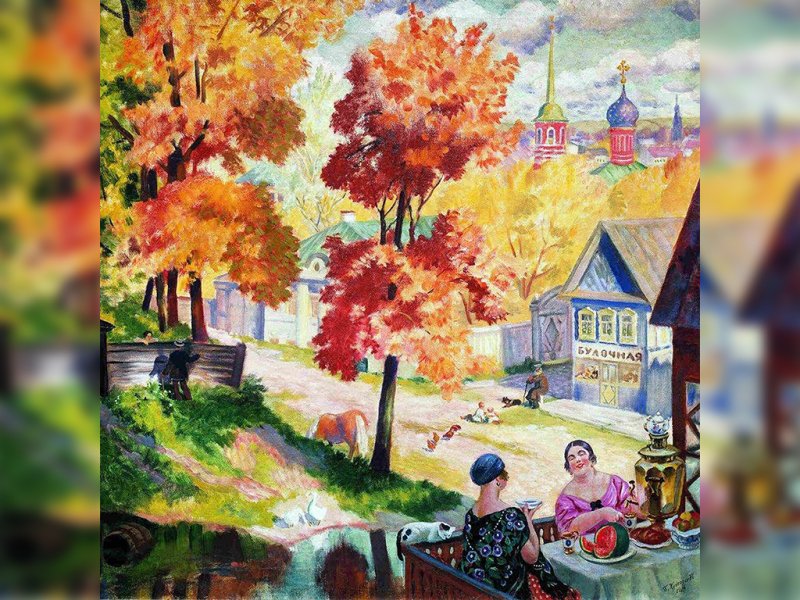
Autumn in the Province. Teatime by Boris Kustodiev, 1926, State Tretyakov Gallery (Moscow, Russia). Credit: Wikimedia Commons (public domain) / CC-PD-Mark
Artist: Boris Kustodiev
Year of creation: 1926
Exhibited at: State Tretyakov Gallery (Moscow, Russia)
A rather frequent mention in our series, Boris Kustodiev is, as we already know, a master of color, leaving no chance for such a color-ful season to not be featured in his art. In his final year of life, while confined to his bed, the artist created this romantic, idealistic portrayal of provincial life where autumn takes center stage. Rich in detail and action, the landscape was painted entirely from the artist’s memory.
Golden Autumn

Golden Autumn by Isaak Levitan, 1895, State Tretyakov Gallery (Moscow, Russia). Credit: Wikimedia Commons (public domain) / CC-PD-Mark
Artist: Isaac Levitan
Year of creation: 1895
Exhibited at: State Tretyakov Gallery (Moscow, Russia)
In just 40 years of his short life, Isaac Levitan allegedly painted over 1,000 paintings – and just as many, or more, sketches. Of those, around 100 were dedicated to fall, but his most famous autumnal piece is undoubtedly Golden Autumn (1895). The landscape captures the twilight of the golden era, when leaves still display rich, warm gold and amber colors before they gradually darken and fall. It’s considered to be a part of the artist’s own season-themed series – on par with his March, Fresh Wind. Volga, and a few others.
An Autumn Day. Sokolniki
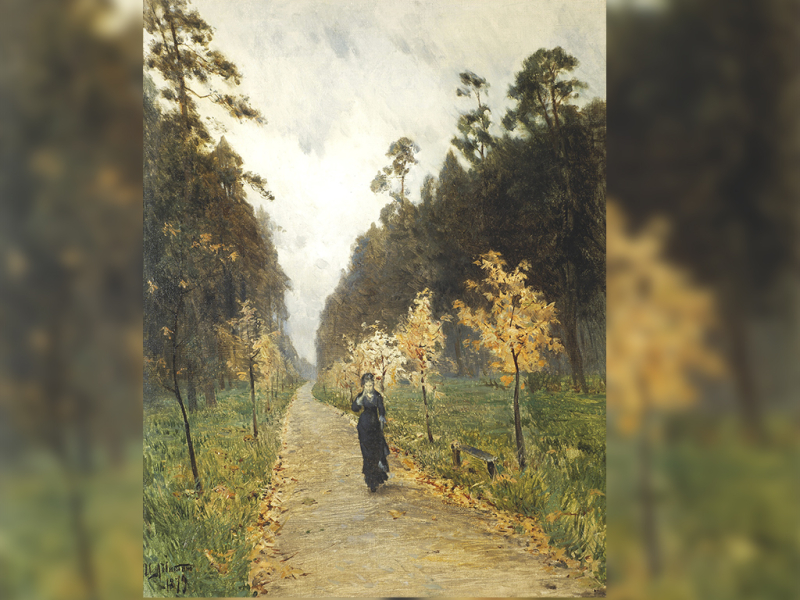
An Autumn Day. Sokolniki by Isaak Levitan, 1879, State Tretyakov Gallery (Moscow, Russia). Credit: Tretyakov Gallery / Wikimedia Commons (public domain) / CC-PD-Mark
Artist: Isaac Levitan
Year of creation: 1879
Exhibited at: State Tretyakov Gallery (Moscow, Russia)
Levitan’s An Autumn Day. Sokolniki shows a different play of colors than Golden Autumn. It catches fall in its decay – the weather takes a seasonal turn, and beautiful colors start to fade. Interestingly, the painting is one of the few in his artistic practice to depict a human figure. The landscape was painted by Levitan himself, but the female figure was added by Nikolai Chekhov, a painter himself and a brother of Anton Chekhov, a prominent playwright and short story writer.
Alyonushka
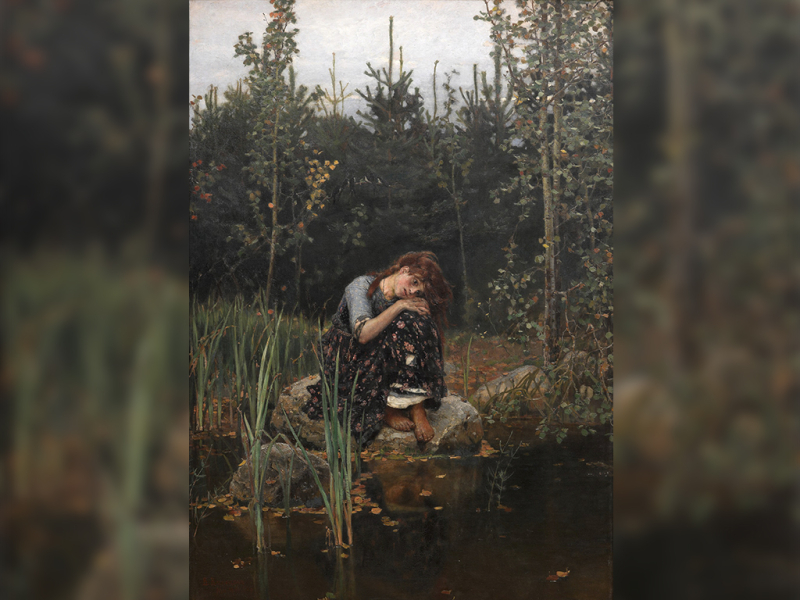
Alyonushka by Viktor Vasnetsov, 1881, State Tretyakov Gallery (Moscow, Russia). Credit: Tretyakov Gallery / Wikimedia Commons (public domain) / CC-PD-Mark
Artist: Viktor Vasnetsov
Year of creation: 1881
Exhibited at: State Tretyakov Gallery (Moscow, Russia)
Though not strictly an autumn piece, Viktor Vasnetsov’s Alyonushka evokes a late-fall mood through yellow leaves drifting on still water, a muted, dark palette, and a sense of melancholy. The scenery mirrors the inner sorrows of the main heroine – a simple peasant girl who has become a symbol of Russian sadness.
When we aren’t bringing you the top insights about Russian culture, we train future professionals in AI, IT, physics, engineering, infochemistry, and biotech.
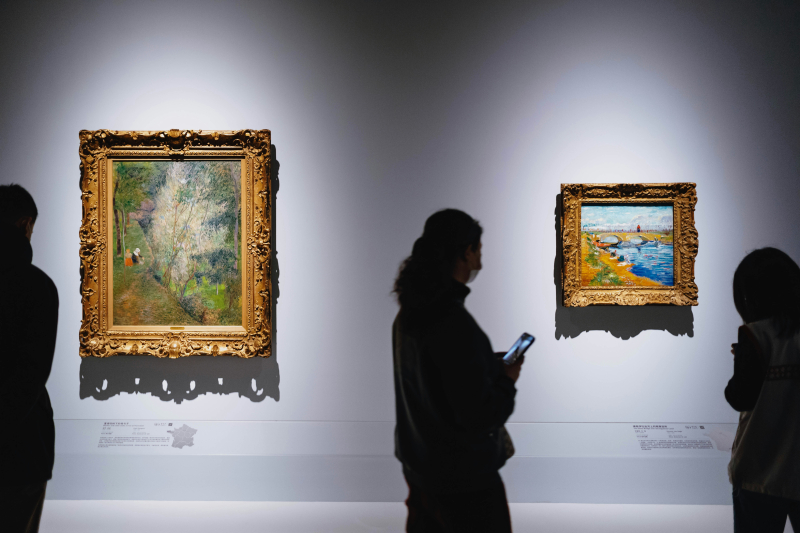
Title image credit: tommao wang (@tommaomaoer) via Unsplash