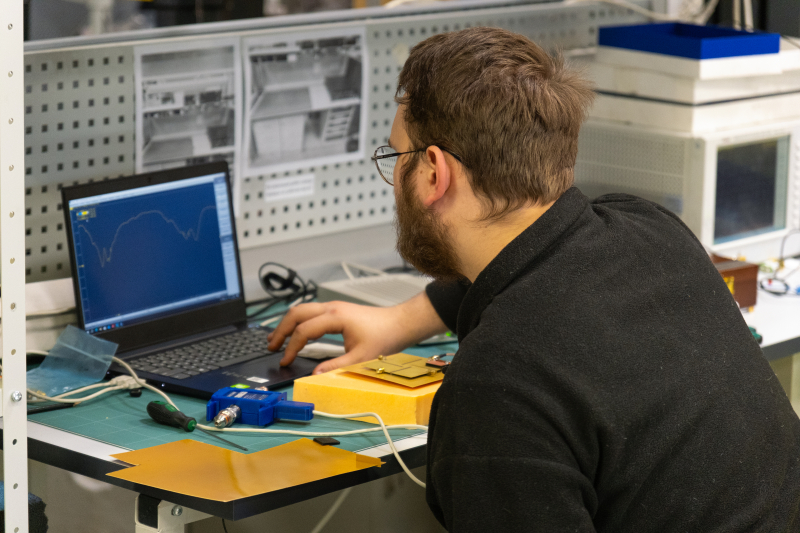
A satellite communications engineer, or connectivity systems developer, is a specialist who studies and develops networks, components, and technologies for wireless data transmission. They ensure modern, high-quality digital connectivity in regions with underdeveloped wired infrastructure, develop technologies for the Internet of Things, smart cities, and satellite control, prioritize data transmission security, and create new connectivity standards with higher internet speeds – such as 5G and 6G.
In order to be successful in the field, a satellite communications engineer needs to have a good command of interdisciplinary knowledge in radio physics and communication theory, as well as be able to code, work with network equipment, and develop prototypes of digital and analog high-frequency devices.
Here are the top five handy skills for engineers in the field:
Software development. Before you get to develop hardware or implement new communication algorithms, you will need to test them by playing them out with equations and functions. This practice conserves resources: you can fix the mistakes that may occur during the making of a new device and test your algorithms in advance. That’s why to start with, engineers create a mathematical model of the system and “pass” it through a simulation software that imitates real system behavior. These mathematical models are created mainly using Python and C++. However, existing software rarely fits the narrowly specialized wireless communications demands, which is why engineers need to be able to develop software for their unique systems.
Algorithms. These are the rules, actions, and mathematical operations performed by an object of a communication system. They are necessary to optimize the system, for instance, by lowering its energy consumption or increasing the traffic. Another example of using algorithms is noiseless coding. It’s needed when the wireless transmission channel has a lot of noise made by the signal reflecting from buildings or by signals from other devices on similar frequencies. To eliminate this noise, engineers equip their code with a mathematical operation that detects and fixes errors in a message upon its delivery. This helps maintain the speed and quality of communications.
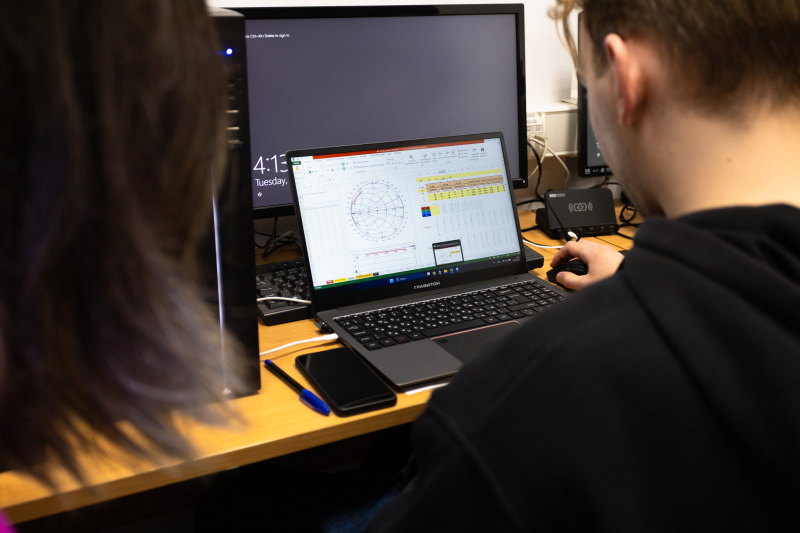
Photo by Danila Poperyokov / Faculty of Physics
Mastering new methods and technologies. Russian telecom companies mainly use ground communication systems with established standards: 2G, 3G, and 4G. These standards set requirements for the operation of communication systems and components verification methods that ensure faster data transmission. However, modern satellite communication technologies are not yet standardized and thus there are no descriptions of how or on which components the system should operate. Therefore, when creating wireless technologies, engineers need to study new methods of transmitting and receiving information. One of them is 6G, the standard now studied in Russia, with new antennas and devices developed to fit it. Engineers should also pay particular attention to AI tools that can facilitate and optimize the design and implementation of algorithms and intelligent data transfer systems.
Processing and analysis of big data. Engineers work with large volumes of data that need to be analyzed, such as network performance metrics, measurement results, tests, and simulations. With data analysis, it’s possible to compare different approaches and test hypotheses, based on which experts make decisions. Specialists use various machine analysis methods and programming languages to process data. For example, engineers often use Grafana – a tool for collecting and visualizing data. This is an open platform for gathering, monitoring, and visualizing information, allowing the creation of charts and interactive analytical dashboards. However, ready-made software isn’t always available for specific tasks, so specialists need to be able to create and optimize such programs themselves.
Project management. Any engineering project, especially a complex one, like satellite communications, requires a team of specialists in mechanics, radio physics, engine design, communications, and others. That’s why apart from hard skills, modern engineers need developed soft skills: team work, adaptability, time management, as well as the ability to account for risks and resources to complete the project within the deadline, budget, and quality requirements. These skills will come in handy not only for team leads, but for any members of a team. Specialists also need to understand the difference between different project approaches: the classic waterfall model (with tasks performed consecutively) and the Agile approach (based on sprints and adaptability).
Photo by Danila Poperyokov / Faculty of Physics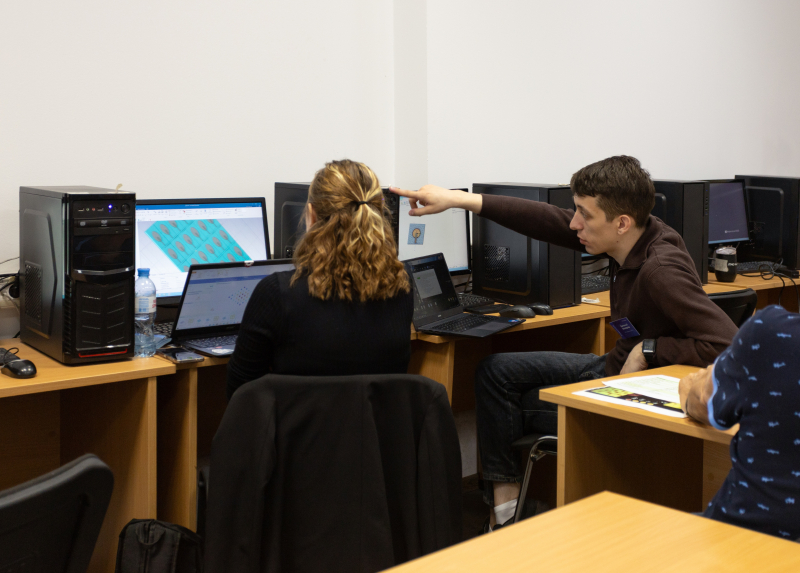
At ITMO, you can get these and other skills needed for an in-demand professional in the track Wireless Communication Algorithms that’s recently been included in the Master’s program Wireless Technologies. The program was developed in collaboration with BURO 1440. Students in the track will be able to intern at the company’s R&D centers; they will also receive a 15,000-ruble monthly stipend from the partner. The company’s leading experts will deliver lectures and supervise student research projects. Graduates of the track will be able to work as researchers, system analytics, and simulation platform developers.