Botanical routes
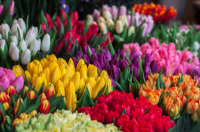
This month, I went hard to complete my spring to-do list and one Saturday morning ended up going to St. Petersburg Botanical Garden. It was pure chance; it was raining all night and then magically cleared up by afternoon, so I randomly pitched the idea to my friend. Another piece of luck was that it was a festival weekend; with the ticket we bought, we could visit the park itself, as well as the Japanese Garden, and the tropic route at the greenhouse.
I don't know why but I'd never taken that route before (I think?) – and it was a miss for sure. It truly feels like a round-the-world trip, a summer encapsulated: it has its own climate (above 20-25C) and flora (e.g., cactuses, palms, pineapples, and coffee), and the route isn’t a short one – you get to fully enjoy all the greenery and, if you’re lucky, even spot some furry workers protecting the plants.
At the garden, there are three routes in total – tropic, subtropic, and aquatic (works only in summer). Now, I want to visit all three and probably revisit the first one I went to when it gets winter-cold again. – Marina
Southern suburbs
Last fall, I moved to the south of St. Petersburg and although it’s been a while I still miss the nonchalant vibe of the city center. For a while I was even disappointed with my choice – my courtyard is green yet there’s no park nearby, no fancy coffee shop, and no library within walking distance. Luckily, the first warm days kicked in and unlocked a different side to my area. I was reminded that some of St. Petersburg’s most beautiful suburbs are right at my doorstep. I can cycle to Strelna, Peterhof, or Lomonosov, or hop on a suburban train to Pushkin and Pavlovsk.
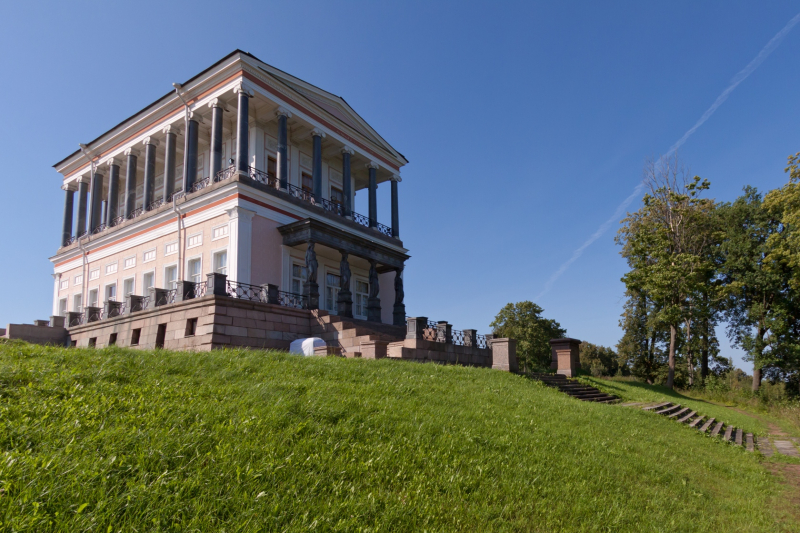
So far I’m celebrating my two weekend outings: one to Belvedere Palace and another to Sergievka Park – and I’m thankful to live within reach of such a wonderful blend of nature and architecture! – Elizaveta
Brain-inspired machine learning algorithms
Exposing myself as a nerd here, but my May discovery – and a very recent one at that – are Core A* publications on merging neuroscience with machine learning algorithms. One particular study used bilingual brain fMRI data to fine-tune several language models, and they have actually demonstrated improved performance for some of them. What’s fascinating for me here is the use of neuroscientific insights about shared semantic systems in bilinguals (something like languages overlapping in your brain) to try and make an algorithm perform better by functioning more like a human brain!
Unsurprisingly, this isn’t the first article to incorporate this principle but it is, as far as I understand, one of the first studies involving bilingual data. As a neuroscientist, I couldn’t be more excited and I now anticipate a summer full of learning new interdisciplinary ideas (or maybe even training my own algorithms, who knows!). – Catherine
Title image credit: IzoeKriv / Wikimedia Commons / CC BY-SA 3.0