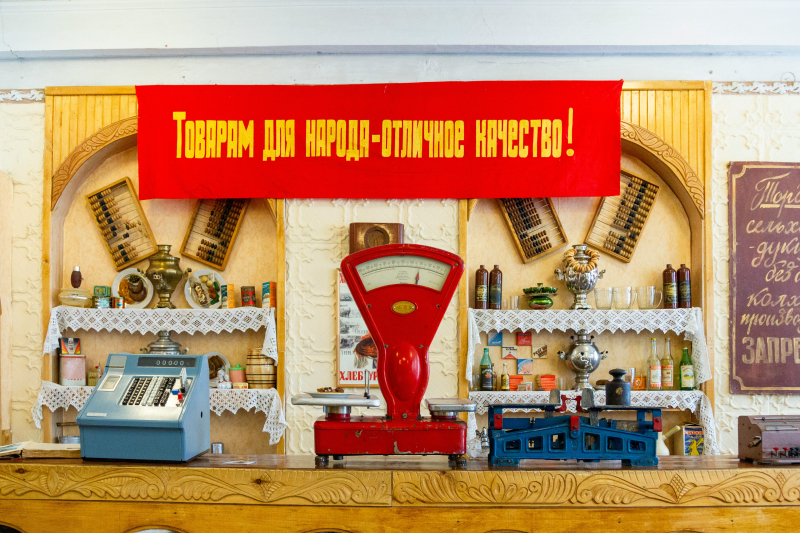
The rise of Soviet lingo
One thing you’ll notice about words that were created or popularized in the USSR is that a lot of them are abbreviations. The examples are endless, from reasonably short simplifications like:
-
Agitprop (агитпроп) – “agitation” + “propaganda” (агитационная пропаганда);
to lengthy, pretty absurd ones, such as the names of organizations:
-
Nizhkraikartofelplodoovoshchsoyuz (нижкрайкартофельплодоовощьсоюз) – “Nizhny Novgorod Krai Potato, Fruit, and Vegetable Union” (Картофельно-плодово-овощной союз Нижегородского края)
Some would argue that this new lingo was a direct consequence of the revolution: the new regime needed a new way to speak. There’s clearly some truth to that, but other researchers believe that technology had more to do with that: the telegraph became a thing before the Soviet times. This and other innovations accelerated the pace of life and changed the way we communicate. The language became more brief, more practical.
Still, this can’t explain one of the strangest trends of the 1920s: naming children after political figures or even abbreviated slogans. Just take Dazdraperma, which is short for Да здравствует первое мая (“Glory to the 1st of May”). A few of them, like Vladlen (short for Vladimir Lenin) and Ninel (can you guess where this one comes from?) have stuck around to this day.
More examples still in use today
-
Likbez (ликбез) – “elimination” + “illiteracy” (ликвидация безграмотности)
Once a government program for teaching people to read and write, today it means an educational crash course. You can say “Спасибо за ликбез!” – “Thanks for likbez!” when someone shares an insight into something new to you.
-
Kolkhoz (колхоз) – “collective” + “farm” (коллективное хозяйство)
Initially, kolkhoz meant a big farm where locals worked together and shared the output. Now it’s often used as a negative word to call something tasteless. For example, “Так в театр не одеваются, это колхоз!” – “You can’t dress that way when you’re going to theatre, it’s kolkhoz!”
-
Shirpotrep (ширпотреб) – “wide” + “consumption” + “goods” (товары широкого потребления)
Shirpotreb refers to inexpensive, mass-produced goods. Not it’s used in a negative way, to describe particularly low-quality goods: “В магазинах один ширпотреб” – “There’s nothing but shirpotreb in the stores.”
Learn more about changes in Russian language over the years in our previous stories, like this one.