An acute shortage of qualified specialists forces businesses to have direct contact with universities. If previously, companies could employ students at starting positions after their graduation; now, they expect recent graduates to have competencies of a mid-level and higher specialists. Hence, there is the need for the business and academic worlds to join their forces to help Bachelor’s students acquire sufficient expertise to be involved in real-world business projects in the final year of their studies. That being said, universities also greatly lack practicing specialists in the classroom, as only they have current knowledge and expertise in applied fields.
The joint work will bring tangible results if universities use a product approach, common for business, when designing and implementing their educational programs. What it means is that both parties will need to continuously work to advance their product, while at the same time growing in their individual spheres and efficiently using their own resources. In this case, the task of describing the outcome comes to the fore. The solution was developed by ITMO – and that’s a role-based competency model.
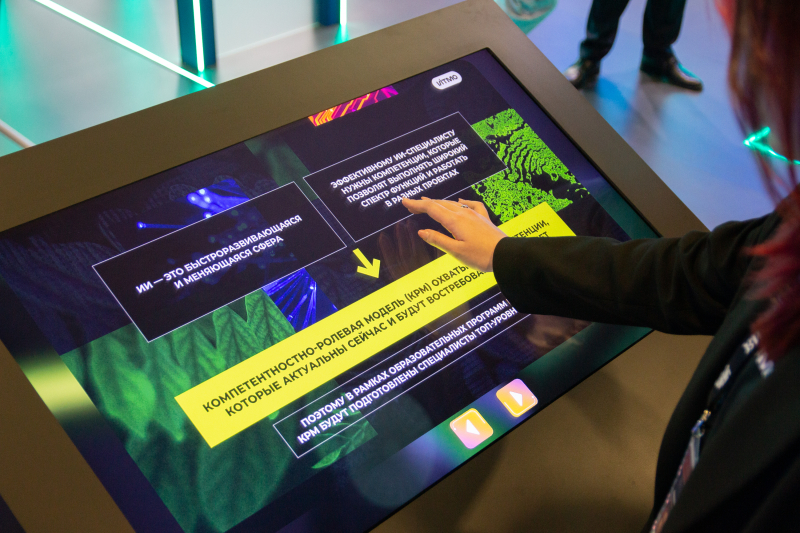
The ITMO stand at the Digital Solutions forum. Photo by Anastasia Kolupaeva / ITMO NEWS
With new jobs appearing every month and their descriptions becoming more and more vague, the role-based competency model provides concrete roles and corresponding competencies, instead of abstract specializations. This approach will make it possible to create detailed professional profiles tailored to the needs of industrial partners and thus design and implement the training of specialists who will be sought-after by companies. ITMO University has already developed such a model for AI specialists, and more than 300 heads and lecturers of educational programs at Russian universities have had the chance to learn how to use it. There are further plans to produce models for other fields, as well.
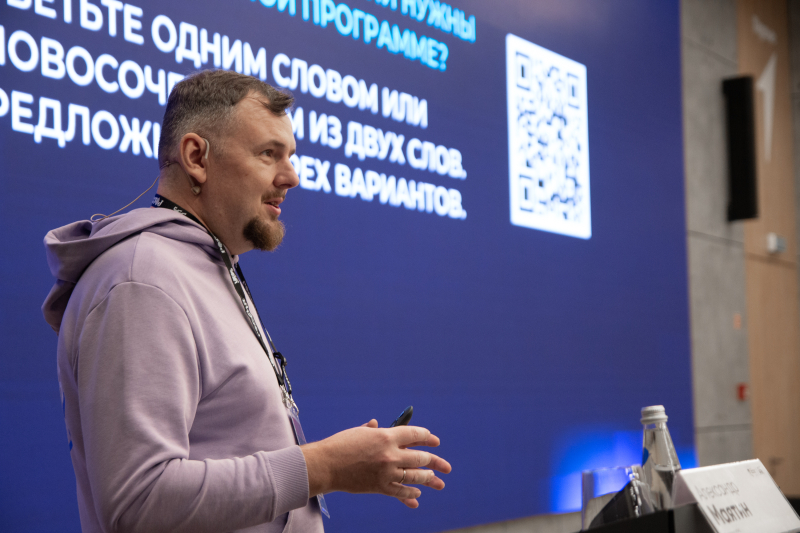
As noted by Alexander Mayatin, the role-based competency model primarily serves as a bridge between the business world and academia.
“Following a product-oriented approach, we need to define our goals – they should be achievable and measurable. And that’s exactly what the role-based competency model does; it allows us to accurately describe what we want and use our resources efficiently. Here’s an example: when an industrial partner comes to us willing to provide their expertise, we will know exactly what to say to them. They won’t understand us if we name an educational program, some abstract profession, or a curriculum course; but they will get it, if there’ll be a set of roles or competencies that an expert needs to have,” explains Alexander Mayatin.
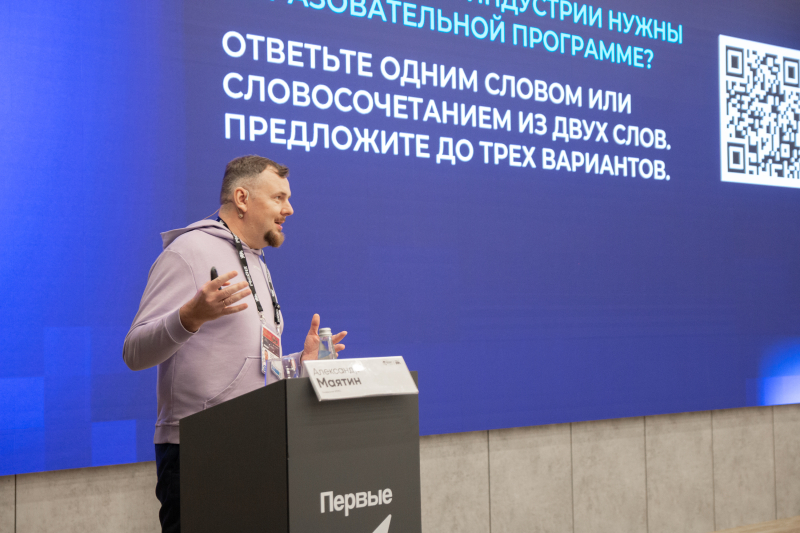
Alexander Mayatin at the Digital Solutions forum. Photo by Anastasia Kolupaeva / ITMO NEWS
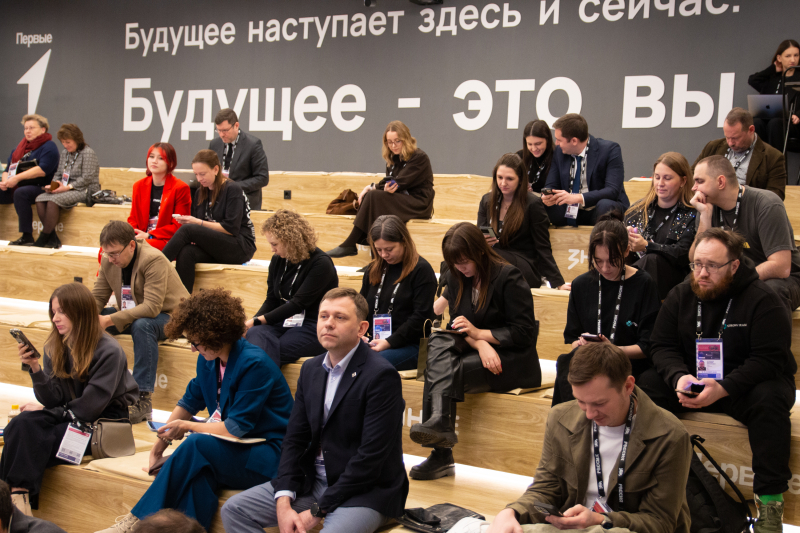
Participants answer quiz questions. Photo by Anastasia Kolupaeva / ITMO NEW
At the workshop, the representatives of companies and universities took part in an interactive quiz during which they explored the prospects and risks of business-academic collaborations, along with successful practices, and obtained action plans from ITMO experts on how to create an educational product.
The IT forum Digital Solutions was held on November 12-15 in Moscow. Representatives of domestic IT businesses and authorities came together at the event to discuss the key aspects of the country’s digital transformation; as part of the forum’s business program, ITMO experts shared their experience in training IT specialists and new practices in educational programs.