How to get there
Located about 1,800 km from St. Petersburg, Ufa can be easily reached by a direct 2,5-hour flight. At least six planes depart for Ufa from Pulkovo Airport every day, so you can easily pick one that fits your schedule. In case you’re up for some hardcore experience or a bit of digital detox, there is an option of the train – and just in 48 hours you’ll be on the spot. The train’s route passes through towns like Nizhny Novgorod, Ivanovo, and Yaroslavl, but considering the time-to-cost ratio, it’s not the most efficient choice; in fact, long-distance train tickets may cost even more than a flight.
Once in Ufa, the key means of transport are buses, trolleys, and trams. In my experience, getting around by taxi is often easier and more affordable than in St. Petersburg, unless you’re traveling to or from the airport. In that case, hop on bus 110 and enjoy a scenic introduction to the city.
Key sights
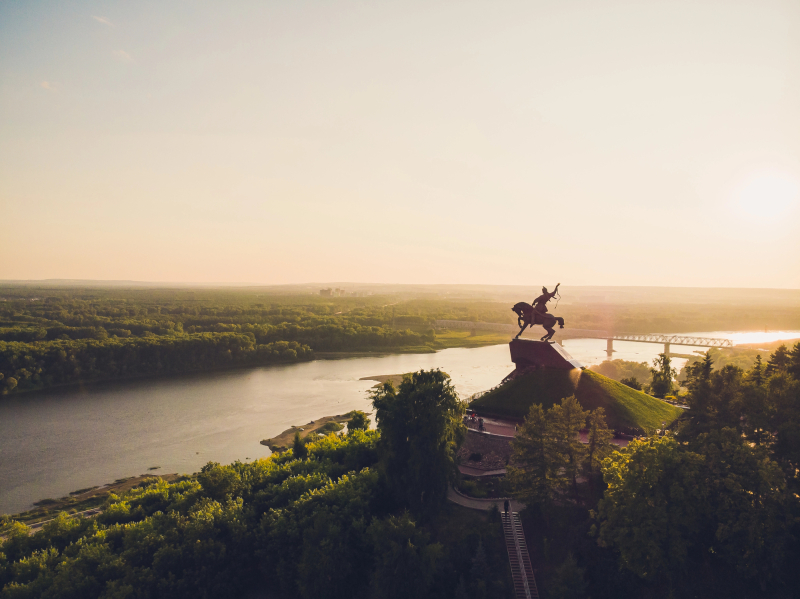
Though the city may seem large, most of the key sights are conveniently located in one area, so you could catch all of them in one long walk. First thing to see is the grand Monument to Salavat Yulaev, a national hero who participated in Pugachev's Rebellion during the reign of Catherine the Great. He was not only a warrior, but also a poet and writer. Actually, you can notice him from afar as soon as you enter the city – the monument is placed on a cliff overlooking the Belaya River.
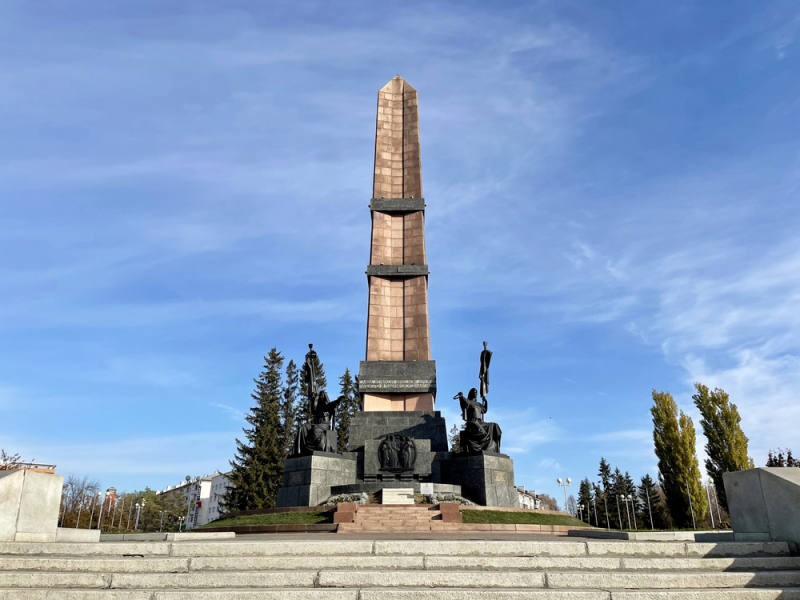
The Monument of Friendship. Credit: irinabal18 via photogenica.ru
From there, take a stroll along the newly renovated Belaya River embankment. Your walk will lead you to another prominent landmark: the Monument of Friendship, a towering stela commemorating the 400th anniversary of Bashkortostan’s union with Russia.
In Ufa, there’s no shortage of museums: there’s the National Museum of Bashkortostan, the House-Museum of writer Sergey Aksakov, and Archaeology Museum. But if you can only choose one, don’t miss the Bashkir State Art Museum, named after Mikhail Nesterov, a prominent Bashkir artist. In addition to Nesterov’s works, which depict the spirit and life of the region and Russia in general, the museum houses remarkable pieces by Russian masters like Shishkin, Levitan, and Polenov.
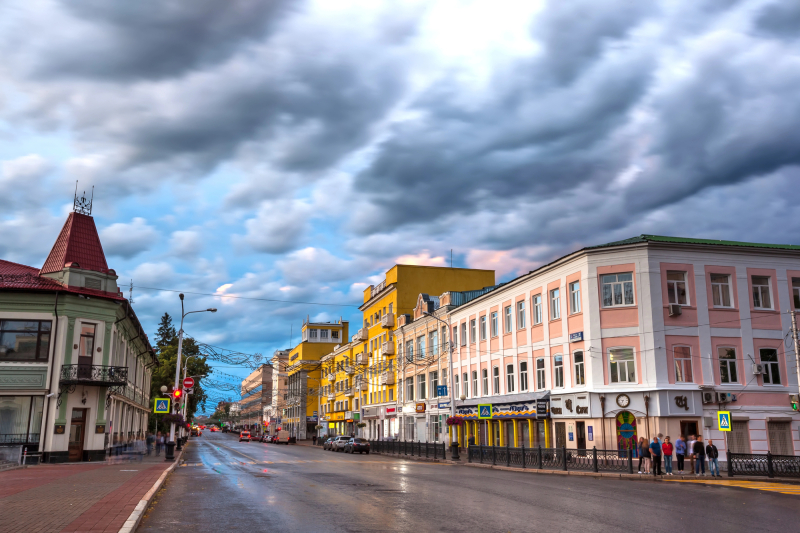
Ufa’s historical center. Credit: ValeryBocman via photogenica.ru
As you explore the city center, you won’t be able to miss Gostiny Dvor and the nearby fountain Seven Girls. Unlike St. Petersburg, Ufa’s historical center is rich in low-rise wooden buildings, some still inhabited, others used as museums, art schools, or offices, standing side by side with their modern counterparts. But it’s not just all history – there’s a modern public space called Art-Kvadrat, a hotspot for the younger generation. Here you can chill, learn more about the modern art in the region, and buy souvenirs from local businesses. Shortly, it’s just like our New Holland Island or Sevkabel Port.
And of course, Ufa, home to a significant Muslim population, is known for its stunning mosques. There are some big ones, like Lala Tulpan or Al-Rahim, or smaller ones hidden in residential areas, like the Cathedral Mosque, Gufran, or Galia.
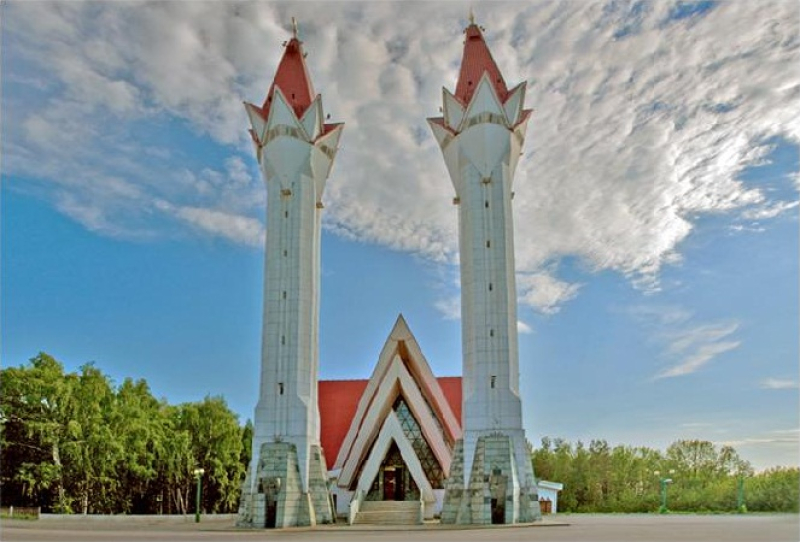
Lala Tulpan. Credit: Elnur Neciyev, CC BY-SA 4.0 , via Wikimedia Commons
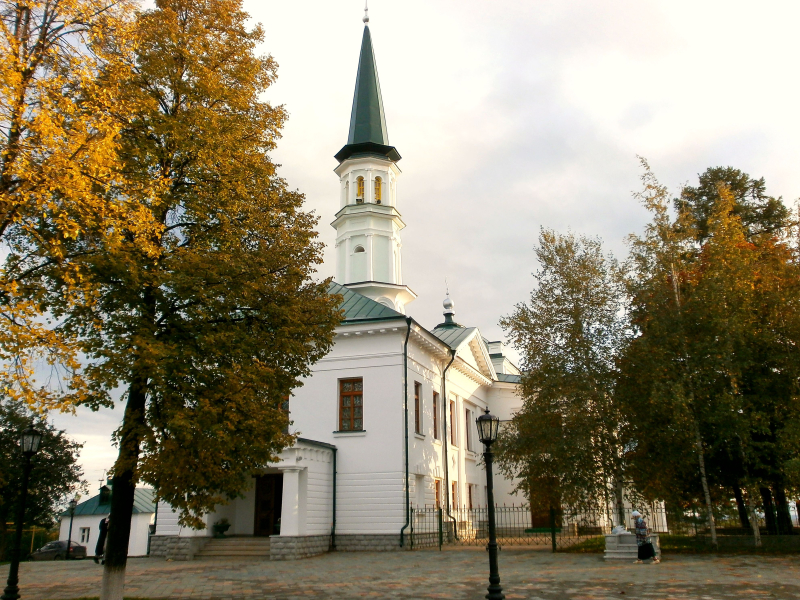
Credit: 1poruchik1, CC BY-SA 3.0, via Wikimedia Commons
Greens and views
What always surprises me in Ufa after years in St. Petersburg is an abundance of green spaces. And they are not just cozy gardens but large parks and forested areas. That’s why I think it’s best to come here in late spring or summer, just so you can walk and breathe in the fresh air. My personal highlight is Victory Park in Cherikovka – located on a hill, it offers amazing views on Belaya River. Another scenic spot is called Tramplin – here, you can take a short ride on a vintage ropeway through a forest. For more nature inside the city, check out Kashkadan Lake and the Botanical Garden.
Local food
No trip to Ufa is complete without tasting the local food. Personally, one of the things I look forward to most when visiting is eating qistibi – roasted flatbreads, especially the ones with mashed potatoes. Not to look too far, you can find them in the street food chain Aibat Hallyar, which makes qistibi with fillings or with a twist, or Eko Pyshka, a local bakery.
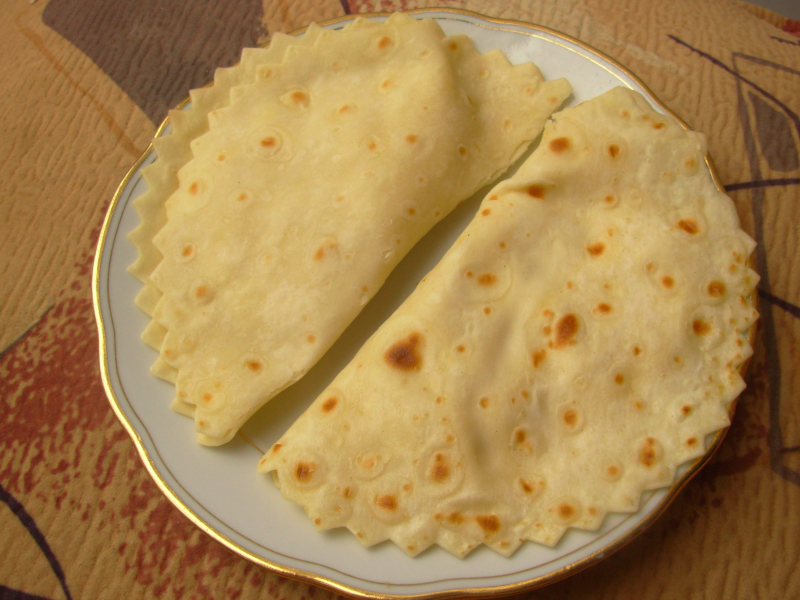
Qistibi. Credit: Qweasdqwe, CC BY-SA 3.0, via Wikimedia Commons
When I’m leaving Ufa, I try to bring back a sweet treat called chak-chak – fried dough drenched in honey, which goes great with long tea parties. You’ll find it in almost any shop, but for an authentic taste, check that it’s made in Bashkortostan, not Tatarstan. And while honey itself is a popular local souvenir, chak-chak is a better option for flying, since honey counts as a liquid and won’t make it past airport security in your cabin baggage!
Bashkir cuisine, a heritage of nomadic people, often has horse meat as an ingredient – like in beshbarmak or soups. To taste a high-end take on traditional flavors, visit Duslyk or Azyk Tulek, two well-known local restaurants.
For hearty yet budget-friendly meals, my localfriends recommend Barakat – a cafe with a cozy canteen atmosphere. For 300 rubles, you can get yourself a three-piece lunch and energy for a day of exploring.
Of course, there’s a bunch of more familiar food – such as European and Asian cuisines. A lot of eateries are scattered around the above-mentioned Art-Kvadrat, and there’s also a new food market inside Gostiny Dvor. And if you can’t spend a day without coffee, great drinks are waiting for you at Mama Varit Kofe and Monkey Grinder.
Personal note
I’m originally from Bashkortostan and I’ve been to Ufa several times, mostly visiting my friends and relatives who studied there. Despite being shown around and well taken care of, I always felt like I couldn’t quite crack the city. Long walks were disorienting, the marshrutkas felt chaotic, and the hills literally took my breath away. But I think I finally got it: it’s a youthful and ever-evolving city; every time I return, there’s always something new – a park, food hall, embankment, or city-wide festival. At its core, Ufa has a deeply hospitable soul – you’ll feel it from both the locals and the city itself.