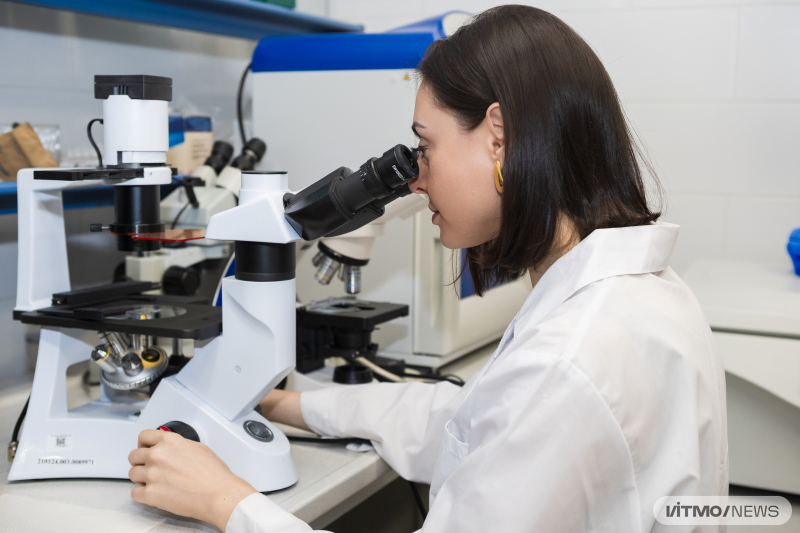
To start off, let’s talk briefly about your journey in science. Where did you study, and what got you into research?
I received my Specialist’s degree in biology from Saratov State University. There, I worked on a molecular biology project. Namely, I developed testing systems for molecular diagnostics of bipolar disorder and schizophrenia. After I graduated, I was invited to join the Microbe Institute, where I shifted my focus to bacteriology. At the same institute, in 2014, I defended my thesis in microbiology. After I completed my PhD, I was offered a postdoc position at the Department of Cytology and Histology, St. Petersburg State University.
Then, you were invited to join projects in Russia and abroad. Why did you choose ITMO?
First, I had never aimed to leave Russia and move abroad. Then, I fell in love with ITMO when I first came to meet the team in 2018. Since I was used to more conventional academic environments, I was moved by the dynamic and youthful atmosphere at ITMO. At that time, the university already had strong research teams in the fields of solution chemistry and DNA nanotechnology. I liked the team, as well as how the university looks and brands itself – and I realized I want to pursue my career here.
Elena Koshel is a PhD in biology, an associate professor, the head of the Laboratory of DNA Nanosensor Diagnostics, and the director of the Center for Molecular and Biological Technologies. In eight years at ITMO, she has implemented projects worth over 300 million rubles and actively fueled biological research at the university. Among her team’s projects is a portable test system for rapid detection of DNA pathologies.
Elena Koshel. Photo by Dmitry Grigoryev / ITMO NEWS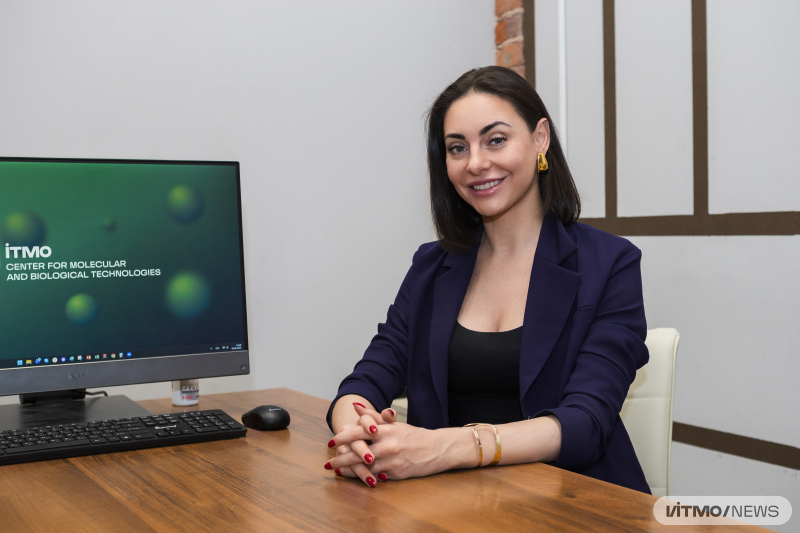
You’ll head ITMO’s Faculty of Biotechnologies in the new academic year. The faculty was established in 2020; it grew out of the Faculty of Food Biotechnology and Engineering, which, too, underwent transformation in 2015. What are the faculty’s major achievements so far?
The faculty had revised its scientific and educational areas in the past six years. It fostered new partnerships; the program became stronger and now Bachelor’s students can intern at major biotech companies starting in their first year. Thanks to this integration, they can make their career choices as early as possible and proactively build it while they’re still at university. Whereas the facilities and projects provided by the partners allow them to work on real-world industrial cases for their graduation papers.
A significant milestone in the faculty’s life was the opening of the Youth Laboratory of Personalized Food and Packaging Materials in 2025. The laboratory was commissioned by the state and provided resources for the most relevant fields of studies at the faculty.
At the Research and Educational Center for Nutrition. Photo by Dmitry Grigoryev / ITMO NEWS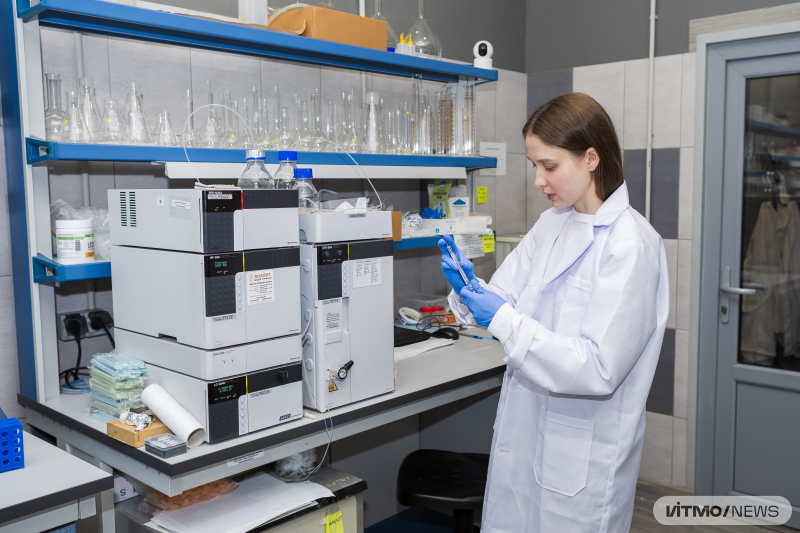
The times are changing and so are technologies and research. What goals does the faculty set now?
First and foremost, it’s training graduates who will be sought after in multiple economic sectors. We aim to equip our students with competencies within the role-based competency model Science and Technology, as well as those in IT and AI so that they can apply intelligent technologies in their work – when it comes to both production and development of new products and technologies. These are no longer some future prospects; it’s happening today. For that, the university is also working on a role-based model specifically for biology majors, which will bridge the gap between business and academics and allow us to train in-demand specialists. In this regard, our top priority is to help students master the full cycle of product development – from an idea to a store shelf.
Two projects on foodtech multiagent systems have already been launched – both received funding via the federal program Priority 2030.
Our next task is to continue developing and strengthening foodtech at the faculty. I want it to be a top choice for more applicants – primarily for Russia to have more specialists who possess cutting-edge competencies and can perform the entire cycle of product and formula development.
To achieve that, we need to strengthen our ties with partners and the faculty’s research and technology facilities (e.g., modernize our laboratory complexes and purchase state-of-the-art equipment). This way, we’ll be able to run large-scale projects here, at ITMO, together with our partners.
Read also:
You’ve mentioned working with partners in the industry. How does the faculty interact with businesses today? Do you plan on expanding the list of partners further?
Right now, companies come in as partners on educational programs. They provide us with material and technological resources, their specialists teach courses as guest experts, and students complete paid internships at partner facilities. But I’d like to see us building research and education centers together or establishing joint laboratories on campus. One example of such shared infrastructure is the VkusVill x ITMO Center for Food Innovations, where students, with guidance of supervisors from the industry, explore the full production cycle – from an idea to a commercial test batch. We have plans to launch similar programs with other partners and allow students to create in-demand products.
Read also:
ITMO and VkusVill Launch Joint R&D Center for Foods of the Future
As for the list of partners, it will definitely be expanding. For instance, this year we’re starting a partnership with Partiya Edy – Yandex’s manufacturing wing for ready-made food. We also plan collaborations with VkusVill, Partner-M (food ingredient production), Okraina (meat products manufacturer), Shin Line (largest ice cream producer in Kazakhstan and Central Asia), the Kolomenskiy holding (largest bread manufacturer in the country), and others. The ramp-up in partnerships is in part thanks to our connection with the ITMO Foodtech research center.
The faculty’s biopharmaceutical branch will also continue to develop, including through integration with the Center for Molecular and Biological Technologies and ties with key partners like BIOCAD.
In addition, I plan to strengthen our industrial biotechnology efforts through interactions with resource-extracting companies, including ones in the oil and gas sector. There is regular demand for research in that field, which underlines the importance of investing in relevant competencies.
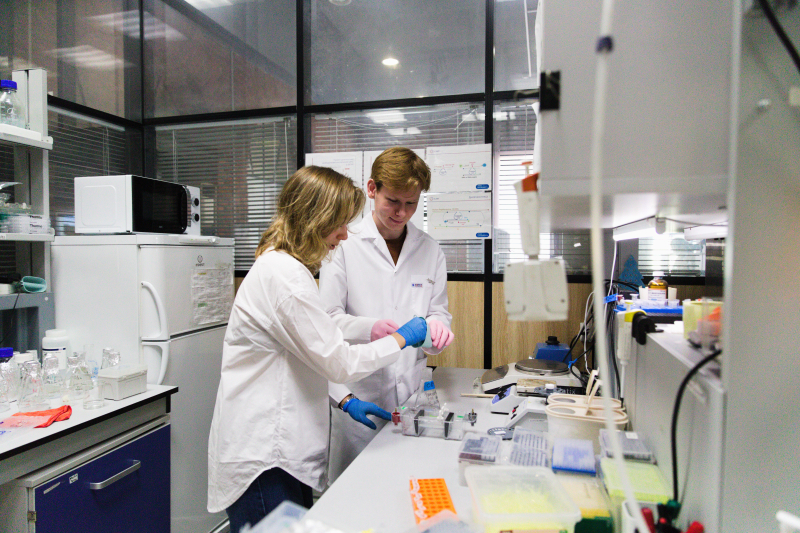
Center for Molecular and Biological Technologies. Photo courtesy of the department
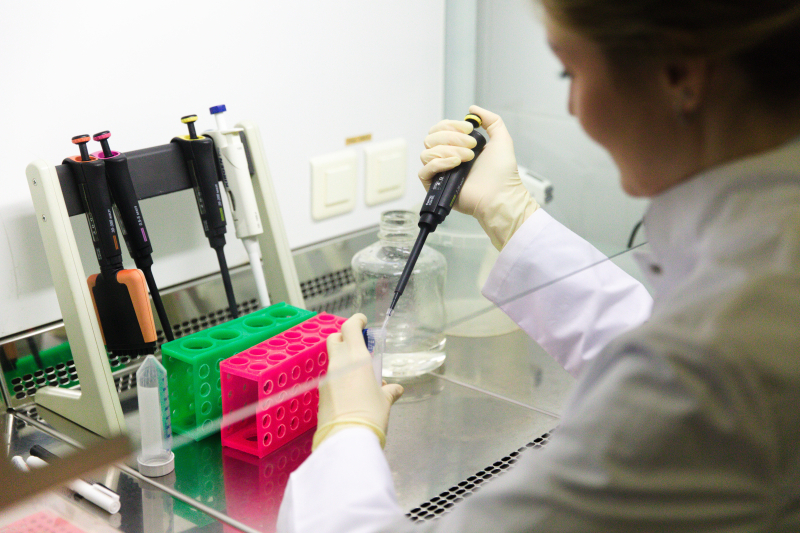
Center for Molecular and Biological Technologies. Photo courtesy of the department
The Faculty of Biotechnologies offers one Bachelor’s program and two Master’s programs. What needs to be on the curriculum of a biotech program these days to ensure its relevance to both students and the industry?
First of all, a student must feel sure that they’ll be in demand upon graduation. When they apply to a program, they must have a clear image of what awaits them – and know that they’ll be getting the complete set of competencies. Meaning that they won’t be just an engineer, but also a developer who knows how to commercialize a product. When a person knows the market and the specifics of an industry, they can better understand its inner workings and see development in a new light.
We can ensure this through applying a role-based competency model and creating a flexible learning process – students can acquire a proper foundation of skills and knowledge while trying their hand at different things. To that end, I want to increase the number of specializations, starting from the Bachelor’s level.
At the Research and Educational Center for Nutrition. Photo by Dmitry Grigoryev / ITMO NEWS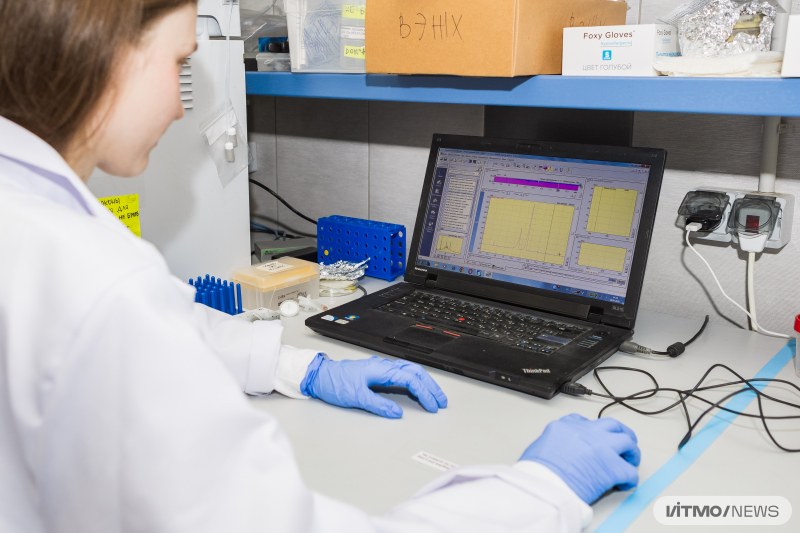
The faculty has a strong team: there are 19 PhDs and 8 DSc, as well as business representatives who share their experience and conduct lectures. Will you continue acquiring new competencies within the team?
Absolutely. We have a strong team of experienced and respected scientists, most with a background in food biotechnologies. We also have talented and eager PhD students. I want to strengthen the “middle level,” which includes young PhDs and DSc, ones with some experience and not recent graduates. There are the ones who can conduct their own research, bring in resources, and earn grants. These staff members could be the leaders of new research fields at the faculty.
ITMO has several centers engaged in biotechnologies and bioengineering research. In the foodtech realm, that includes Natalia Eremeeva’s Laboratory for Personalized Food Products and Packaging Materials, Denis Baranenko’s International Research Center "Biotechnologies of the Third Millennium,” and Olga Orlova’s Research and Educational Center for Nutrition. In terms of biology, the Center for Molecular and Biological Technologies has the most expertise. They have six laboratories working on subjects ranking from DNA sensors to experimental oncology and tissue engineering. I want to build a shared ecosystem at the faculty that’ll unite these departments and create conditions for joint projects. This’ll help combine our human resources and expertise – and thus make the faculty more appealing as a recipient for investments and a platform for major projects.
International cooperation, too, matters greatly for exchange of experience. Right now we’re strengthening our relations with Latin American countries in particular, where environmentally-minded food production technologies are in great demand.
Read also:
At the Research and Educational Center for Nutrition. Photo by Dmitry Grigoryev / ITMO NEWS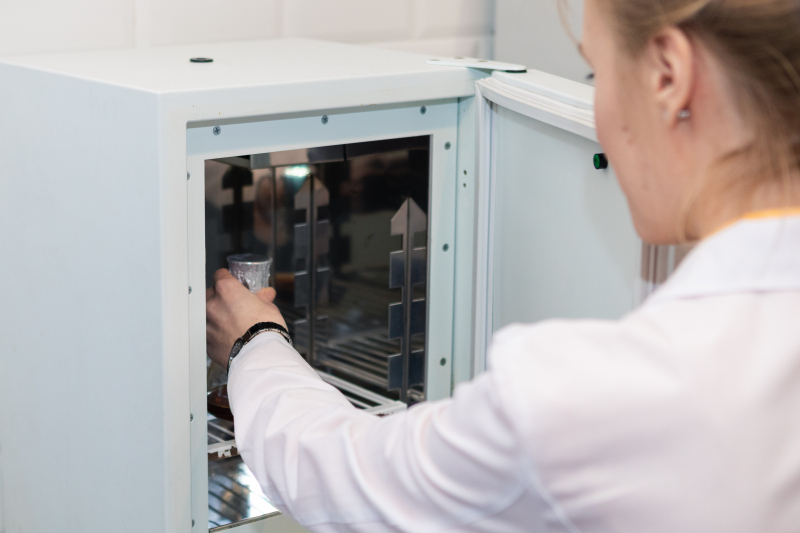
So, the perfect model for the faculty is one such ecosystem?
An ideal faculty works on the full cycle: from developing all-new products and technologies to seeing them commercialized. It trains experts, creates infrastructure, and maintains close ties with partners. Thanks to the latter, the cycle becomes shorter and a student is able to complete it within their period of studies. Thus, they become part of the real economy as graduates.
And when I speak about the faculty’s ecosystem, I mean everyone including graduates, who launch their own startups and companies and then come to us to establish partnerships, receive guidance, and hire specialists.