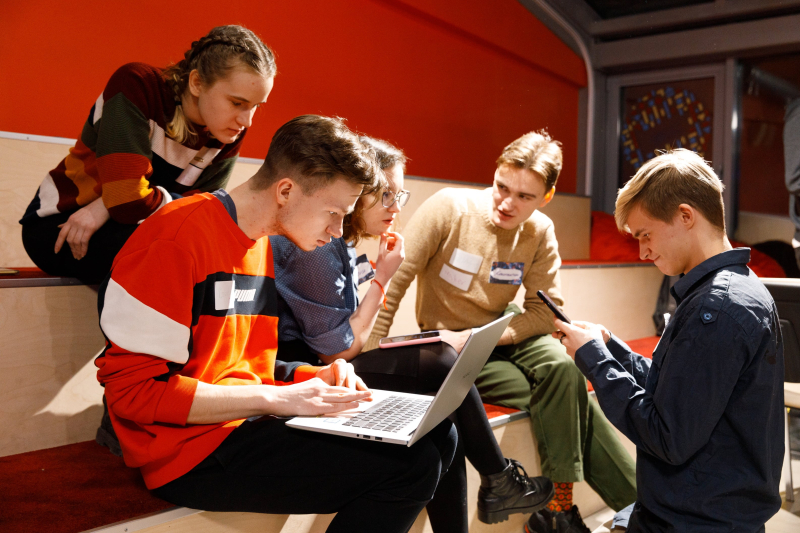
According to Russian researchers, over 80% of students use AI to complete their homework or prepare for tests and exams. Educators view this as a problem: popular AI platforms can make mistakes, hallucinate, or provide solutions beyond course material. This leads to students studying haphazardly, without remembering the material.
Specialists at ITMO’s Artificial Intelligence Technologies Faculty have found a solution. They created AI Lecturer – a virtual mentor that helps students understand higher math topics. The platform was developed by an ITMO team of methodology experts, lecturers, and AI specialists. Before, the university had used other testing and training systems to help master typical math problems and this experience was used to develop the new solution.
The system uses only the methods and terminology covered in the lectures. At the same time, the platform does not provide the final answer; instead, it helps students develop their reasoning skills. All of this helps structure the material and reinforce knowledge. To date, the platform has been piloted in two courses: Linear Algebra and Data Processing and Mathematical Analysis and Fundamentals of Computation. Lecturers can upload their own problems, reference solutions, lecture materials, and configure the AI’s mode of operation.
AI Lecturer’s main difference from popular neural networks is the minimal risk of hallucinations. Language models can produce wrong answers and solutions and doubt their own accuracy; no modern LLM is hallucination-proof. However, AI Lecturer has it down to a minimum: the platform has additional verification modules, while human lecturers always join in for complex cases.
“What’s the main issue with LLM hallucinations? They can solve a problem wrong but they won’t see it. Our model verifies its solutions using symbol mathematics. AI Lecturer has a built-in Python module that writes validators and verifies answers at every step. The solution is suggested by AI Lecturer, but if the Python module detects an error, it will highlight it and notify the lecturer,” says Maria Moskalenko, the deputy dean of the Artificial Intelligence Technologies Faculty and a lecturer of the Academic and Methodology Center “Artificial Intelligence.”
To users, the platform looks like a standard web interface where they need to register, solve problems, and submit their solutions.
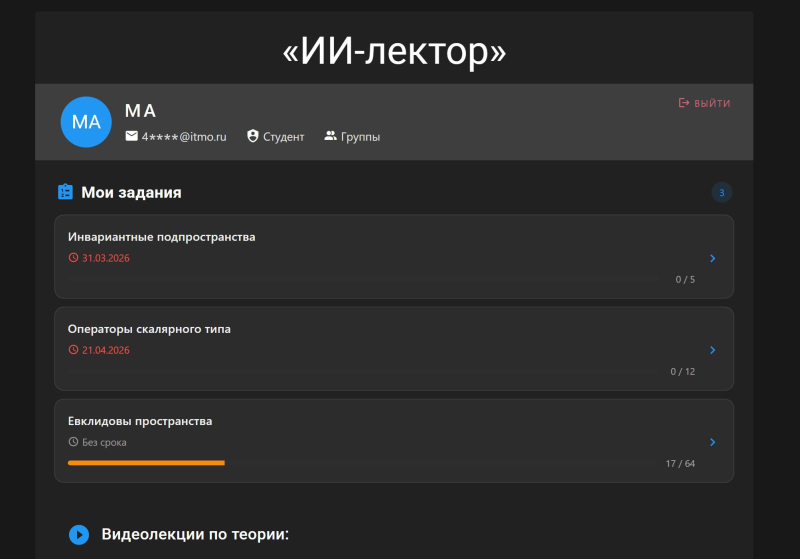
AI Lecturer interface: student's personal page. Credit: the platform's developers
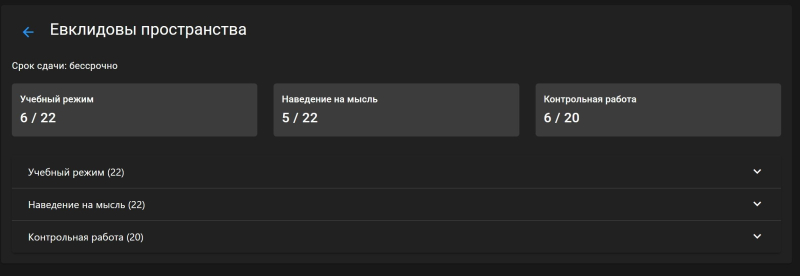
AI Lecturer interface: learning modes. Credit: the platform's developers
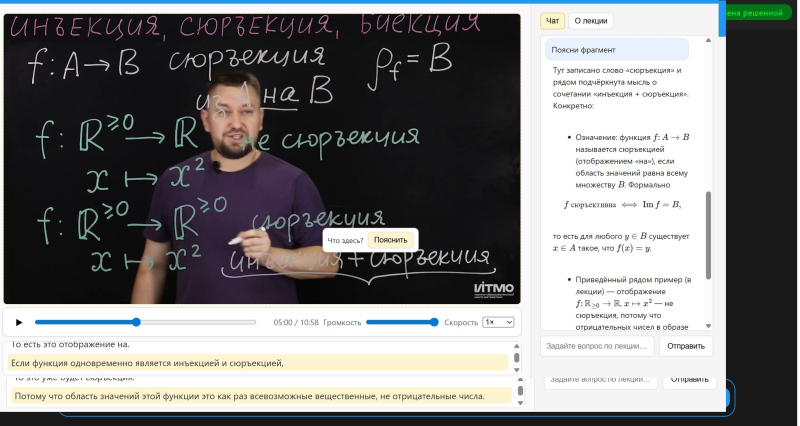
AI Lecturer interface: a lecture. Credit: the platform's developers
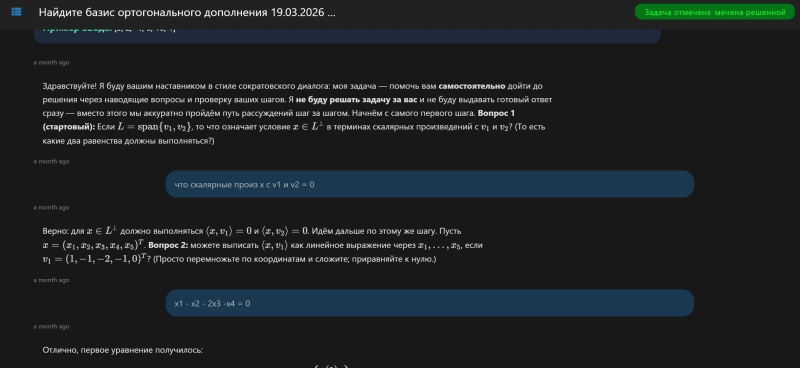
AI Lecturer interface: a student discussing their solutions with the AI lecturer. Credit: the platform's developers
Currently, AI Lecturer has three modes:
- Learning mode – here, the system guides students step by step, explaining what needs to be done, and checking each action.
- Hints – this is a mode for practicing what students have learned. The system doesn’t offer instructions, but asks questions and offers hints.
- Test – this mode is for assessing a student’s grip on the material without any hints. The platform registers the progression of the solution and evaluates the correctness of each step, allowing the student and lecturer to see the real level of understanding of a particular topic.
The new platform helps both students and lecturers. It analyzes students’ answers and their problem-solving approaches. Based on this analysis, it provides a personalized assessment, indicating where the student is making progress and where there are gaps. The system also provides an “overall snapshot” of the students’ knowledge by collecting statistics on completed assignments for the entire group and even the entire cohort.
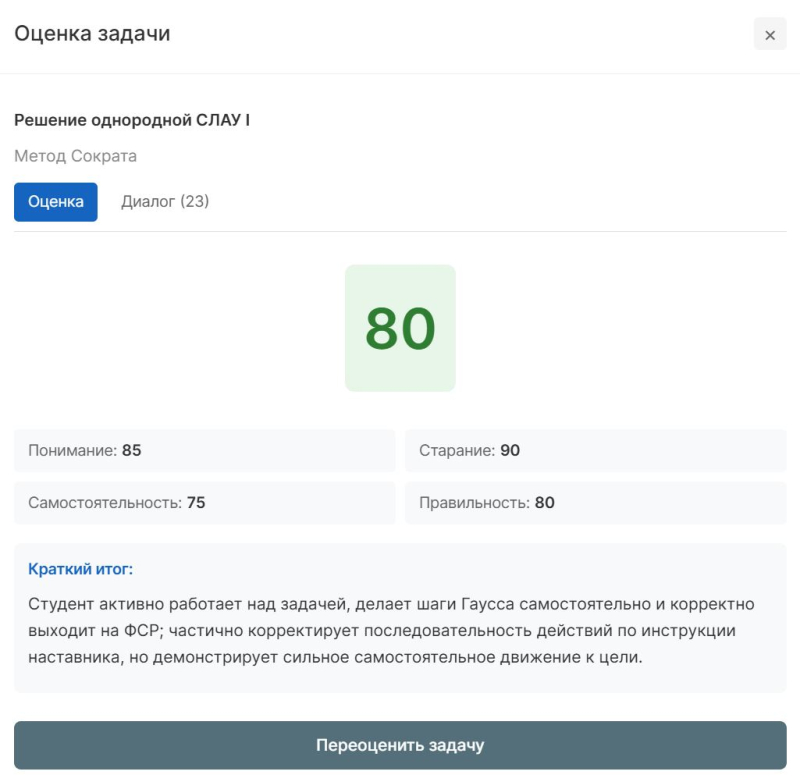
AI Lecturer interface: lecturer's view; the system evaluates a student's solution. Credit: the platform's developers
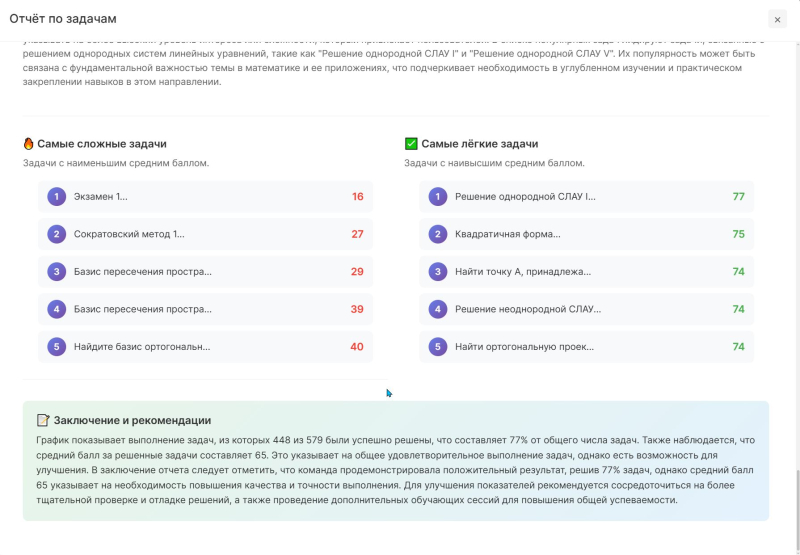
AI Lecturer interface: lecturer's view; based on a student's performance the system identifies the easiest and hardest problems. Credit: the platform's developers
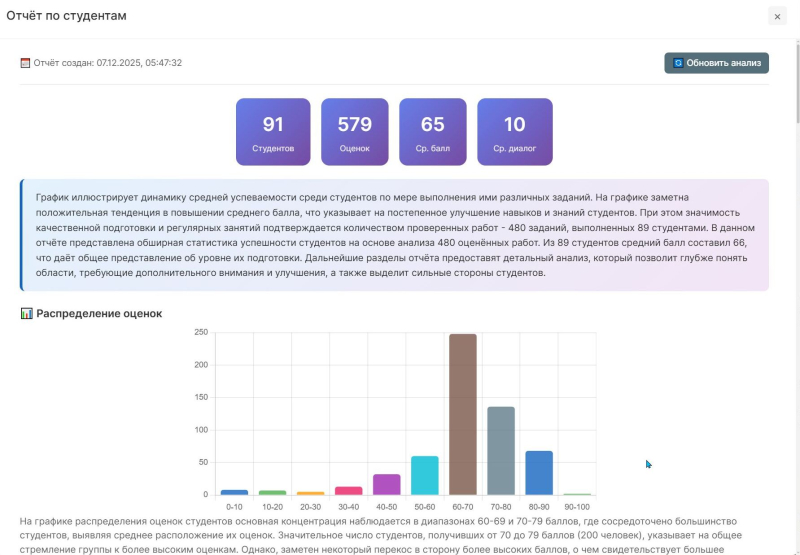
AI Lecturer interface: lecturer's view; as students complete their tasks, the system collects statistics on the group's performance. Credit: the platform's developers
In the previous academic year, the system was tested by 50 first-year students of the AI Engineering program. This pilot run resulted in an almost double increase in the frequency of self-study sessions, while the number of questions to the lecturer on typical problems decreased by 41%. Students used the platform to get into harder topics and prepare for tests. They also noted that the AI Lecturer helped them catch up if they had to miss a class. Those students who used the Test mode also increased their GPA by 12%.
“When using other AI platforms for the subject, I often found that they would change their opinions and criticize their own solutions. Most often, it happens when you ask follow-up questions. I didn’t experience the same with AI Lecturer. It is confident in its answers and provides detailed explanations to follow-ups, even if you phrase them shortly,” shared Kira Sazonova, a student in the program who participated in the pilot.
Starting September 2026, AI Lecturer will become a regular part of the program’s curriculum; students will use the platform to complete homework and study a part of course materials. This semester, the platform is available for two subjects, but in spring the number will grow to four. The platform’s architecture can be easily adapted to other mathematical subjects thanks to its technical and methodological versatility.