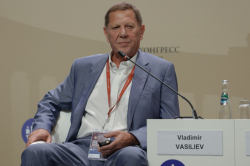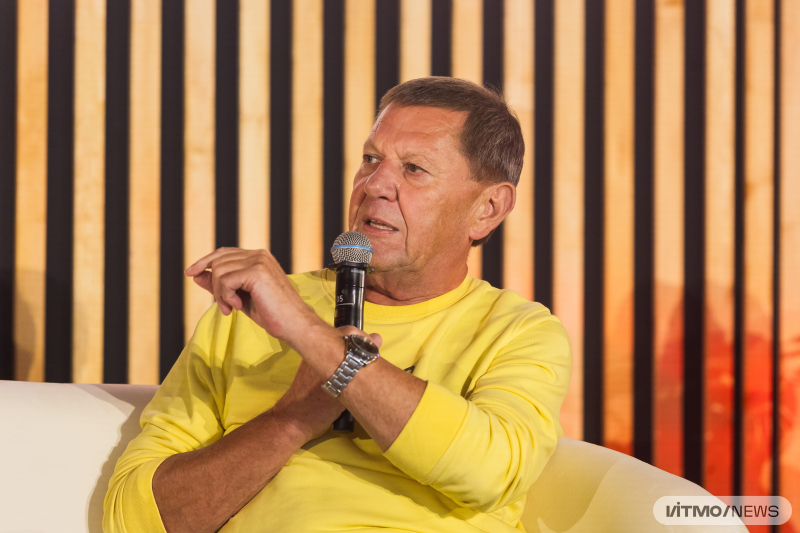
The summit featured several discussions. During one of them, From Digitalization to AI-Native: Could AI Be Vice Rector?, university rectors shared cases of AI implementation and discussed how university management can change with the AI-native approach. The discussion included ITMO Rector Vladimir Vasilyev, Innopolis Rector Alexander Gasnikov, St. Petersburg State University’s First Vice Rector Anastasia Yarmosh, and Skoltech’s Vice President for AI Evgeny Burnaev.
At ITMO, AI is viewed first and foremost through the lens of human interaction. AI doesn’t exist independently; its potential can be seen only in connection with someone setting tasks and evaluating results, said Vladimir Vasilyev. A student, lecturer, or staffer works with AI, teaches it, obtains results, and starts the cycle again. With this approach, humans control the meaning, manage the work of a complex system, and verify results. At the same time, AI is introduced into the educational process, not only into the learning one. Students and lecturers are assisted by agents and multiagent systems that offer schedule notifications, additional information, and context-dependent replies. Such solutions are also used by administrative departments, including HR, legal services, and others. Students create their own agents to work with.
“I think that the introduction of AI at universities isn’t a revolution – it’s an evolution. First, I believed that AI would become an independent actor in any process, but now we see a different model: humans and AI work together, yet it’s still humans who set the agenda, control the complex system, and verify and validate results. That’s why a systematic AI approach isn’t just in using chat bots for routine operations; instead, it implies a deeper reconstruction of the university: humans set goals and strategies and control results, while AI takes on the role of an assistant and gradually expands the areas that could be entrusted to it,” added Vladimir Vasilyev.
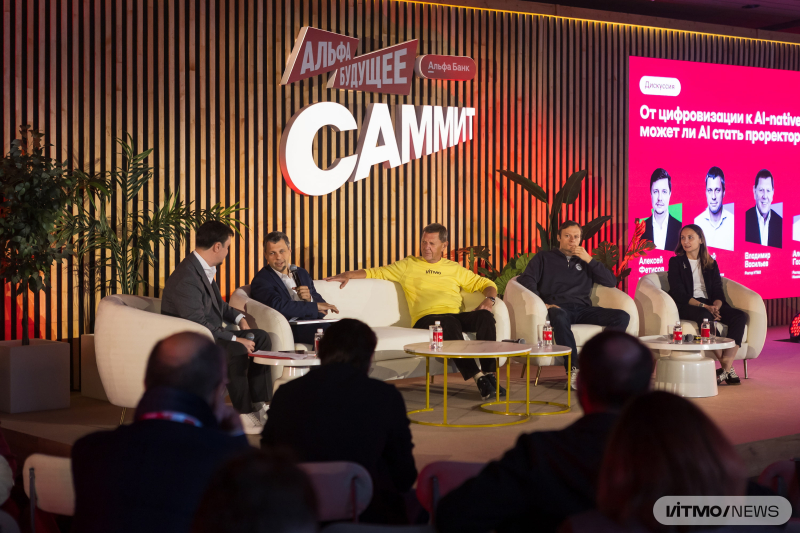
Alfa Future Summit. Credit: Dmitry Grigoryev / ITMO NEWS
Another discussion held at the summit was entitled Technoboom on Campus: Could Universities Become Corporations? And Why? and moderated by Daria Kozlova, ITMO’s Director for Strategic Development. The discussion included MIPT Rector Dmitry Livanov, MEPhI Rector Vladimir Shevchenko, and Ural Federal University Rector Ilya Obabkov.
The participants discussed the university’s changing role in the technological chain. In the past, universities passed their solutions on to the industry and left the chain; now, leading universities leading universities strive to turn their technologies into products, bring them to market, and make profit independently or in collaboration with major businesses. Thus, universities are stepping into the shoes of fullscale market players with proprietary R&D, product lines, and full responsibility for results. However, this model doesn’t fit all: universities have different tasks, resources, and opportunities. That’s why they can adapt various elements of this model instead of feeling obligated to turn into corporations.
The Alfa Future Summit was held on September 25 in St. Petersburg and focused on technologies, management, and education. The event aims to promote startup culture among students and lecturers, as well as foster an exchange of experience between business and education.