Contents
The story behind the course
Some non-technical skills are paramount for all specialists regardless of their field: these are the ability to negotiate, make one’s position clear, give and receive feedback, as well as manage and resolve conflicts. Yet the traditional approach to teaching these skills often falls short, and there are several reasons for that, experts say.
“First, it’s not enough to give a lecture on communication and ask students to read up on theoretical materials. Soft skills develop through practice and in real-life situations specifically. And second, lecturers should not only know methods but also be able to integrate them in the educational process, namely, into their classes, and at the same time take into account the specifics of each course and audience,” says Yulia Romanenko, the head of the soft skills module and the course’s lecturer at ITMO.

Yulia Romanenko. Photo courtesy of the subject
Specialists from ITMO and Sberbank stepped in to solve this problem. Together, they developed a continuing education program, titled The Methodology of Teaching Soft Skills in Higher Education, which sparked a huge interest: the course's two launches received 1,000+ applications from lecturers of varied disciplines in Russia.
From request to realization
The course started as a joint project within the GigaAcademy for Educators (formerly Sberbank’s Digital School). The program was first launched in 2020 and since then, over 10,000 lecturers at universities and colleges from different regions of Russia have completed the training. Their knowledge is now passed on to over a million students across the country.
“In this course, we train lecturers how to adapt a curriculum for any subject so that students could develop soft skills in a natural way. We also help them build their own core skills: we teach them how to give feedback efficiently and structure classes based on their goals, rather than falling back into a lecture track. In the course, we welcomed educators from different areas, from technical fields to humanities. All of them share the same pain: namely, they struggle with keeping students’ attention in the classroom. Hence, for them, we introduced case studies, class design, course mapping, assessment, and feedback. The statistics speaks for itself: 70% participants of our summer launch intend to apply what they learned in their teaching practice,” shares Maria Topunova, the head of ITMO's Center for the Development of Supplementary Education.
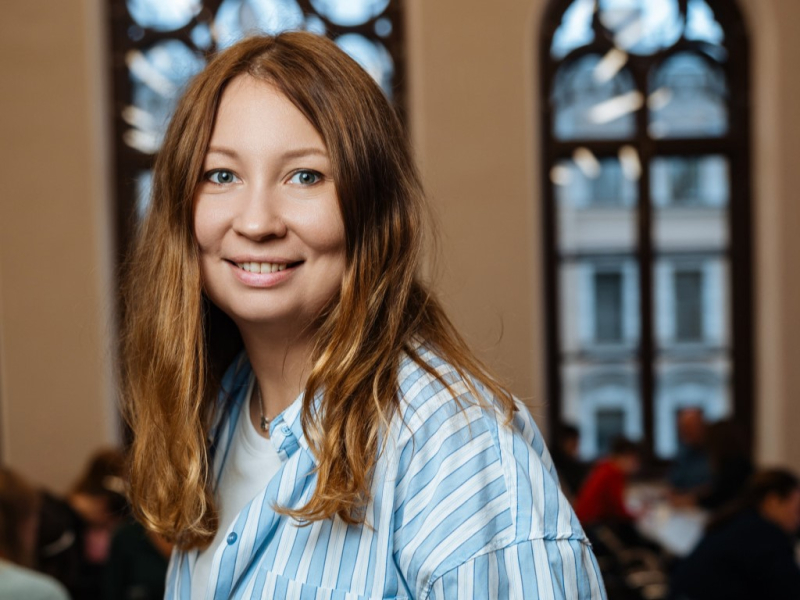
Maria Topunova. Photo by Shamil Troyanovsky
ITMO was in charge of the content and methodological aspects of the course. For many years, the university’s soft skills lecturers have been running management and communication courses for students and workshops for lecturers and managers, as well as developing online programs for industrial partners. The project was developed and curated by ITMO soft skills experts Yulia Romanenko, Evgenia Shestakova, Alena Bondar, and Anastasia Kuzminkova. Sberbank, in turn, provided their own LMS platform for lecturers to study theory and take tests.
The team faced a much greater challenge than merely conducting a series of soft skills classes. They need to teach lecturers to not only use tools for their own professional growth but also help them learn to pass those skills on to their own students. To achieve this, the course’s mentors had to show not only “what” to teach but also “how” to design classes that would help build those skills.
“The integration of soft skills should start during the design stage, rather than be a last-minute addition to a class plan. With this in mind, we divided our course into two equal parts: the first four sections focus on the methodology behind training adults and the design of the educational process, while the other four – on the development and integration of specific soft skills, such as time management, public speaking, empathetic communication, and conflict management,” adds Yulia Romanenko.
Overview
The course includes a total of eight modules that are delivered over the course of six weeks. The training takes place in a hybrid format: students access theoretical materials and tests via Sberbank’s platform and attend webinars with ITMO experts to practice the skills they learned. For participants from different time zones, three webinars were held at different times for each topic.
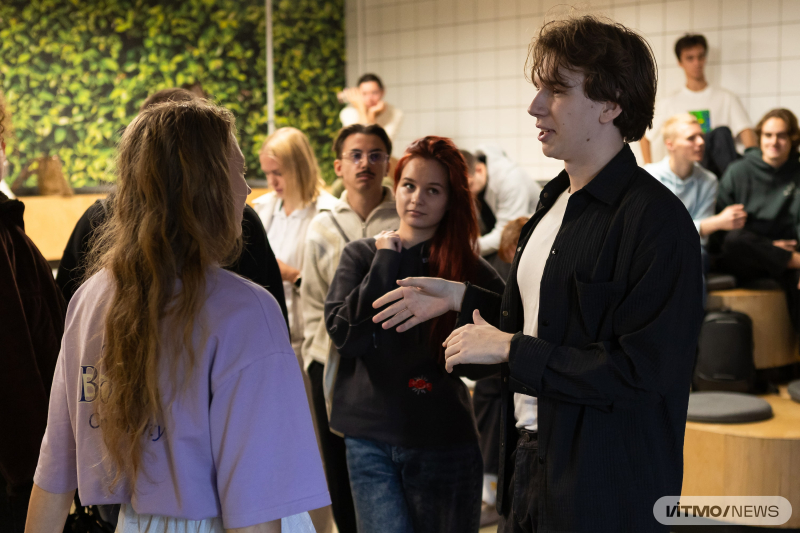
During practical classes, the curators asked lecturers to perform various assignments: for example, analyze a case study or practice a scenario. In the module on empathetic communication, the participants first studied how to use empathy in communication and then practiced using dialogue simulations based on complex situations designed by the coordinators. Whereas, during the conflict management class, they learned to analyze conflicts and mapped the experience onto situations from their own practice – the participants worked in mini-groups or pairs for greater efficiency.
“Thanks to this approach, each lecturer could immediately put new tools into practice and brainstorm ways to use them in their programs. Apart from practical experience, participants also receive a ready-made tool kit: handouts, checklists, guidelines, and longreads that they can use when preparing for their own classes or courses. For us, knowledge transfer was fundamental: we wanted lecturers to immediately put their knowledge into practice – at their universities and with their students,” notes Yulia Romanenko.
Credit: Dmitry Grigoryev / ITMO NEWS
Results and plans
Over the course of two years, more than 500 lecturers have completed the course. Most reviews are positive: 87% of people are satisfied with the curriculum, 89% – with the speakers, 90% – with the organization, and 88% – with the materials.
“Together with ITMO, we trained 512 university lecturers from all over Russia to develop soft skills in students. What matters to us is that the knowledge and tools they learned here will benefit thousands of students in various specializations. Many tend to think of soft skills as a mere addition to professional training, but it’s no longer true. You can be an outstanding specialist who is well-versed in contemporary tools, but if you don’t know how to listen to others, receive feedback, and negotiate in challenging situations, even the strongest team will fail to succeed to the fullest. Soft skills can’t be mastered through theory alone – they’re built by interacting with real people. That’s why our mission – the one we share with ITMO – is to help lecturers bring soft skills training into the classroom,” says Olga Tsukanova, the managing-director of Sberbank’s Academic Partnerships Directorate.
The team plans to make the training even more flexible. Since taking a full course requires some time, future iterations may include micro-modules that are geared towards specific skills: class design, feedback, empathetic communication, public speaking, or conflict management. This approach allows participants to choose the tools they need at the moment and instantly apply them.
“The ITMO team has already run various formats with major tech companies, and the one with Sberbank is what we called an individual project. This means that we created the course for an already-existing platform and adapted our methodology to meet our partner’s needs. We also have several joint programs with Alfa-Bank. For instance, the track called Modern Artificial Intelligence in Higher Education attracted over 170 participants from more than 60 universities and 34 cities, while another program, Product-Based Approach in Education, welcomed heads of educational programs from over 90 universities from 50+ regions. For school teachers, ITMO also has advanced training courses in different subjects, as well as AI, pedagogy, and soft skills,” shares Maria Topunova.