Startup Peru 12G is a business initiative contest organized by Peru’s Ministry of Production to support incubators, accelerators, and innovative startups targeted at regional and global markets. The contest is open to both aspiring and established entrepreneurs aged 18 and older, regardless of their citizenship.
This year, about 500 teams presented their projects online to the contest’s expert committees. The key requirements were that the initiatives presented needed to be innovative, scalable for national and international markets, and compliant with Peruvian laws.
One of the teams at Startup Peru 12G was Qui9, led by Anton Potsulin, an ITMO alumni and a lecturer at ITMO’s Faculty of Technological Management and Innovations, and Silvia Caceres Chalco, a graduate of the National University of the Altiplano in Peru.

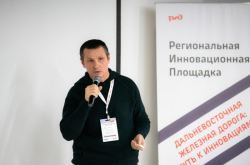
Anton Potsulin. Photo courtesy of the subject
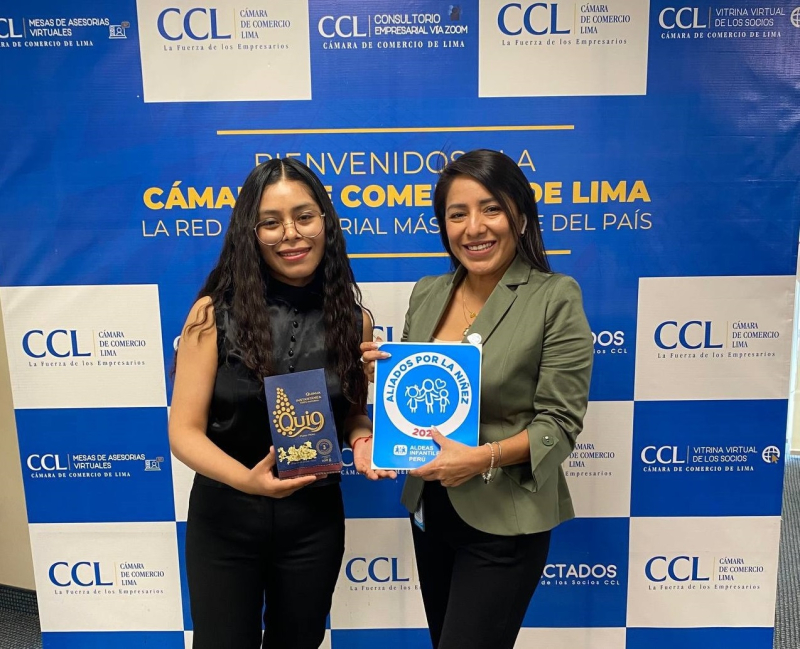
Silvia Caceres Chalco, a co-founder of Qui9, and Violeta García, the head of the fund Aliados por la Niñez. Photo by Silvia Caceres Chalco
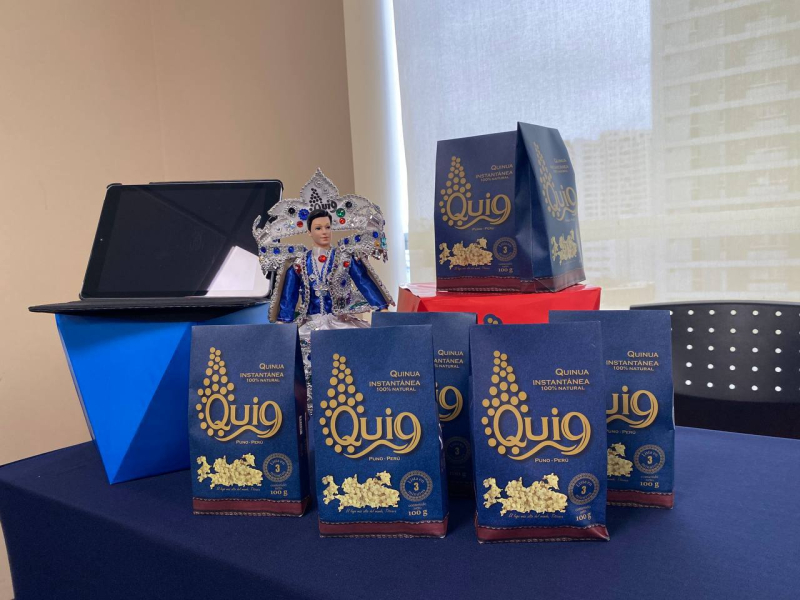
“I met Silvia at the Nexum PUCP accelerator, where I presented my own project. She’s an agroindustry expert, and she’s come up with the technology of instant quinoa – an extremely popular grain crop in Peru, rich in protein and iron. Quinoa typically takes from 15 to 18 minutes to cook, but Silvia found a way to cut down the time to just three minutes. Now, all you need to do is pour boiling water over instant quinoa, and that’s it. She had been pitching her idea at Startup Peru 12G since 2019, but she was falling short in the business aspect. The thing is, targeting the wrong audience could be a real bottleneck to sales and further scaling. I know that for a fact; at ITMO, I help students “package” their business ideas and I’ve also won several large grant competitions in Russia, for instance, the ones by the Foundation for Assistance to Small Innovative Enterprises, My Business, and the Federal Agency for Youth Affairs. So, we decided to join our forces to make the product greater business-wise,” says Anton Potsulin, a co-founder of Qui9.
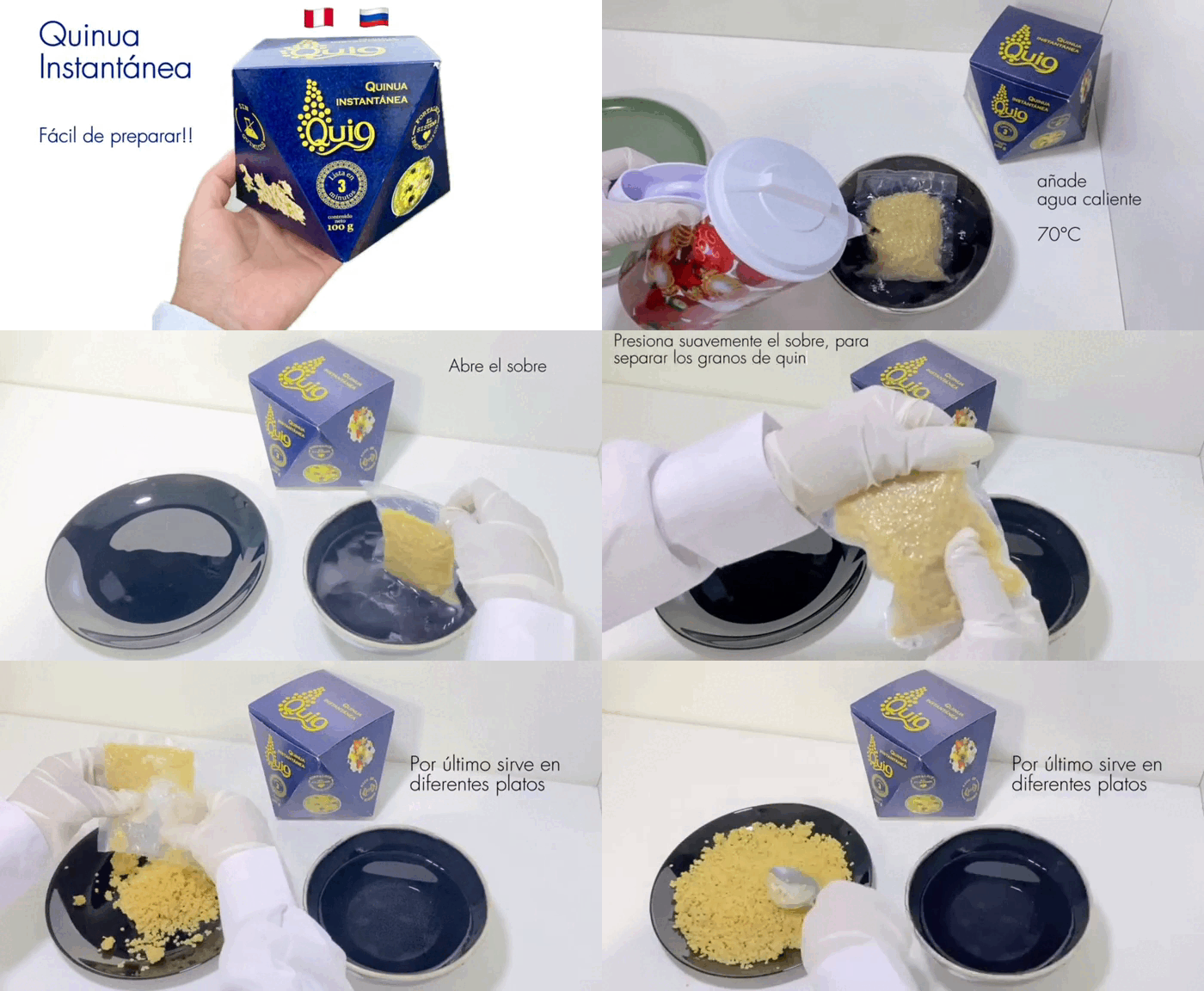
To cook quinoa, pour boiling water over it and wait for three minutes. Video by Silvia Caceres Chalco
The team worked on the startup for around four months. Over this time, Silvia ran several experiments to obtain a product safety certificate and prepare patent documents, while Anton finalized the business idea. In particular, he narrowed down the target audience to primarily athletes and people who prefer healthy foods, developed a chatbot with recipes, and prepared a business and financial model.
Working on an international startup was not easy, confesses Anton. Due to time differences, meetings took place at night, and at first the language barrier was also a difficulty, as Anton spoke no Spanish. The founders used a translator to communicate. Yet, with time, Anton took up some Spanish and was able to talk to the contest’s experts on his own. Another challenge for the team was studying Peru’s tax system and laws.
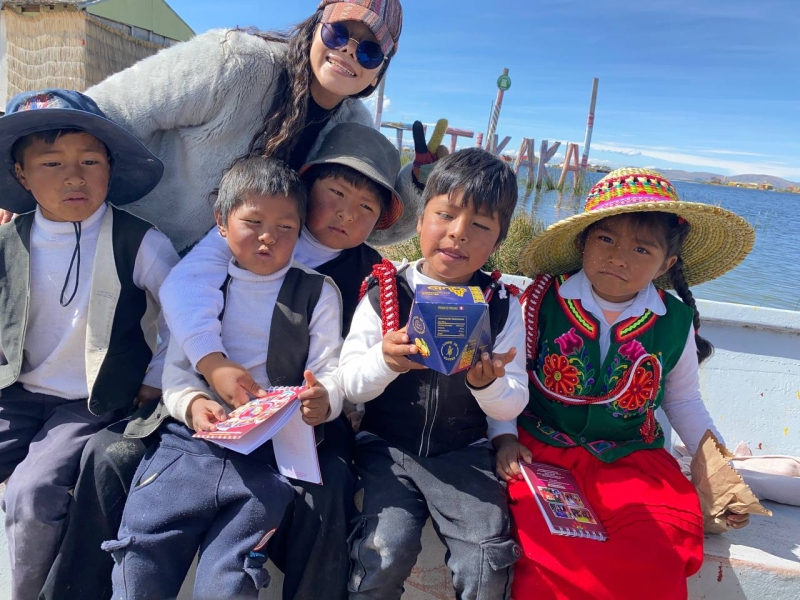
As per one of the contest’s requirements, grant holders in Peru were expected to invest some portion of the grant money in social initiatives. Anton’s team chose to host quinoa tastings for low-income families on the Uros Islands in Lake Titicaca.
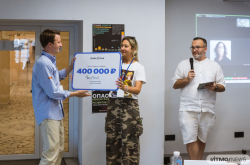
Qui9 became one of the winners of Startup Peru 12G and received a grant of up to $40,000 . Additionally, the teams were asked to select an accelerator that would help them find subcontractors, network, and attract investments. Such centers in Peru operate within universities and venture funds. The team chose Emprende UP for this role – an acceleration center at the Pacific National University (in the top 100 universities in Latin America and the Caribbean); the center will help the founders make their entry into the regional market.
As of now, Anton and Silvia are negotiating product supplies to two local healthy food stores and are actively promoting the brand in Peru; then, the teams will be aiming for the Brazilian market. In regard to marketing and design, the team relies on Giovanna Godo – a nutritionist who recently joined the team. In parallel, the developers are also working on a prototype of a quinoa iron-rich bar for the Russian market. The team’s business mentor is Andrey Anfinogenov, the dean of ITMO’s Faculty of Technological Management and Innovations.
“For me, the win at Startup Peru 12G is not so much my personal achievement, but that of the whole university. I showed what I am capable of, and the university gained recognition and strengthened its reputation as a business expertise center in Latin America. Thanks to the contest, ITMO and the Faculty of Technological Management and Innovations have started working with the best incubators and acceleration centers at Peru’s top universities – the University of Piura, the Continental University, the Pacific University, the National University of San Agustin, the Catholic University of Santa Maria, and the National University of the Altiplano. Together, we can hold joint events for students in both countries and make it easier for Russian entrepreneurs to enter the Latin American market,” notes Anton Potsulin.