The solution, which is based on software robots and AI, is currently being employed at the Youth Personnel Reserve. The model works in two stages. First, Gennady, the robot, collects applications from St. Petersburg’s recruitment portal and transfers them to a neural network. Then, the neural network called Vera assesses CVs against seven critical criteria, specifically if the candidate filled out the form correctly, lied on their CV, made spelling mistakes, or used obscene language.
Applications with unconfirmed job experience, errors, or inconsistencies are returned to candidates, while those that are filled in correctly automatically enter the reserve’s database. However, the final decision is made by an HR specialist, who will either reject the candidate or invite them for the next round of the selection.
The solution is supposed to speed up the recruitment process at the Youth Personnel Reserve, reduce selection errors, and free up specialists’ time for more complex tasks. Whereas a person takes 5-10 minutes to review a CV, the service can do the same in 45 seconds.
The algorithm will be under testing until September 2025. The Committee for Informatization and Communications is planning to expand the network’s services, for instance, by introducing an in-depth analysis of candidates’ letters of motivation and attached education documents.
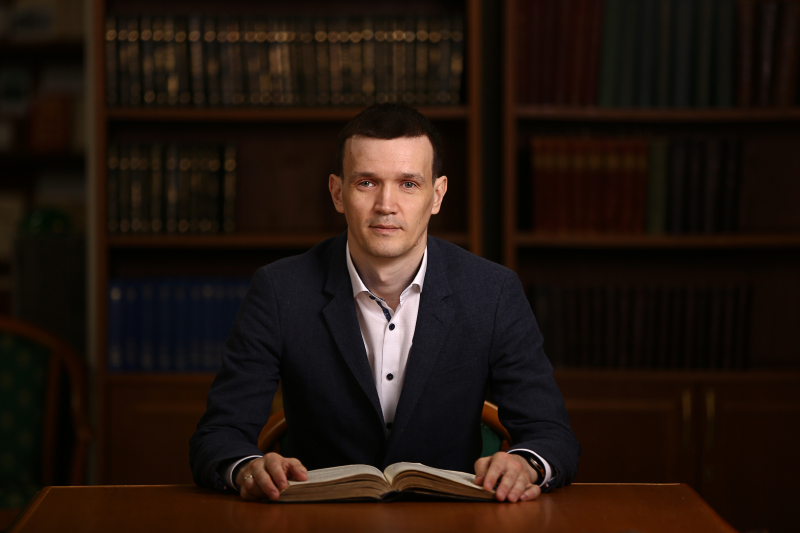
Dmitry Fedorov. Photo courtesy of the subject
“In the future, we’re going to employ this neural network to build a multi-agent system that can profile candidates, analyze their CVs and queries in natural language, as well as conduct personalized recruitment by chatting with applicants. Moreover, we want to tailor our system to the university’s needs so that it could search for thesis supervisors, select project topics and laboratories, and recruit students to LISA,” says Dmitry Fedorov, PhD in engineering, an associate professor at ITMO’s Faculty of Applied Informatics, and the head of ITMO’s Laboratory of Intelligent Services and Applications (LISA).