With the rapid changes in the job market, students are driven to learn to not only solve tasks within their job responsibilities but also tackle new challenges, especially in an AI-driven world. By doing that, they can future-proof their careers, even though neural networks are already taking over jobs – and will only continue to do so. Experts believe that in the next five to ten years, AI technologies will fully automate tasks associated with coding, big data processing, administrative matters (for instance, in law), finance, and databases.
For management positions, the situation is more complex, as these specialists are tasked with both performing routine tasks and generating creative solutions.

Credit: ITMO University
Mathematicians make great entrepreneurs?
Systems thinking is a critical ability for entrepreneurs, which allows them to analyze situations, assess risks and opportunities, and therefore make better decisions. One way to develop this type of thinking is by acquiring fundamental education in mathematics, physics, and other exact sciences.
By analyzing the backgrounds of 146 Russia's richest persons from the Forbes 2025 list, Forbes Education found that technical universities make up half of the top 10 universities by number of billionaire alumni. The most popular majors among these graduates include not only economics and management (32.2%) but also exact and engineering sciences: namely, physics (13%), materials technology (12.3%), electricity and heat engineering (11%), computer science and engineering (7.5%), mathematics and mechanics (6.8%), and electronics and radio engineering (5.5%).
Other studies focused on the relationship between degrees and careers. A report by Defiance Capital says that in the US and the UK, 49% of unicorn CEOs have STEM degrees (mathematics, engineering sciences, physics, biology, and chemistry). A similar trend was observed by the analytics company Tracxn; according to its data, nearly 63% of unicorns in India were founded by at least one IT graduate.

Photo by Dmitry Grigoryev / ITMO NEWS
Here is why it happens:
Math and business are alike. Business management is all about managing complex processes. Leaders often face new challenges and have to make decisions under uncertainty. There are no ready-made solutions – so, they have to make them up on the go. And that’s where exact sciences come into play: for one, mathematics teaches students to cope with chaos, uncertainty, abstractions, and complex systems, and physics – to find patterns in the real world.
Science helps improve cognitive flexibility. University students do not only gain applied skills – but also learn to learn, think, and apply these skills in unconventional situations. What makes tech majors stand out is that they are competent to build concept models from data and identity patterns in them – these skills are invaluable for business.
Systems thinking is vital not only for top leaders – but also anyone who wants to stay ahead in the era of AI. As computers excel at routine tasks, humans will be able to generate solutions for the tasks that go beyond machine capabilities or call for out-of-the-box thinking.
System thinking and AI
Researchers from Pakistan, Chile, South Korea, and Malaysia studied how AI affects education. In their study, they discovered that students now often disregard the need to verify AI-generated information and make their own decisions; the use of AI makes them experience more laziness and procrastination, not to say pose threats to data security and confidentiality.
In this case, traditional methods of assessment cease to work: written assignments and even theses can be generated by AI. There is a need for a new toolkit that will help evaluate reasoning skills in students without burdening teachers who have to deal with large amounts of information.
Consequently, classroom activities and face-to-face communication with teachers will come to the forefront since these formats allow students to communicate with an expert, ask their questions and not obtain quick answers from AI, but immerse themselves in a deep discussion.
For AI to be beneficial, it is vital to teach students to think critically and systematically, observe data hygiene, check resources, and treat neural networks as additional tools, rather than a source of information. Conscious use of these technologies can facilitate educational processes for all parties: for example, AI agents can be used to perform routine tasks and thus free time up for live communication, that can, among other things, develop students’ ability to think.

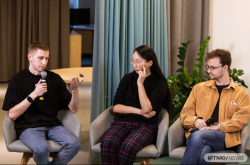
Photo by Dmitry Grigoryev / ITMO NEWS
The topic of AI and education was discussed at the 6th educational intensive “The Formula of Fundamentality in Education at ITMO” by Nadezhda Amrani, an entrepreneur and a lecturer at ITMO, Anton Boitsev, PhD in physics and mathematics and the deputy head of ITMO’s Institute of Applied Mathematics, Andrey Kudlis, PhD in physics and mathematics and a senior lecturer at ITMO’s Faculty of Physics, and Elena Moshurova, the head of the core educational module Entrepreneurship at ITMO.
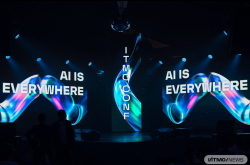
At the event, speakers talked about preserving the fundamentality of education in spite of AI integration, as well as promoting interdisciplinarity and individualized educational tracks. In 2025, the event featured 47 speakers, including Daria Kozlova, the Director for Strategic Development at ITMO, Alexander Mayatin, the executive director of ITMO’s Information Technologies and Programming Faculty, and Ekaterina Skorb, the director of ITMO’s School of Life Sciences.