The professional development program Managing Top-Level Educational Programs in AI: Role-Based Competency Approach was developed at ITMO as part of the Top AI project (within the project Data Economy and Digital Transformation of the State) of the Russian Ministry of Digital Development, Communications and Mass Media, with support from the Analytical Center of the Government of the Russian Federation.
The program’s main objective is to train heads of programs and lecturers who will, starting this year, teach students within educational programs focused on AI.
What makes the new program different is the ITMO-developed universal role-based competency model that can be used as a foundation for 12 models specialized for various fields. One such model includes a set of competencies, knowledge, and skills in AI that will facilitate the training of professionals in the field and evaluation of their work. For instance, one educational program can include two roles, an AI engineer and a data analysis specialist. Students in the program don’t have to choose one specialization, but are instructed in the intersecting competencies of both roles – to be able to work in interdisciplinary teams and complete various tasks: writing code today and managing a developer team tomorrow.
“The model developed at ITMO is a step away from the conventional approach with specializations and educational standards. We are talking about the competencies that top AI and IT specialists need in terms of market demands. New AI platforms and solutions appear every week, and we need to come up with approaches and educational programs that will adapt to the market and will be sought-after in 4-5 years. This places a great responsibility on heads of educational programs, so we won’t be able to do it without support from business and the academic community,” says ITMO Rector Vladimir Vasilyev.
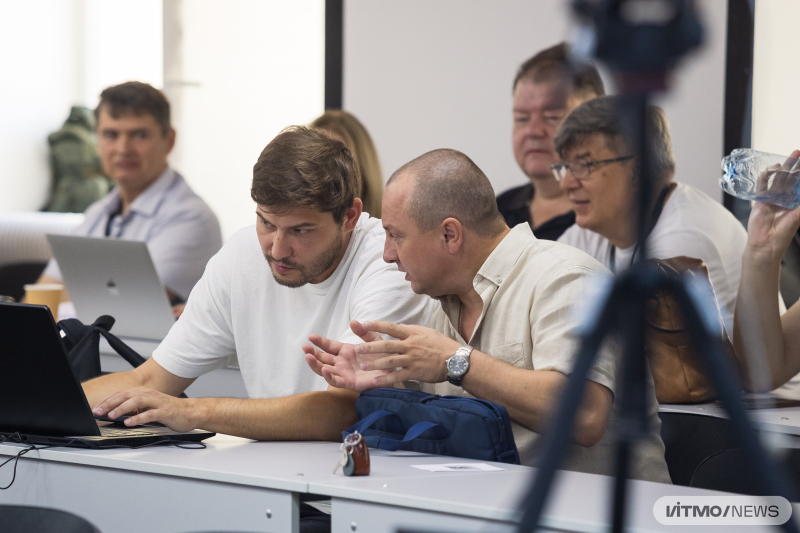
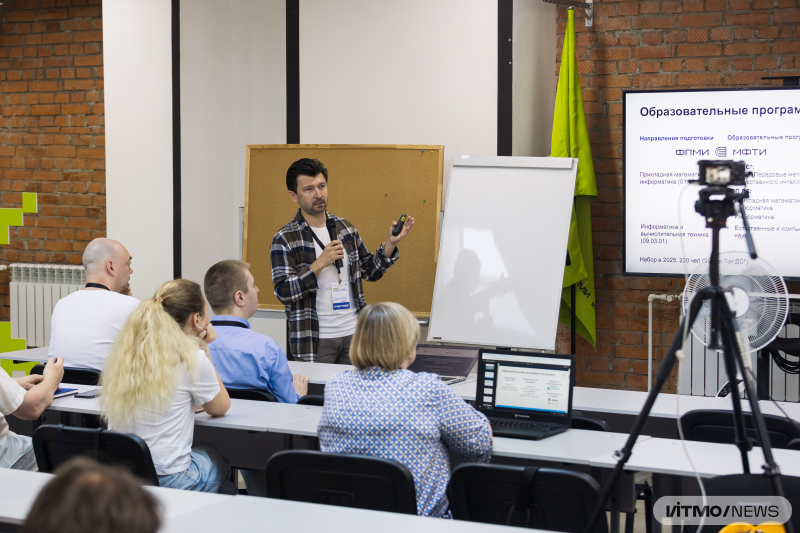
Professional development program in AI at ITMO. Photo by Drmitry Grigoryev / ITMO NEWS
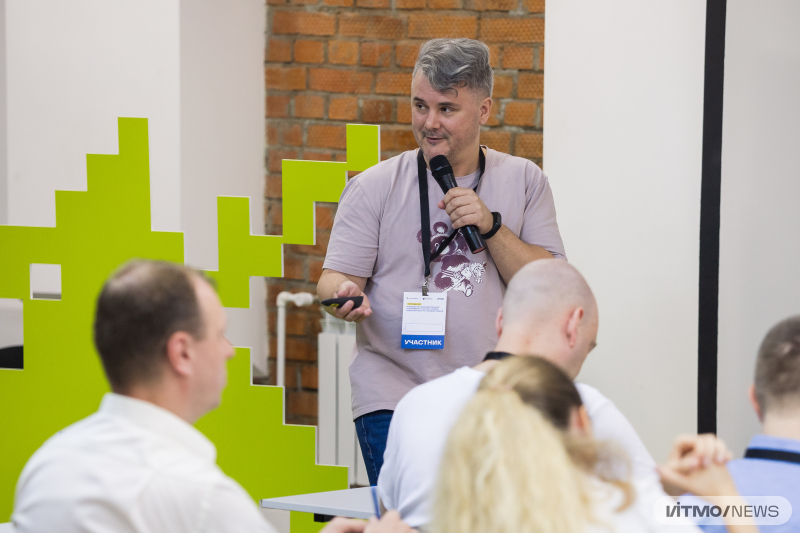
Professional development program in AI at ITMO. Photo by Drmitry Grigoryev / ITMO NEWS
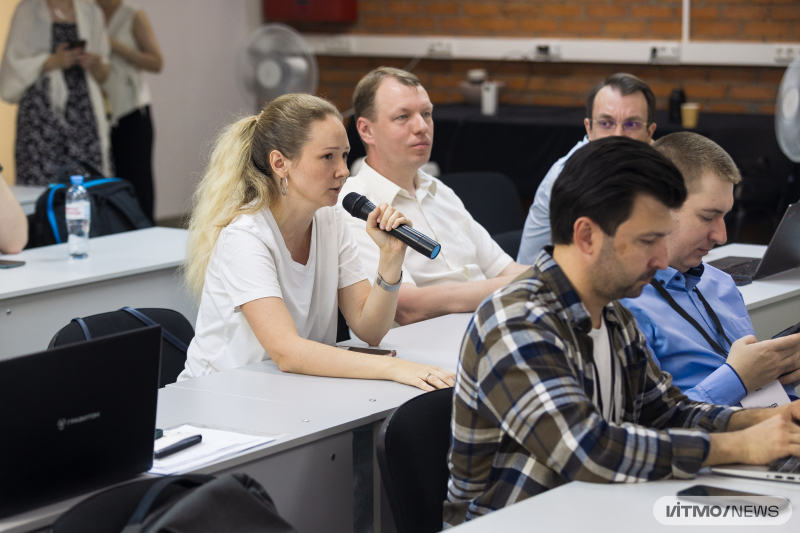
Professional development program in AI at ITMO. Photo by Drmitry Grigoryev / ITMO NEWS
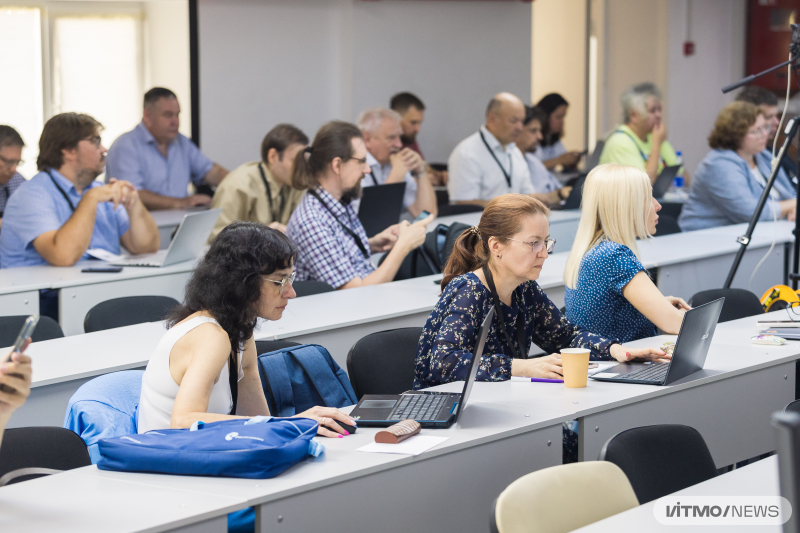
Professional development program in AI at ITMO. Photo by Drmitry Grigoryev / ITMO NEWS
300+ representatives of 22 universities from 13 Russian cities joined the program after passing the competition held by the Ministry of Digital Development, Communications and Mass Media. Among the participating universities were Higher School of Economics, St. Petersburg State University, Moscow Technical University of Communication and Informatics, Moscow Institute of Physics and Technology, Innopolis University, Southern Federal University, Novosibirsk University, Sevastopol State University, Vyatka State University, Volga State University of Technology, Kuban State University, and others.
“It’s not enough for universities to just adopt the role-based competency model in their educational programs if they want to train top specialists in AI. Such programs end up being quite comprehensive, and it would take new educational technologies and specialized computing infrastructure to fit them into the four-year-long Bachelor’s studies model. The key success factor, on the other hand, is training the educators. Heads of educational programs manage strategies and resources, while the lecturers are responsible for equipping students with knowledge. This two-tiered approach makes it possible to scale up training and reach thousands of students all over the country,” shares Alexander Boukhanovsky, the head of ITMO’s School of Translational Information Technologies and the Institute of Artificial Intelligence.
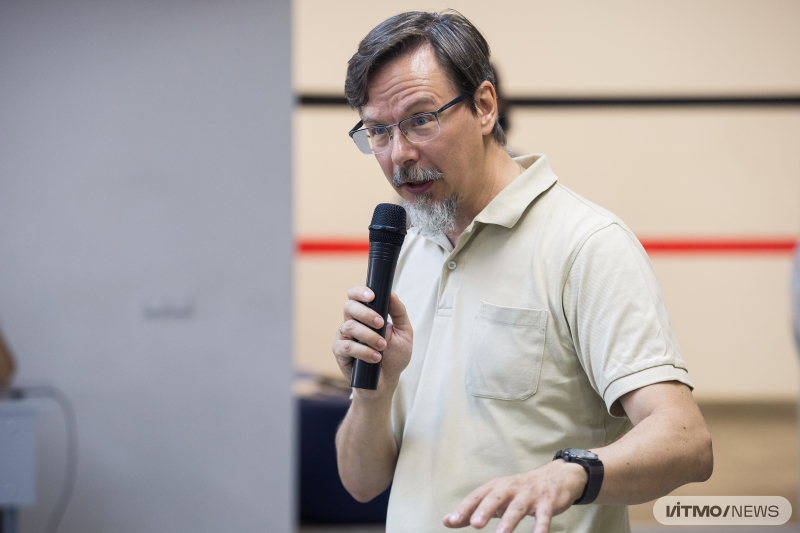
Alexander Boukhanovsky. Photo by Drmitry Grigoryev / ITMO NEWS
Within the course, heads of educational programs and lecturers learned about creating programs and courses tailored to the tasks of industrial clients, attracting funding from state and business, managing the workflow of corporate and research laboratories, supporting students in their work on hackathons, startups, publications, and open-source solutions; the participants also got to learn about the intricacies of providing training in modern AI and LLMs.
“By creating open-source solutions, students get an opportunity to boost their skills, get involved in A* conferences from their first year, and acquire experience of working on portfolio-worthy projects. For universities, developing open-source projects is a way to train top-grade professionals who make replicable scientific studies and contribute to the country’s technological sovereignty. For instance, ITMO has developed more than 30 AI frameworks and libraries that are used by both Russian and international companies, including NVIDIA, Uber, Google, JetBrains, and others,” adds Nikolay Nikitin, the head of the scientific and technological development group of ITMO’s Research Center “Strong AI in Industry.”
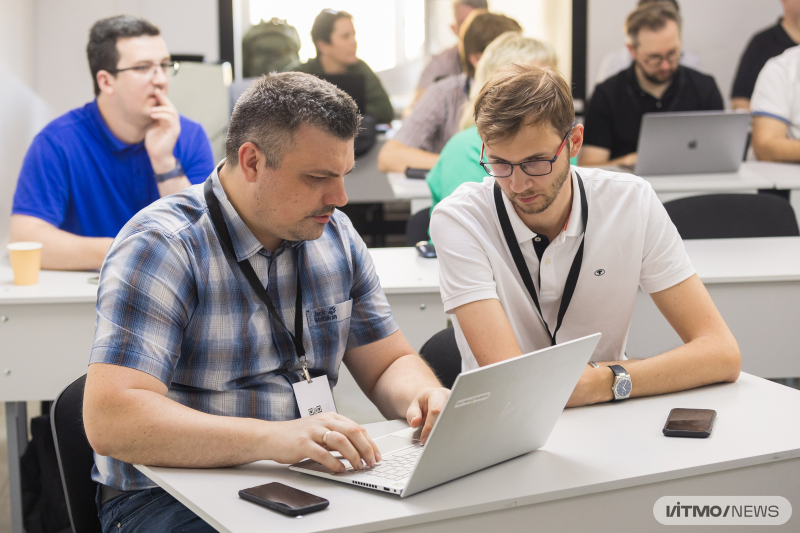
Professional development program in AI at ITMO. Photo by Drmitry Grigoryev / ITMO NEWS
The participants will use the knowledge gained at ITMO to develop educational programs that will train top AI experts. At the end of the course, the educators presented educational programs, curricula, and the list of competencies according to the role-based competency model – all of which they are planning to implement at their universities.
“I believe that the main benefit of such large-scale educational events is an opportunity to exchange experience with colleagues from different universities and the course’s lecturers and workshop hosts – experts from ITMO and various AI development companies. First of all, we could “touch base” with frontier AI researchers. Moreover, it was beneficial to discuss the current state of AI technologies during a short in-person session. Several of the overview presentations we heard would definitely be useful both for students in top AI programs and lecturers of the Center for Digital Research and Educational Programs and Developments of Volga State University of Technology,” shares Alla Kravets, a participant of the program and the head of the educational program AI in Gaming and XR App Development at Volga State University of Technology.
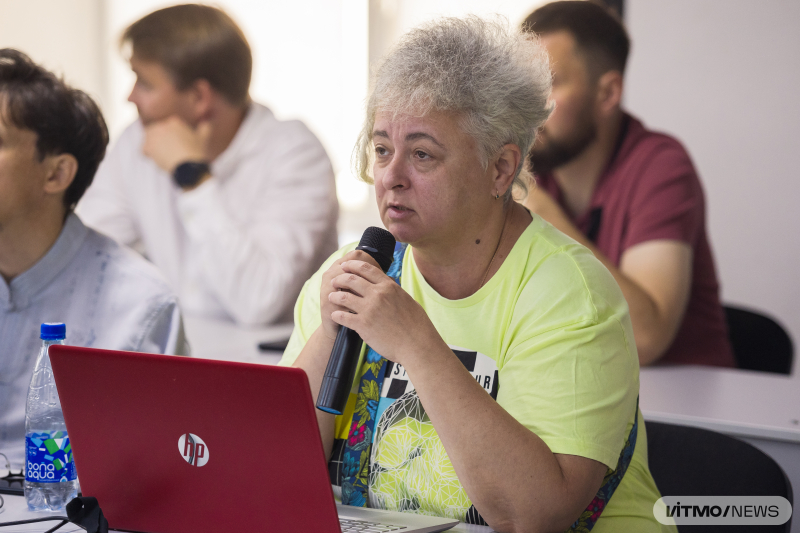
Alla Kravets. Photo by Drmitry Grigoryev / ITMO NEWS
The program lasted a month and included both online and offline events, including lectures by ITMO experts and representatives of major Russian IT and AI companies – Sberbank’s Research and Development Center in St. Petersburg, Gazprom Neft, Yandex Cloud, RUSAL, Cloud Technologies, and Speech Technology Center.