Scientific St. Petersburg is an experimental platform for promoting science and technology. The products and events developed by its science communication specialists will be of interest to any audience, from school students to experts and from museum curators to scientists.
This season, the project’s team will be joined by partners from all around the country. Among them will be the Russian Geographical Society, Tretyakov Gallery, the Ecopatrol movement, Kamchatka State University, Lenfilm, as well as St. Petersburg’s leading research institutions and hospitals. For the second year in a row, the project received support from the Russian Ministry of Science and Higher Education as part of a contest of popular science projects.
Open lectures, discussions and meetings with scientists will take place at various venues within the project. ITMO will launch a multimedia space for educational events and live streams, as well as virtual tours of the city’s key scientific sites, including a VR tour developed in collaboration with the Lenfilm film studio.
This year, the project will place a special focus on citizen science by implementing initiatives where St. Petersburg citizens will be able to participate as volunteer researchers. One of such projects will be Chestnut Compass – a countrywide program for monitoring the condition of chestnuts in urban environments implemented in partnership with the Russian Geographical Society and the Ecopatrol movement.
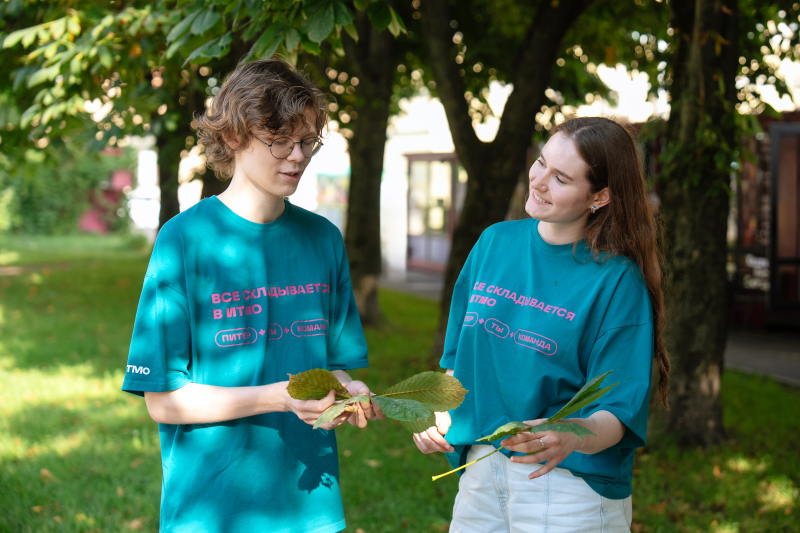
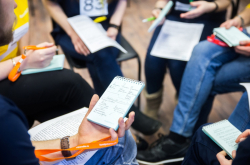
Volunteers taking pictures of chestnut leaves as part of the project. Photo by Nikita Seliverstov
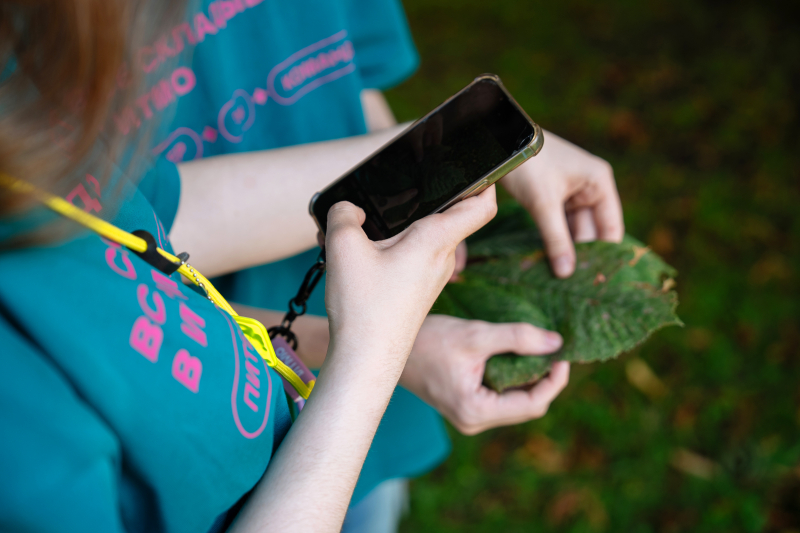
Volunteers taking pictures of chestnut leaves as part of the project. Photo by Nikita Seliverstov
The previous season’s initiative “Masterpieces as Seen by Scientists” that aims to integrate art and science will continue in this season, as well. Initiated by the Russian Museum and ITMO’s Center for Science Communication, the project now operates beyond St. Petersburg and offers a new perspective on museum collections via public lectures, interdisciplinary tours, and educational sessions for professionals in the country’s regions. The School of Scientific Souvenirs is also coming back: this is a track where artists, researchers and designers collaborate on creating the visual image of science in everyday life.
In the fall, ITMO University will host a major AI crash course for science communication and PR specialists and science journalists. The course will focus on the best practices of using generative AI for creating popular science content, visualization, and working with the audience. The program is aimed at both beginners and experienced specialists and will become one of the key events of the project.
“We deliberately focus on experimental formats: first of all, as communication specialists, we need to involve new audiences. What’s more, we aim to achieve concrete results and metrics from each initiative: from a line of souvenirs to creative strategies, new routes for popular science tourism, or scenarios for interacting with citizens. We plan not just single events but methodologically proven approaches to popularization of science and technology, as well as place a focus on the impact of science on society,” comments Daria Denisova, the head of the project and head of ITMO’s Center for Science Communication.
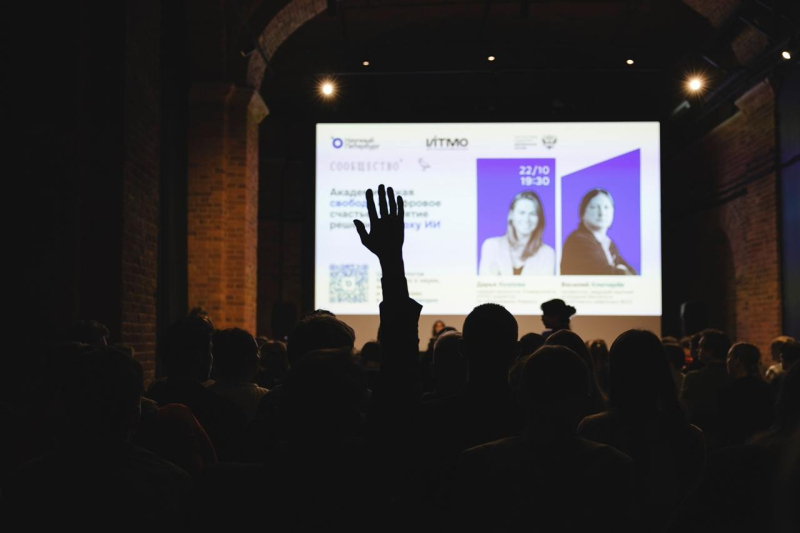
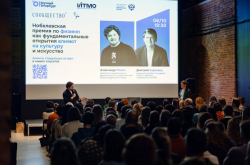
Noble Talks lectures in 2024. Photo by Maria Ezhova
Scientific St. Petersburg’s public program already launched at ITMO Family Day. Among the speakers for the project’s lectures were Vasily Klucharev, a neurobiologist; Andrey Sebrant, Yandex’s director for strategic development; Evgeniya Sokolova, the head of Public Health Sciences Master's program; Maria Pazi, a science journalist; Yuri Rykov, a research associate at ITMO and lead data scientist at OKKO, as well as other experts, including representatives of companies, science journalists, HR experts, scientists, and representatives of industry. Among the topics discussed were humor in science, health research, the AI revolution, and contemporary education.
“Scientific St. Petersburg helps us talk about scientists and science as an important part of urban life. It is for this reason that we launch initiatives that will be interesting to various audiences. For example, we are now making an aggregator for popular science events on our website, and in every project that we do – from a lecture event to a VR tour, we think: who might need it, how would they get there, and why they would stay,” underlines Yulia Volzhina, the project’s executive manager.
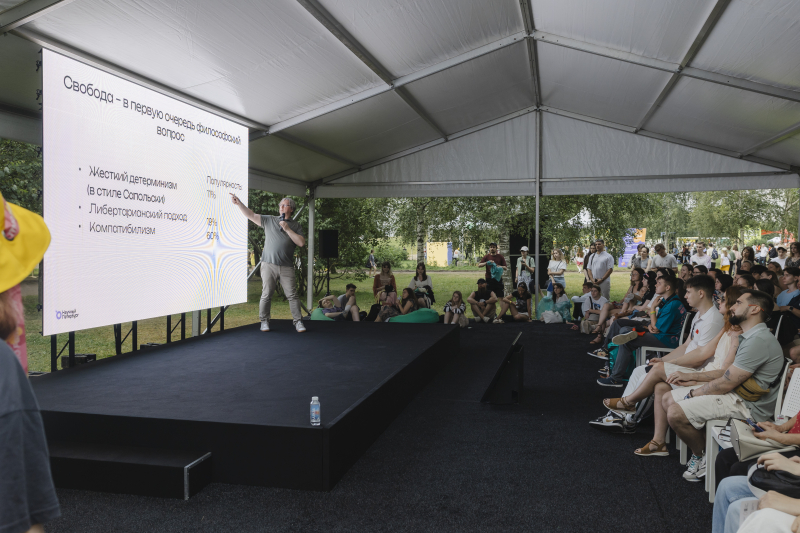
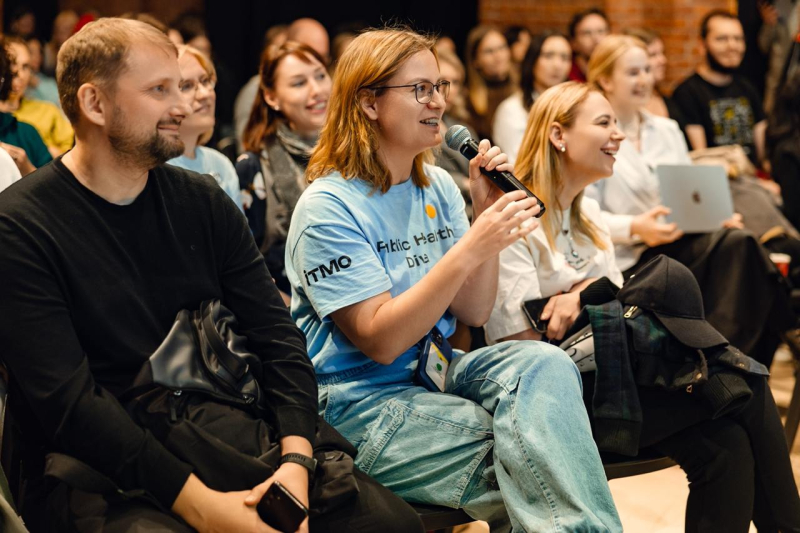
Vasilii Klyucharev's lecture at ITMO Family Day. Photo by Maria Ezhova
All in all, over 35 experts from universities, science-intensive businesses, and the Academy of Sciences are involved in the project. Its authors expect over 400,000 people from ten of the country’sregions to participate in the Scientific St. Petersburg’s new season.
You can read more about the project on its website (in Russian). The project’s first schedule will be published in early September and will be updated regularly.