It will be hard, but you’ll like it
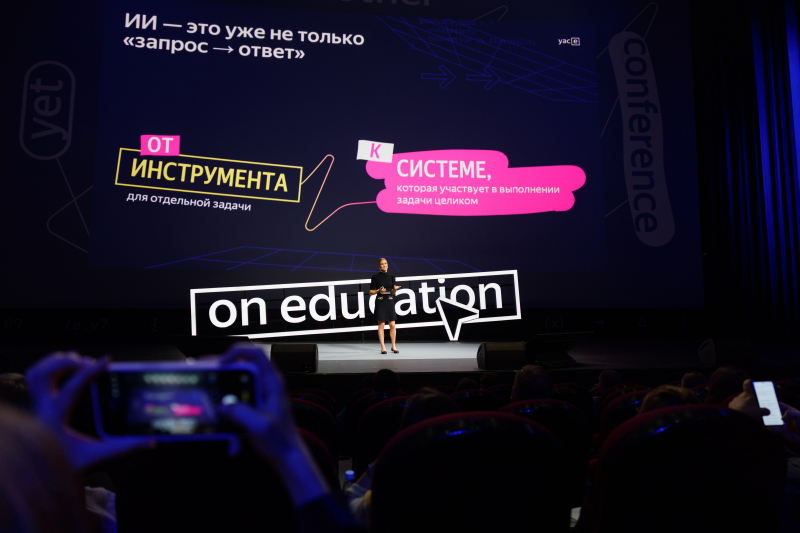
The conference was opened by Daria Kozlova, the director for education at Yandex and the Director for Strategic Development at ITMO. According to Dr. Kozlova, in just three years the role of AI in the educational process has changed several times – from a tool for automating simple tasks to a full-fledged thinking partner. Now, AI and humans work in tandem, but it’s the next generation of researchers and developers who will determine how the roles will be divided in the future and how AI will be developing. That’s why it’s important to boost AI-native teaching and update educational programs and trajectories.
“For quality AI development, we need to train complex system architects. This training isn’t about quick skills or knowledge. Here, the focus shifts towards fundamental training, as well as mathematical, physical, and natural sciences-oriented thinking. It’s important to teach students to ask questions and set tasks, not work with ready-made solutions,” said Daria Kozlova.
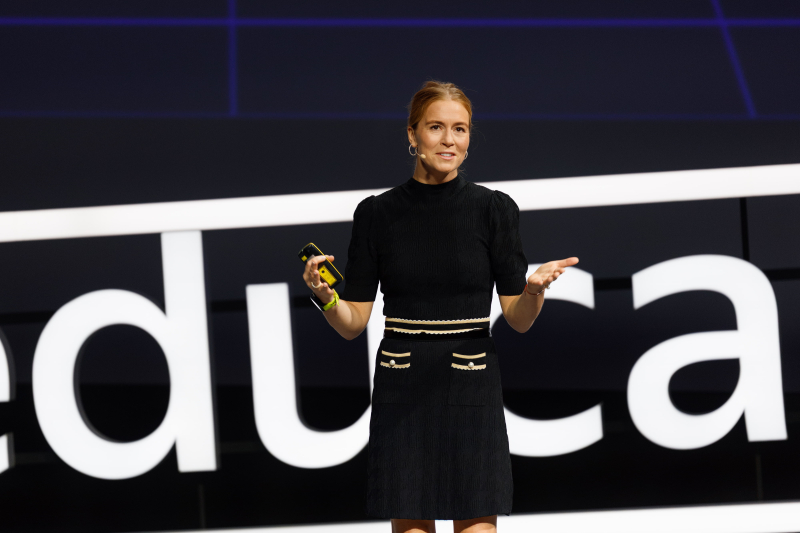
Daria Kozlova. Credit: Yandex
In these changing conditions, experts are already noticing something of a “radical change in the educational triangle”: tools and applied skills remain an important component, but the foundation expands and helps students move forward. New technologies appear all the time and with them – the need to constantly acquire new applied competencies for specific tasks, but it’s the foundational knowledge that helps us navigate the rapidly changing world. That’s why, surprisingly, students don’t rush to delegate their studies to AI, instead knowingly taking on complex subjects:
“19 years ago, when Yandex’s Data Analysis School launched, I believe it had a very accurate motto: ‘It’s gonna be hard, you’ll love it.’ It’s wonderful how well these words describe the way education needs to be now, in partnership with AI.”
In these conditions, higher education, especially fundamental university education, becomes particularly relevant, which was the topic of the discussion AI in Education: Doubts and Evidence. According to ITMO Rector Vladimir Vasilyev, university education right now is primarily about teaching students to think, not just endowing them with skills. Today, some people who interact with advanced LLMs aren't just using AI for reference, but starting to adopt its way of thinking and problem-solving, losing their professional capabilities in the process. The solution has to be found by students and lecturers.
“Education in the age of AI is a collaboration between three actors: students, lecturers, and AI. If this condition is met, everything is alright. But this only works if the lecturer is willing to grow – not just fully reject or accept AI, but constantly look for weak points and new solutions in this collaboration. It’s necessary to always analyze the educational process and environment. In answers to these questions lies growth of students, AI, and lecturers,” added Vladimir Vasilyev.

Vladimir Vasilyev. Credit: Yandex
AI is a great way to highlight knowledge – and the lack of it
Sergey Kolyubin, a professor at ITMO’s Faculty of Control Systems and Robotics and head of the Laboratory “Embodied AI and Robotics,” talked about how AI is already changing educational approaches. This year, he received the prestigious Yandex ML Prize for transforming a classic robotics Master’s program into one focused on physical AI, now called Robotics and Artificial Intelligence.
The curriculum covers the fundamentals of ML in robotics and robot programming and includes an immersive task-focused course on the practices of embodied AI; other courses in the program are regularly updated to account for technological advances. However, that’s not all that’s changed – the approach to education transformed as well.
“Recently, the test assignments that we offer students willing to work at the lab have changed, too. Whereas earlier it was something like ‘Make this baseline, run your solution and test it, make conclusions, and offer an interpretation,’ now our tasks are more like ‘Formulate the problem and hypothesis, think about your solution to the problem, and offer an explanation as to why this problem has practical and scientific value.’ Students can use any AI tools to complete the task, but they will have to present their results in person. And believe me, AI is a great lens that highlights both a student’s knowledge and the gaps in it. It’s difficult to mask something you don’t know by using AI if you get very specific questions,” shared Dr. Kolyubin.
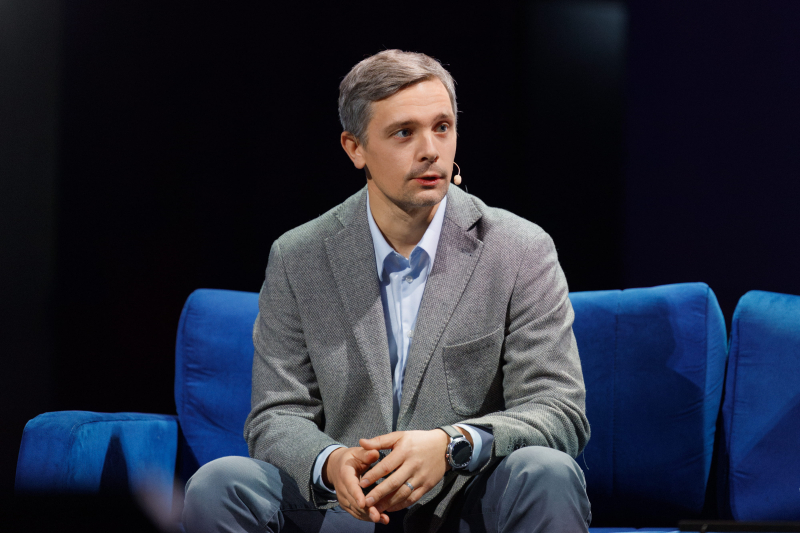
Sergey Kolyubin. Credit: Yandex
AI made interesting things more interesting
Students, too, don’t rush to delegate their thinking to AI. At one of the discussions, former winners and runners-up of national school student competitions and current students of the country’s top universities (ITMO, HSE University, and MIPT) shared why it’s important to study even though you can always turn to AI.
According to Ioann Kakhniashvili, a student of the AI360 Bachelor's program at ITMO, who is already a developer at Yandex, the main thing that determines a student’s motivation to study is their personal interest in a particular subject. AI has made interesting subjects even more interesting, offering students more opportunities to dive into more complex topics. As for uninteresting subjects, there are still plenty of options to cheat – and AI hasn’t made much change in this regard.
Another factor is human feedback that AI just cannot offer.
“In our first year of studies, we had several courses where I wrote a ton of code, submitted this ginormous homework, and received absolutely crushing feedback. This fired up my interest and enthusiasm. I didn’t feel the same for courses where answers were checked automatically. You just don’t see whether you did something good or not: if it works, then it’s fine. There is no human connection and this brings down motivation – that’s when you are forced to turn to AI for answers,” shared Ioann Kakhniashvili.
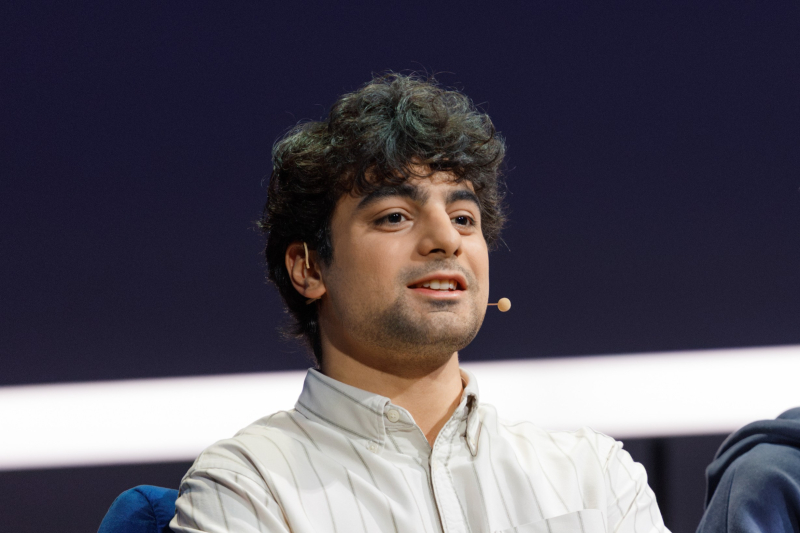
Ioann Kakhniashvili. Credit: Yandex
No one has learned to replace live communication
Personal connection is especially important at an early age, when children only start to show an interest in a subject or get their first achievements. This was discussed at a pedagogical “coworking” session by Andrey Stankevich, the Dean of ITMO’s Computer Technologies and Programming Faculty and head of the methodological committee of the national school student competition in computer science; Marina Pankova, a computer science teacher at Letovo school, a guest lecturer at HSE University, and the head of the Computer Science.Regions program of the Sirius educational center; and Dmitry Aterley, a therapist.
According to Andrey Stankevich, who over the years has trained several generations of world programming champions, the competition community had to move online during COVID-19, but now the situation is changing again. In-person communication at computer schools and camps helps talented students maintain motivation.
“The contest movement thrives on a sense of community, especially in later years, when school students find it hard to establish connections with their classmates, who have completely different interests. These days, such communities move online, which I see as a disadvantage. This started in 2020. At our camps and student clubs, we do our best to bring the community back offline because no one has yet learned how to replace in-person communication,” said Dr. Stankevich.
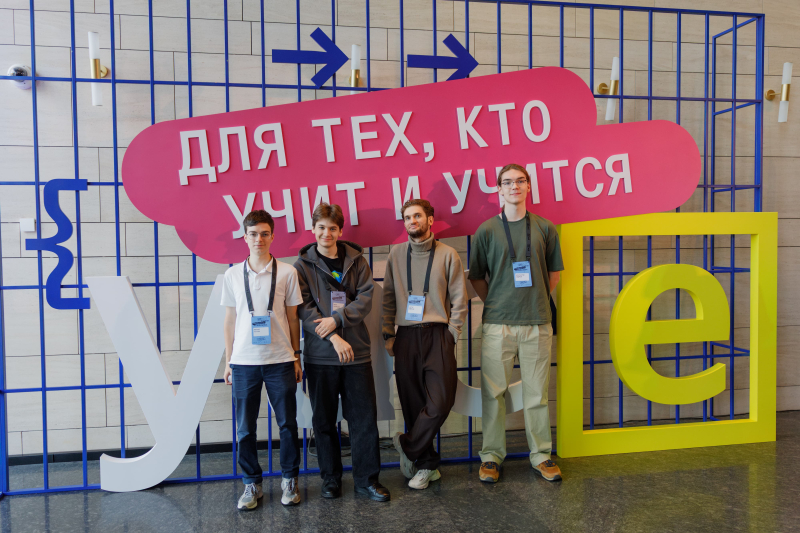
YaC/e Conference. Credit: Yandex
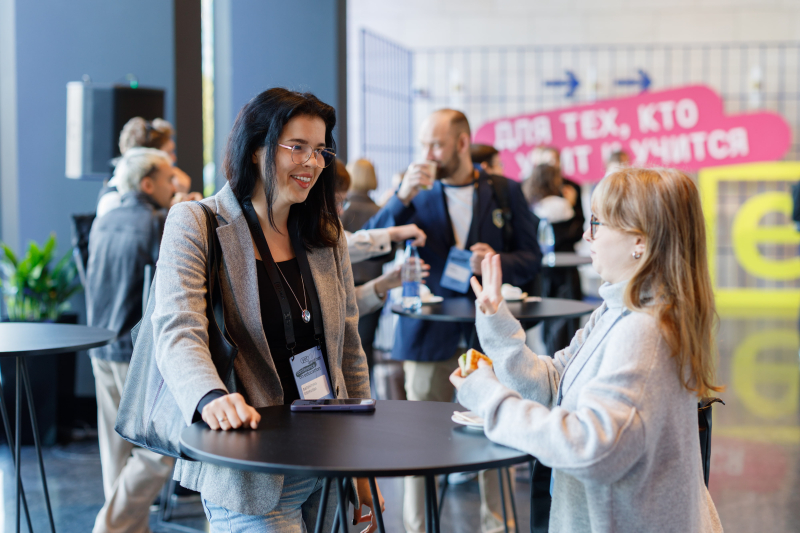
YaC/e Conference. Credit: Yandex
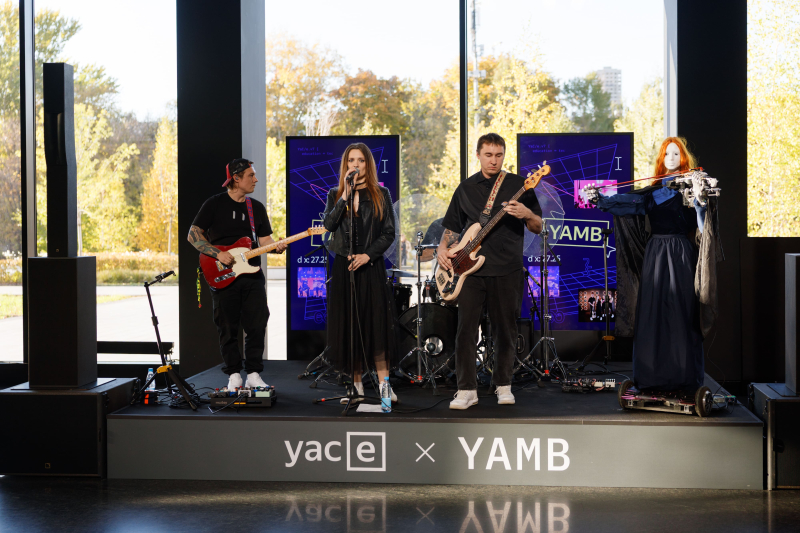
YaC/e Conference. Credit: Yandex
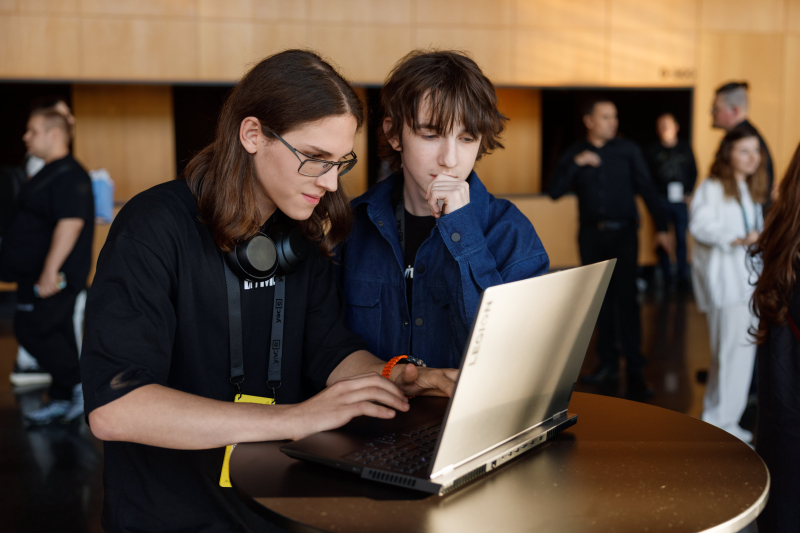
YaC/e Conference. Credit: Yandex
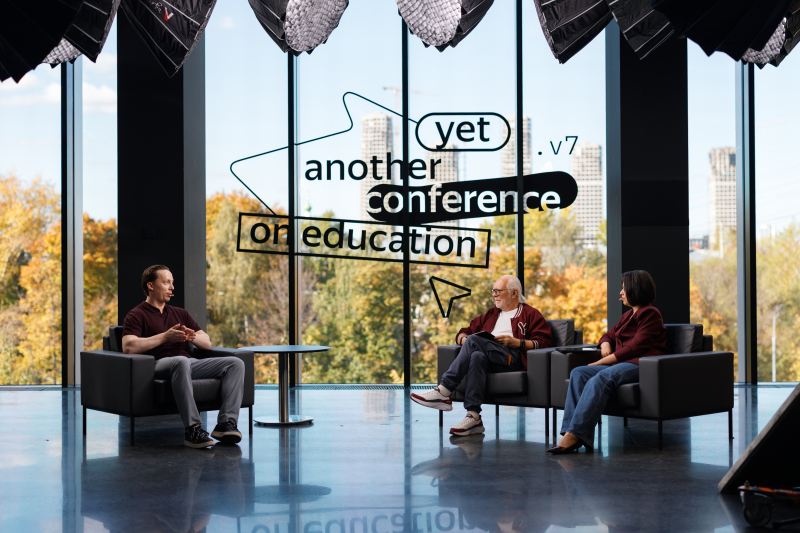
YaC/e Conference. Credit: Yandex

YaC/e Conference. Credit: Yandex
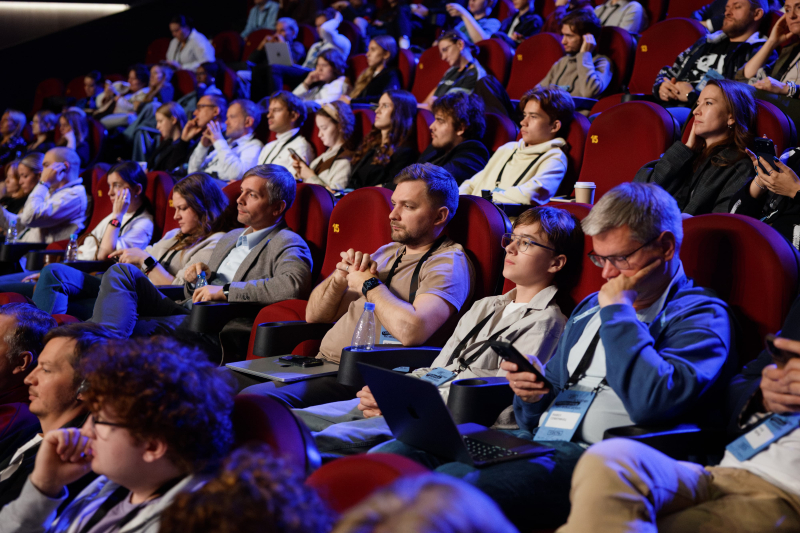
YaC/e Conference. Credit: Yandex
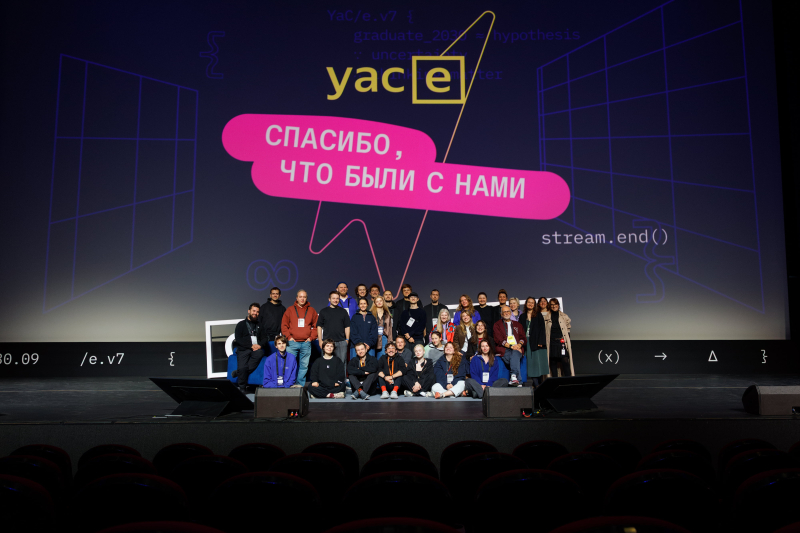
YaC/e Conference. Credit: Yandex
YaC/e (Yet another Conference on Education) is an annual conference held by Yandex and focused on people, technologies, and new trends in education. This was the seventh iteration of the conference. The format isn’t like a typical public talk-oriented conference; instead, experts in various formats discuss the changes they see now – from digital education to AI application at universities.
ITMO experts often join the conference. For instance, this year one of the speakers was Polina Kolozaridi, the head of the Digital Humanities educational program, while Andrey Pribavkin, an ITMO student and backend intern at Yandex Cloud, moderated a discussion. Igor Lositsky, the head of ITMO’s Youth Robotics Laboratory, and his students presented the lab’s main developments, including EMMA, a humanoid robot that can play the violin. Moreover, ITMO students presented their projects at a poster session.