
What is flow state
This wonderful capacity of the human mind was first noticed and described by the Hungarian-American psychologist Mihály Csíkszentmihályi in the 1970-1980s, when he observed artists so deeply engrossed in their work that they disregarded their own need for food and sleep. The name for the concept came about because many of the people alluded to water metaphors when describing their state – they were carried by the flow.
Having studied the phenomenon further, Csíkszentmihályi and his colleagues were able to determine that it is most likely to be produced at the intersection of considerable skill level and a considerable challenge of the task at hand. If the task isn’t challenging enough and your skills are high, you will get bored; if it’s too challenging and you are not proficient at it, you will get anxious. So, it’s a delicate balance, but one that can ultimately be achieved by anyone performing any task – apart from artists, studies have included athletes, students, gamers, and more.
Among the key components of the state are a high level of concentration, a loss of self-consciousness, a distorted sense of time, a sense of control over the activity, and effortlessness of action. You’ve probably already thought of some activity that helps you get into this pleasurable state; however, one common example might be reading.
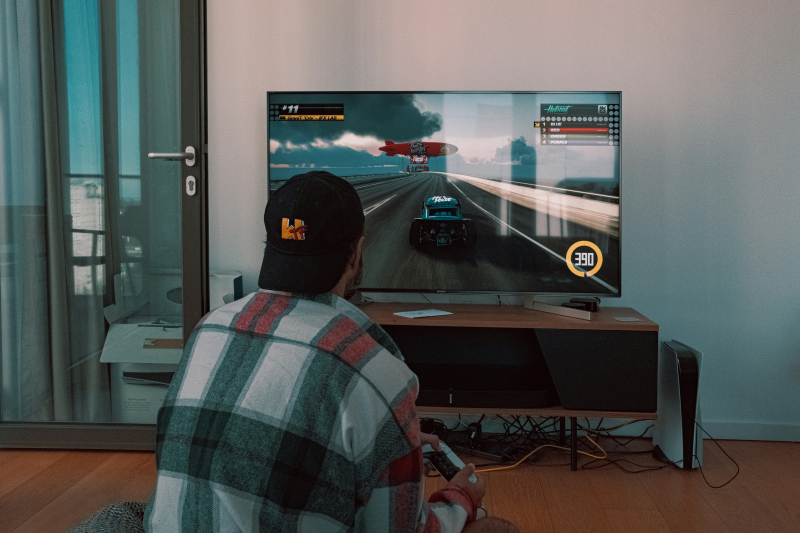
Photo by Samuel Regan-Asante on Unsplash
How we study flow
As you may guess, studying this state is quite a challenging task: if a person is supposed to be highly absorbed by the activity they are performing, you can hardly objectively measure it by asking questions in the middle of it. And yet, at first this was the primary approach used by researchers: in-depth interviews and questionnaires.
These days, of course, researchers have access to various brain activity visualization techniques, including EEG, functional MRI, and functional near-infrared spectroscopy (fNIRS). However, the challenge here lies in the fact that flow is a multifaceted concept: it involves attention, memory, cognitive control, as well as task-related activation (like motor areas for athletes) – so, what exactly do you count as a measure of flow? This variation is mirrored in the studies that attempt to measure and locate the illusive flow within the brain. One of the existing theories posits that flow is facilitated by an inhibition of executive function in the frontal cortices, while authors of another theory point out that the frontal areas are highly active in the flow-like state of meditation and suggest instead that the state is a result of more efficient synchronization between specific networks in the brain.
In the coming years, we will no doubt see even more research conducted in the field, as it grows relevant in this quasi-attention crisis we are experiencing today: it’s highly unlikely to reach a flow state in an environment permeated by distractions.
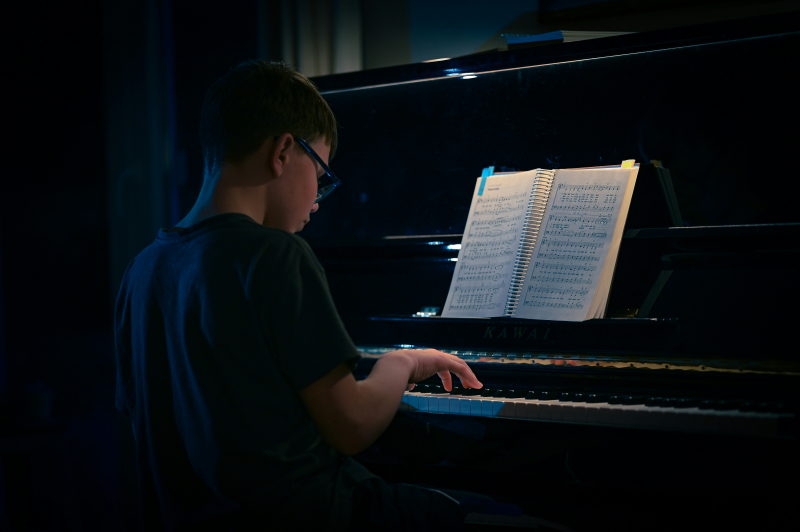
Photo by Kiwihug on Unsplash
How to find your flow
In his book Stolen Focus, Johann Hari explores the many factors that make it hard for us to pay attention. Flow is among the many concepts covered in the book and, as Hari and the experts he interviews believe, one great way to help us regain some control over our attention span. So, how do you practice flow?
- You need to find an activity that you enjoy, where you are reasonably skilled, but which still presents a challenge. It can be reading, sports, or any kind of hobby (yes, even gaming). It could also be a work task – studies show that for some, flow is easier achievable during work than recreation!
- It should be a task where you get clear feedback and can adjust your performance (gaming is easiest here, but you can decide your measure of success or failure in any task and adjust accordingly).
- It’s also important that you set a clear goal: what is it that you are trying to achieve?
- Create a space free of distractions: consider putting your phone into Focus Mode or simply turning on Do Not Disturb.
- Now go and do it!
You may not find your flow on your first try, but that’s no reason to give up. Experiencing flow can have a great positive impact on both your performance and your mental health, so it can be good to find ways to practice it regularly – even during different activities.
If you’d like to read more on the subject, you can explore the references in this flow research review, this paper on the challenge-skill balance, and the wonderful book Stolen Focus, as well as separate studies linked throughout the article.
For more brain research, check out the Research of the Month tag on ITMO.NEWS.