Among scholars of cinema and pop-culture, opinions diverge on what constitutes “eco-horror.” Some prefer a narrower set of criteria, limiting the genre to stories with explicit environmental themes – think pollution, climate change, and so on. Others cast a wider net, arguing that eco-horror often “crosses over” with other genres – from sci-fi to monster flicks. Today, we’ll be using the latter definition to show off the full breadth of what eco-horror has to offer.
Expert opinion
For a scientific insight into the genre, we’ve reached out to Irina Timofeeva – an ecologist, biodiversity expert, and senior lecturer at ITMO’s Faculty of Ecotechnologies:
– Eco-horror takes our environmental anxieties and elevates them to the extreme. Does that actually help increase awareness of those issues? Or does it make them feel less “real”?
– I doubt any director can outdo nature in its inventiveness. Scary as it may be, Alien is just about the daily lives of parasitic insects. I like seeing environmental themes in fiction – even if it’s not done well. And even the most outlandish takes can still sow seeds of future solutions rather than heighten our eco-anxiety.
– So, what does the emergence of eco-horror signify? And how do environmental themes manifest in other genres of pop culture?
– I think it shows us that environmental concerns are growing more relevant. Perhaps some directors are so aware of these issues that they end up infusing their films with a part of their worldview. I’m seeing a lot of ecofiction in movies today, including investigative stories like Minamata, comedies like The Nice Guys, or various cartoons. Maybe I’ve just become conditioned by my work, but I notice environmental themes in almost every movie or show I see, from Avatar to Interstellar and from Don’t Look Up to Wednesday.
Irina Timofeeva. Photo by Dmitry Grigoryev, ITMO.NEWS
– Polar researchers have The Thing. Archaeologists have Indiana Jones. Is there a “totemic” work of fiction for environmental scientists?
– I’d say that would be WALL-E. I once asked my students to write about a story that influenced them greatly – and most of them picked that film.
– If someone asked you to write an eco-horror, what would it be about?
– Oh, it’d probably be about parasitic insects using humans as hosts, or a fungus that changes our behavior – like the cordyceps, which uses “mind control” on ants; the entomophthora, which turns flies into necrophiliacs; or the massospora, which makes cicadas into zombies with half their body missing. Or it’d be about the collapse of biodiversity. Then there’s mosquitos – sharks kill a few people each year, but these guys kill hundreds of thousands by transmitting infections and parasites. If a zombie apocalypse ever happens, it could well be caused by mosquitoes.
– What are some of your favorite examples of ecofiction?
– I would highlight the TV show Extrapolations, which is about climate change; then there’s Okja, which is about ecoactivism and animal rights. The Last of Us deals well with natural processes and how some fungi interact with other organisms. WALL-E and The Simpsons Movie are timeless classics – and then there’s almost every work of Hayao Miyazaki. Mad Max: Fury Road and Furiosa tackle a future in which we’re short on both water and humanity.
Further reading:
- The Evolution of Eco-Horror via Atmos Magazine
- Notebook Primer: Eco-Horror via MUBI
- Your Guide to Eco-horror: Lure of the Surging Green via Slow Burn Horror
Watchlist essentials
Need a quick intro to the genre? Here are four key films to watch (or rewatch):
Jaws (1975)
Tired: Jaws is about a bunch of guys versus a man-eating shark. Wired: Jaws is about the clash between nature and economic interests. After all, the titular predator isn’t actually being hunted because it eats people – but because it threatens the resort town’s main income source.
Credit: Karen Zhang (@oorusakioo) via Unsplash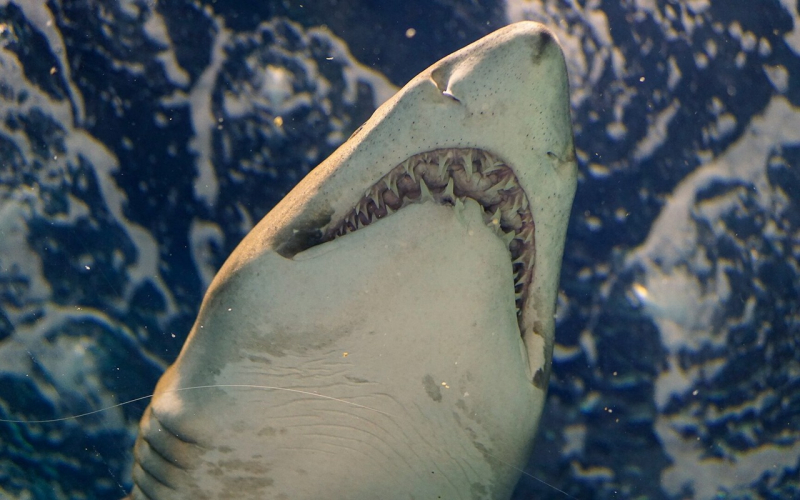
Unfortunately, the film itself has had an unfortunate effect on preservation efforts; its enormous success created an image of sharks as “heartless” monsters and impeded the success of many conservation initiatives, even prompting director Stephen Spielberg to express remorse over its effect on shark populations.
***
Alien (1979)
Until 2025’s appropriately-titled Alien: Earth, the Alien franchise didn’t really show much of our home planet. So, what makes it eco-horror? Critics argue that there’s a key element of the first film that only becomes more prominent in further installments: Weyland-Yutani, the nefarious corporation that seeks to get its hands on the titular xenomorph – often at the cost of many human lives.
The movie’s sequels touch on further themes, such as terraforming, while its prequels Prometheus and Alien: Covenant (spoilers!) even introduce a species of advanced aliens whose impulse to “play god” with nature leads to their own destruction.
***
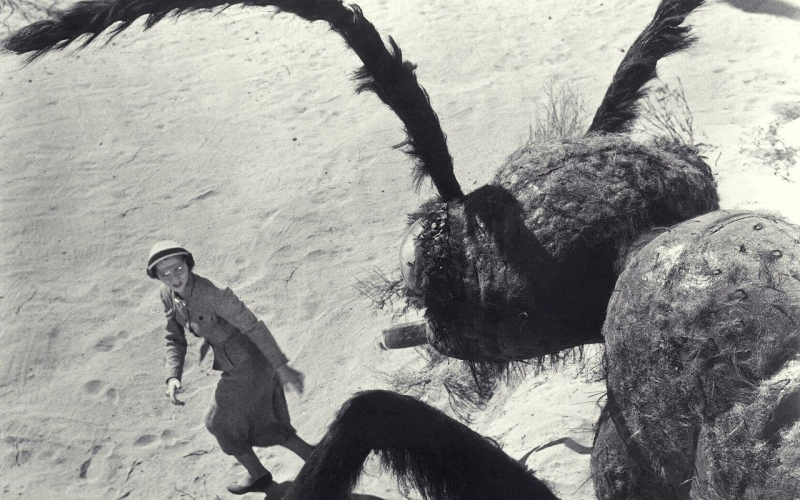
Them! (dir. Gordon Douglas, 1954), an early example of cinematic eco-horror, imagines a world where atomic bomb tests turn ants into giant monsters. Credit: Atom.D / flickr / CC0 1.0 (public domain image)
***
The Host (2006)
Before winning a historic Oscar for Parasite (2019), director Bong Joon Ho made several sci-fi flicks that all feature prominent environmental themes – The Host (2006), Snowpiercer (2013), and Okja (2017). The earliest of the three, which has Seoul besieged by a monster born from toxic waste, is inspired by a real-life incident that occurred in South Korea.
***
Gaia (2021)
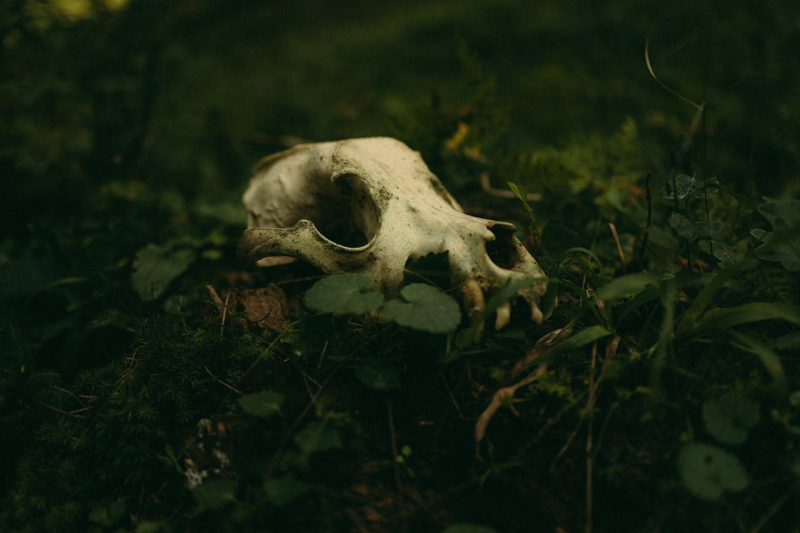
Before The Last of Us (2023), there was Gaia. The South African horror flick goes all-in on environmental themes, following a pair of forestry workers who must descend into a deep forest and confront an ancient power that zombifies humans through fungal spores.
Credit: Erik Karits (@erik_karits) via Unsplash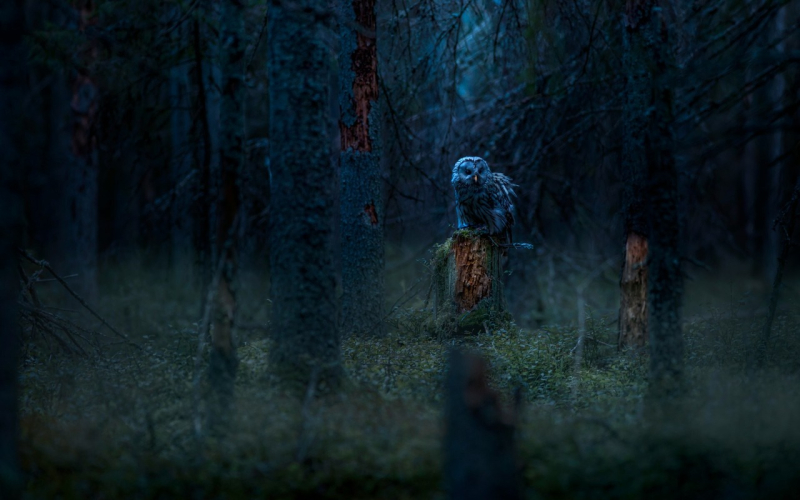
Titled after the Greek goddess of Earth, the movie has no intention of hiding its ideas about ecology and humans, all while employing generous amounts of body horror that’ll give the heebie-jeebies to the most stoic viewer.
For more movie night ideas, check out our guide to Soviet and Russian sci-fi, our list of movies that pushed technology forward, and the 5 mind-bending shows for Severance fans.