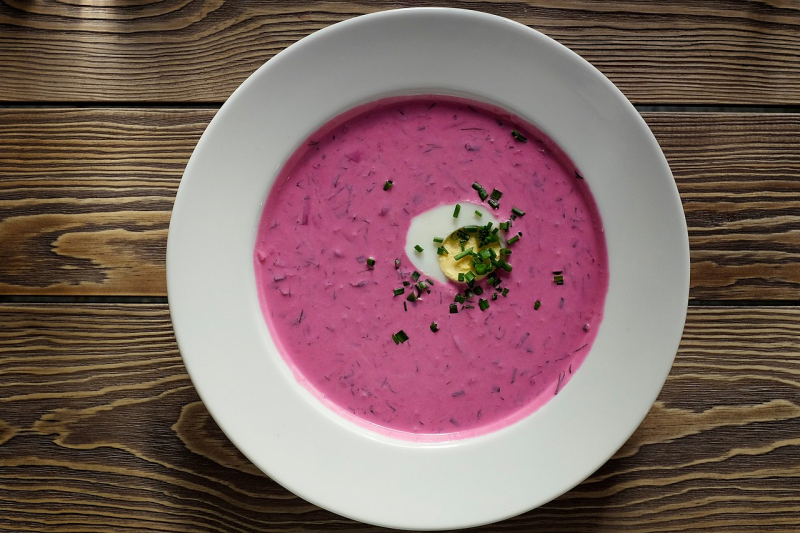
Despite the weather-related stereotypes, summers in Russia can indeed get pretty hot – even here in the Northwest. Thankfully, there are plenty of recipes, both well-known and slightly obscure, that have been honed over decades (or even centuries!) in order to provide some welcome chill on a hot day.
Cold soups
Move aside, gazpacho! Anyone who’s been in Russia for at least some time knows how much the nation treasures its many soups. And, naturally, there are plenty of heatwave-friendly options to choose from.
Russian cold soups: svekolnik and two types of okroshka. Credit: Nadin Sh (@nadin-sh-78971847) via Pexels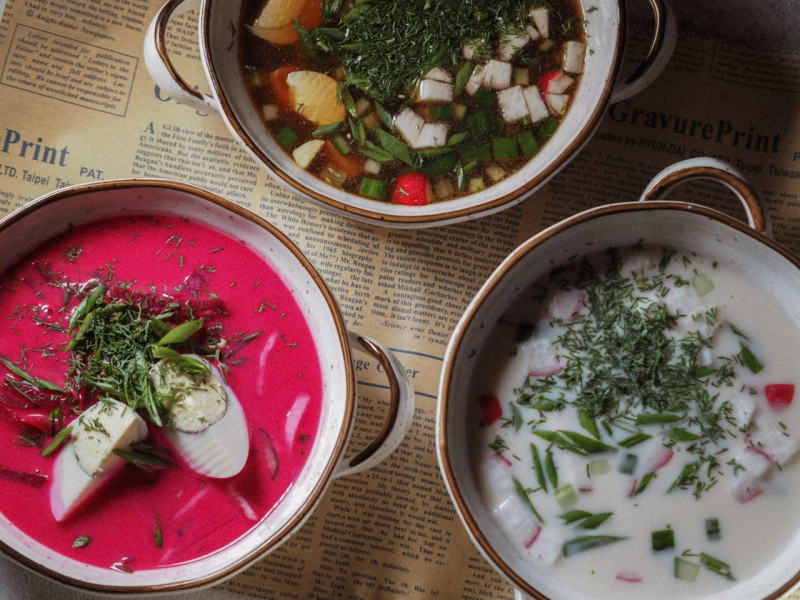
Okroshka
This dish is most often made with boiled potatoes, ham, cucumber, radish, and eggs – an ingredient list quite similar to the Russian (Olivier) salad. But what makes okroshka a subject of heated debate is the “stock,” which may be either kvass (a bread-based “soda”) or kefir (a fermented dairy drink akin to yogurt). Adherents of either version will often claim that theirs is superior, though both parties loathe the rare individual who likes to use both at once.
***
Svekolnik
Meanwhile, svekolnik, as evident from its name (lit. “of beetroot”), is based on another beloved Russian ingredient, which gives it its unmistakable and aesthetically-pleasing shade of light pink-purple. To this St. Petersburg native, it’s almost reminiscent of the city’s ever-present lilac shrubs! Though the dish originates from the Baltic, it has found its place in pretty much every cuisine of Eastern Europe. Made with kefir or sparkling water (and a dash of vinegar for tanginess) and served with boiled egg and sour cream, it’s as hearty as it is refreshing.
***
Tyurya
But what about the lesser-known dishes, you may ask. Well, here’s one you’ve definitely not heard of yet: a dish born of necessity, tyurya is a simple mixture of stale bread, dill or parsley, garlic, and onions, all soaked in water, kvass, or milk. It’s not surprising that this “exotic” flavor combo hasn’t had the success of certain peasant foods like pizza, but it’s definitely worth a try if you have an adventurous palate.
***
Kuksi
A bowl of kuksi soup. Credit: bionicgrrrl / flickr.com / CC BY-NC-ND 2.0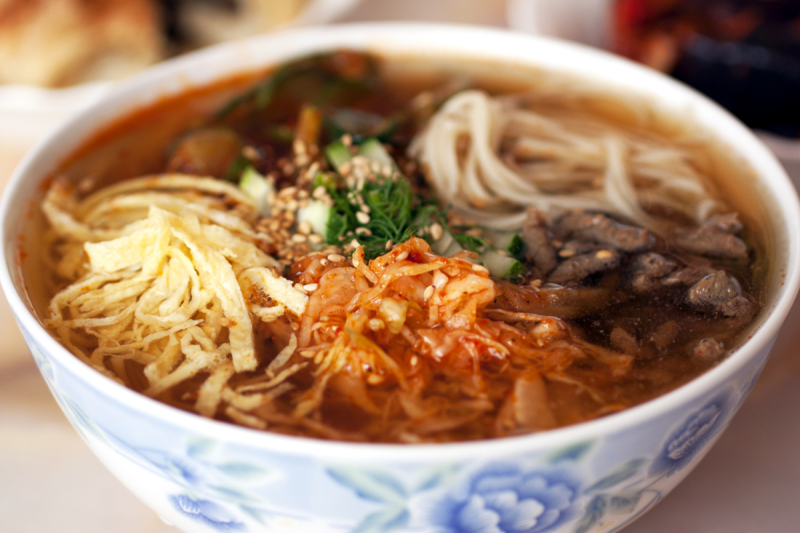
The final soup on the list is one that not even many Russians would be familiar with – kuksi, after all, is not exactly a “Russian” dish per se. Made with noodles, pickled vegetables, beef, and soy sauce-based stock, this punch-packing spicy and sour soup comes from the cuisine of Koryo-saram – the Korean diaspora of the former Soviet Union.
Beverages
On a really hot day, you might not even want to eat anything – but that’s no excuse not to expand your palate in other ways, such as with a refreshing drink.
Grib
Long before kombucha conquered the hearts (and wallets) of many a hipster, it was already well-familiar to most Russians as a drink of questionable appearance and unique taste. Here, it has long been known as chayniy grib (lit. “tea mushroom”) and traditionally made only at home. However, the kombucha trend of the past decade hasn’t passed by Russia, either, so now you can find it at any grocery store in plentiful variations – with flavors ranging from grape or raspberry to mint or lavender.
***
Kvass
This entry comes as no surprise – after all, we’ve already mentioned it aplenty when talking about soups! Kvass is a real summer staple in Russia; until recent times, it was famously sold on the street out of massive trucks filled with this fizzy, sweet-sour drink. Though that practice has gone out of fashion, new trends have emerged: the classic commercial iteration of kvass now competes with craft versions based on traditional recipes, such as white kvass or oat kvass.
***
Baikal and tarkhun
Though they couldn’t be more different in taste and appearance, these two classic sodas have somehow become an inseparable duo when it comes to essential summer drinks. Both first emerged on the scene in the late 70s – early 80s, developed as fashionable substitutes to Coca-Cola and Pepsi. Baikal (named after the famous lake) is flavored with a rich mixture of herbs like eucalyptus, cardamom, and sage, though the taste of pine is the most prominent. Conversely, Tarkhun, with its trademark neon-green color, relies solely on the punchy flavor of estragon (or tarragon).
For more food-related stories, check out our guide to Russian ice cream, read all about the most charming Soviet-style cafes in St. Petersburg, and learn all about how eating healthy can improve your life.
Title image credit: Dmitry Dzema / Wikimedia Commons / CC BY-SA 4.0