Contents:
- Types of contests
- What to expect
- Bonuses for winners
- Where to start
- ITMO-held contests
- Preparation at ITMO
- Key math contests in 2026
- How to join
Types of contests
Student math competitions make up a multilevel system. Here are some of these types:
- Intrauniversity: students compete within one university;
- City-wide and regional: these include more participants, as they are open to all of the city’s universities. In St. Petersburg, ITMO has been the host of the city-wide math contest for over 20 years;
- National: while school students in Russia have one “primary” national contest, university students have many. However, by the number of participants, several competitions could earn this title – for instance, the Siberian Mathematical Contest;
- International: these are the most prestigious events. They include the International Mathematics Competition for University Students (IMC) in Bulgaria, the Vojtěch Jarník International Mathematical Competition (VJIMC) in Czech Republic, and the North Countries Universities Mathematical Competition (NCUMC) in Russia.
In terms of difficulty, intrauniversity and city tournaments are considered less challenging compared to national ones.
What to expect
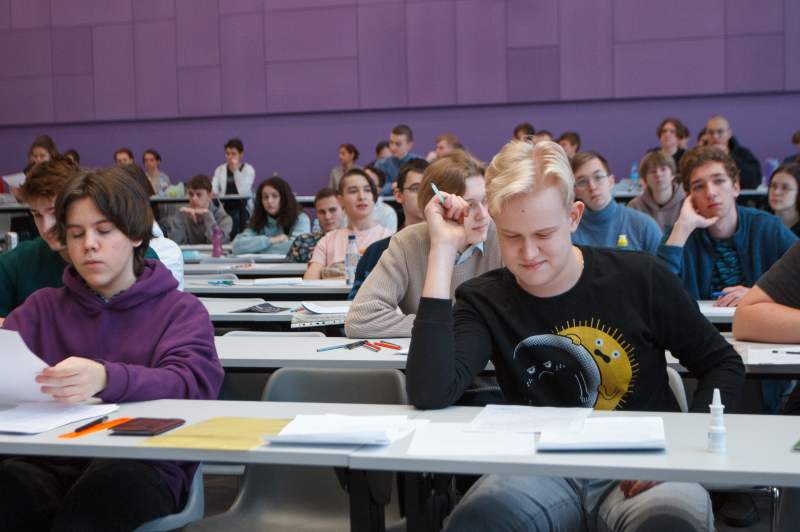
The majority of student contests welcome individual participants, with a team’s score calculated as the sum of the points of its participants. Competitions usually include one or two rounds, each with 4-6 tasks, which students have 4-5 hours to solve.
Competition tasks are submitted by participating universities to the organizing university, where the organizing committee compiles the final version of the tasks. As a rule, all participants receive the same task, regardless of their year of studies.
With competition problems, the trick is usually not in applying a formula, but in coming up with a non-trivial solution. And that’s the practical value of these events: participants develop deep analytical skills and learn to build logical chains and find solutions. In the future, these skills will be useful in work tasks. For example, in IT such approaches lie at the core of algorithm optimization needed to cut down on computing time and memory usage.
Photo by Kirill Dzhenzherukha / ITMO Mediaportal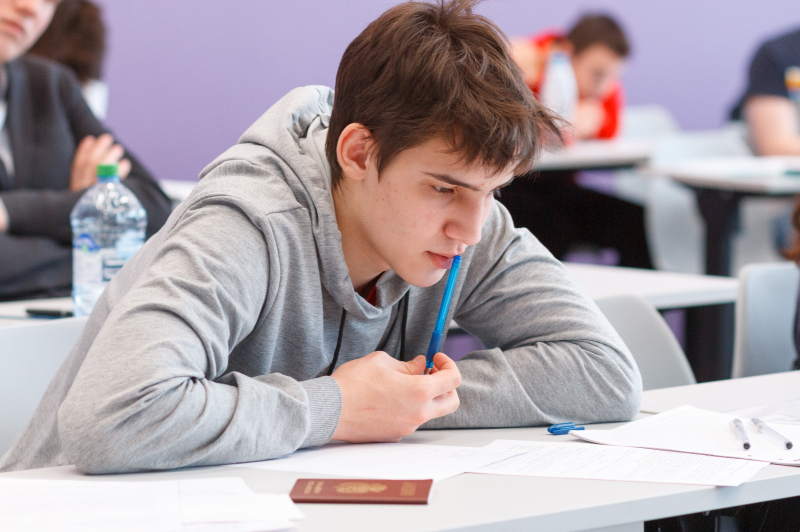
Bonuses for winners
The main benefit of participating in such contests is a boost to systems thinking, logic, and creativity. These are the skills that will come in handy in any field. For instance, a machine learning expert needs systems thinking to understand why an algorithm is malfunctioning and to change the network’s architecture. Logic and creativity help developers find ways to optimize data. Financial analysts need these skills to build probability models and evaluate market risks. Moreover, a contest certificate can improve your portfolio when applying to Master’s programs. At contests, you can also find new friends. Finally, employers take note of well-known competitions, too.
Where to start
You should be ready to train for some time, as many tasks require an out-of-the-box approach. It’s better to start preparing several months before the event and look at the tasks from previous seasons: this way, you’ll be able to gauge the contest’s specific focus and relevant topics, for instance, differential equations instead of probability theory.
For fledgling competitors, the natural first step would be the intra-university contest; there, you can get the lay of the land and practice in a comfortable environment. The next step would be a city-wide contest. Having successfully performed at these levels, you’ll be able to join the university’s math team and participate in national and international competitions.
Photo by Kirill Dzhenzherukha / ITMO Mediaportal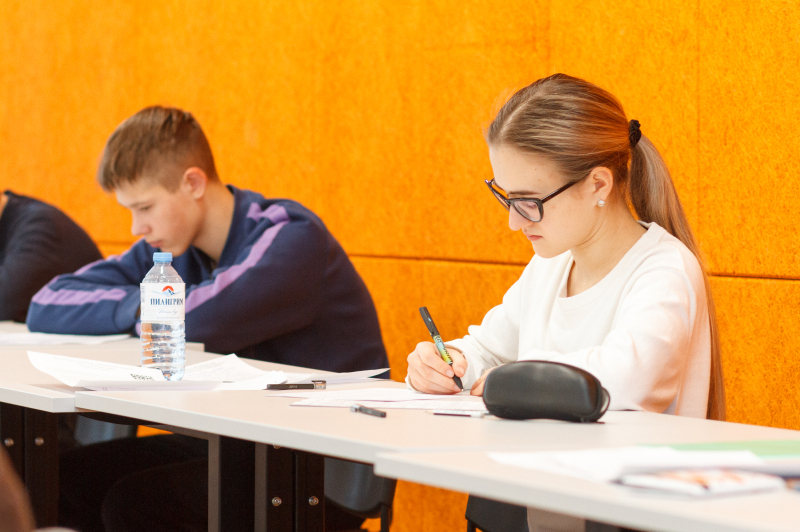
ITMO-held contests
ITMO University hosts internal competitions for its students, as well as regional and even international contests.
On April 26, ITMO will host the 12th North Countries Universities Mathematical Competition. This event annually brings together student teams from over a dozen countries. Winners and runners-up can apply for enhanced scholarships; their diplomas also confirm their math prowess, which is valued by employers in IT.
NCUMC is held in a blended format: in-person at ITMO and online at partner universities. Students can participate both individually and in teams. Registration for the event is ongoing and will close on April 20. At the contest, students will have 4 hours to solve all the tasks. The results will be calculated for teams and individuals.
In the fall, the university will host an internal and a city-wide contest. Detailed information will be available closer to the date.
Moreover, in December, ITMO will serve as one of the sites for the national Siberian Mathematical Contest. There, participants will also have the chance to compete individually or in teams. Last year, the tasks covered several further mathematics domains: algebra, analysis, geometry, combinatorics, and probability theory.
Photo by Kirill Dzhenzherukha / ITMO Mediaportal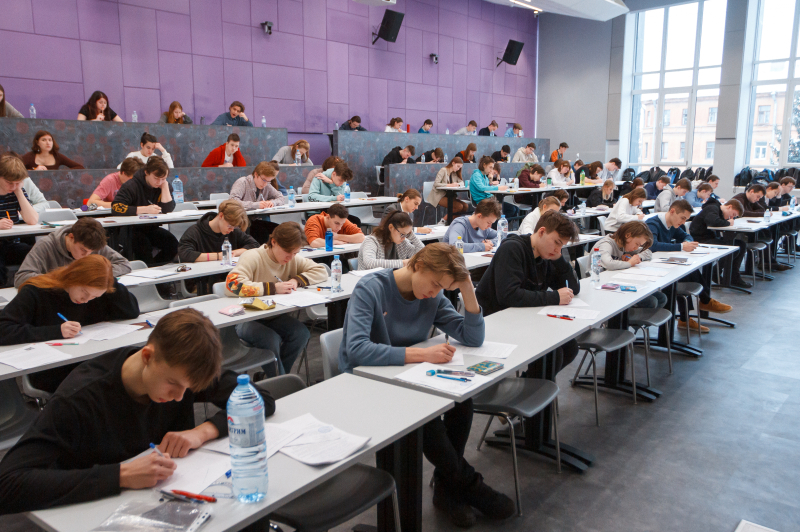
Preparation at ITMO
Any ITMO student can join the Math Contest Club – just follow their Telegram channel and attend the club’s training sessions. There, students discuss math problems from various tournaments, share their experience and useful information, and prepare for future contests together. The university’s teams are usually trained by prize winners. For instance, the current team is trained by Vitaly Aksenov, a math champion and an associate professor at ITMO’s Institute of Applied Computer Science. The last training session of 2025 was held by Konstantin Pakulnevich, the winner of last year’s regional tournament.
Key math contests in 2026
- Major League contest for students and graduates: selection round ended on February 3, final round is to be held on March 12-19;
- February 19-20 – MathOpen 2026 Belarus international student contest;
- February 21 – Student Games in Applied Math and Informatics;
- July 27 - August 3 – International Mathematics Competition (IMC) in Bulgaria.
How to join
In order to join ITMO-organized contests, follow the university’s Institute of Applied Mathematics on Telegram. Registration for events typically opens about a month in advance and closes a week before the event.
When applying to external contests, students need to visit the event’s official website and fill out the registration form there. Application deadlines should be confirmed on the official website as well.