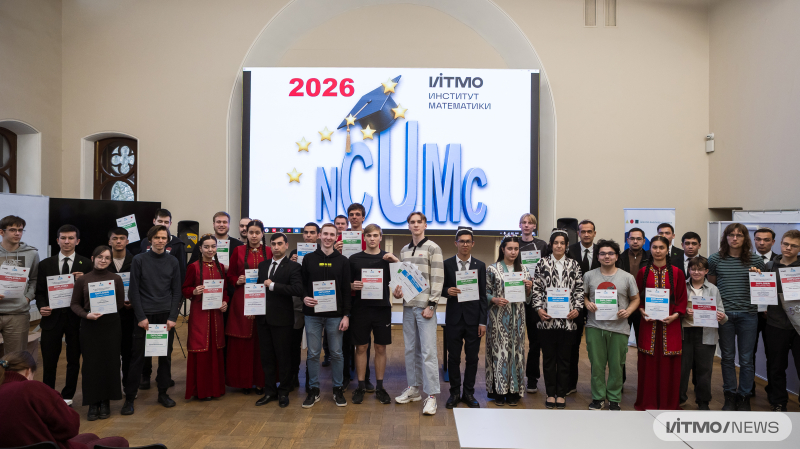
The North Countries Universities Mathematical Competition (NCUMC) was first held at ITMO in 2014 and since then it’s been held annually online. It was designed as a competition for Northern European countries and Russia, but later the event’s geography was expanded – now students of any university and any country can join the competition.
NCUMC is held at ITMO and at the so-called “mirrors,” these are partner universities that host and supervise the competition. Thanks to this format, the contest is open to students from different countries and cities who don’t need to come to ITMO to participate. However, as the conditions cannot be matched exactly at ITMO and at remote locations, there are different leaderboards for participants at ITMO and other universities.
“We don’t select the ‘mirrors’ – on the contrary, if a university wants to participate, they reach out to us. Our partnerships have a very simple format: lecturers ready to act as organizers email ITMO. If they can confirm that they will ensure the supervision of the contest and grading according to the NCUMC standards, we include their university into our list of ‘mirrors.’ Some ‘mirrors’ unite several universities,” shares Igor Popov, the chief organizer of NCUMC.
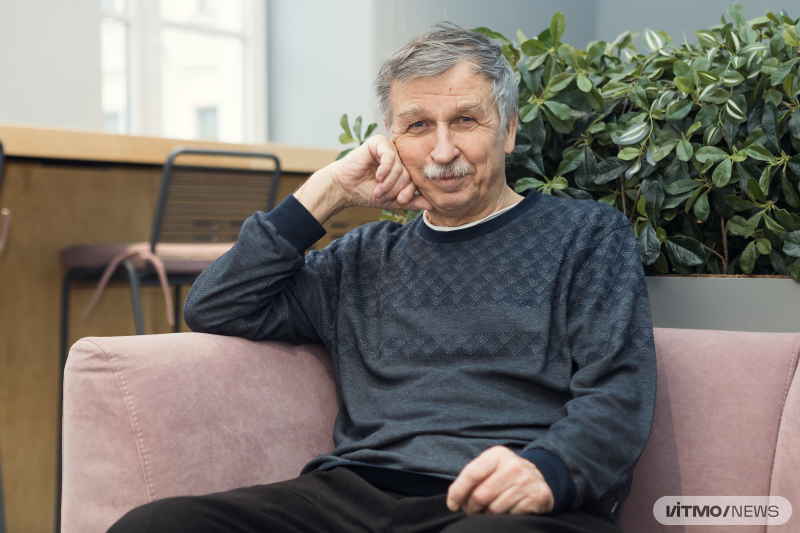
Igor Popov. Photo by Dmitry Grigoryev / ITMO NEWS
In 2026, the competition was held simultaneously at 23 universities, with over 500 students submitting their applications to participate. Apart from St. Petersburg, where the competition was held by ITMO, NCUMC was organized in Novosibirsk, Tomsk, Moscow, Minsk, Tashkent, Ashgabat, Samarkand, Urgench, Gulistan, and other cities. Among the organizers were Novosibirsk State University, Tomsk State University, Belarusian State University of Informatics and Radioelectronics, Lomonosov Moscow State University, HSE University, Bauman Moscow State Technical University, National Research Nuclear University MEPhI, Samarkand State Pedagogical Institute, the University of World Economy and Diplomacy of Uzbekistan, and others. Each university was responsible for supervising the competition and grading students’ solutions.
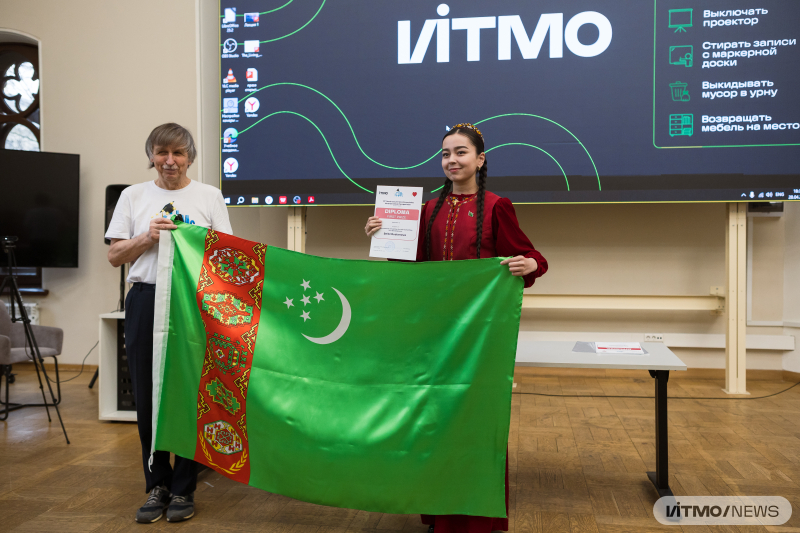
NCUMC 2026. Photo by Dmitry Grigoryev / ITMO NEWS
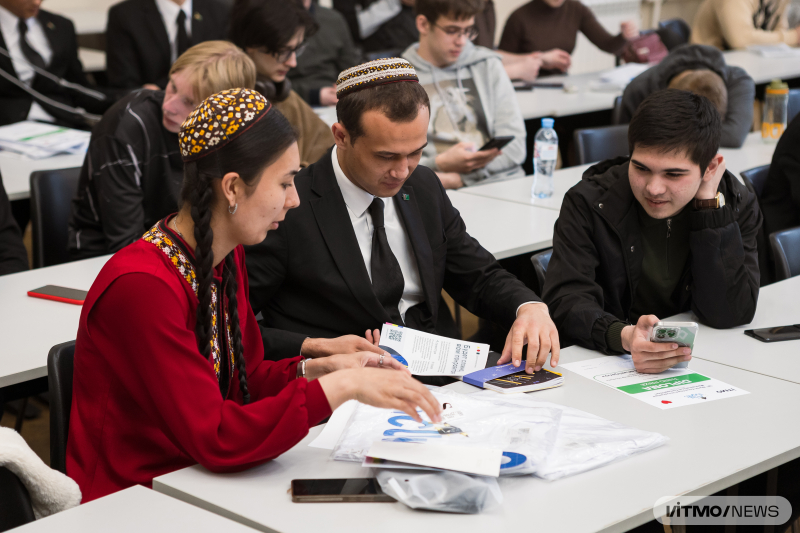
NCUMC 2026. Photo by Dmitry Grigoryev / ITMO NEWS
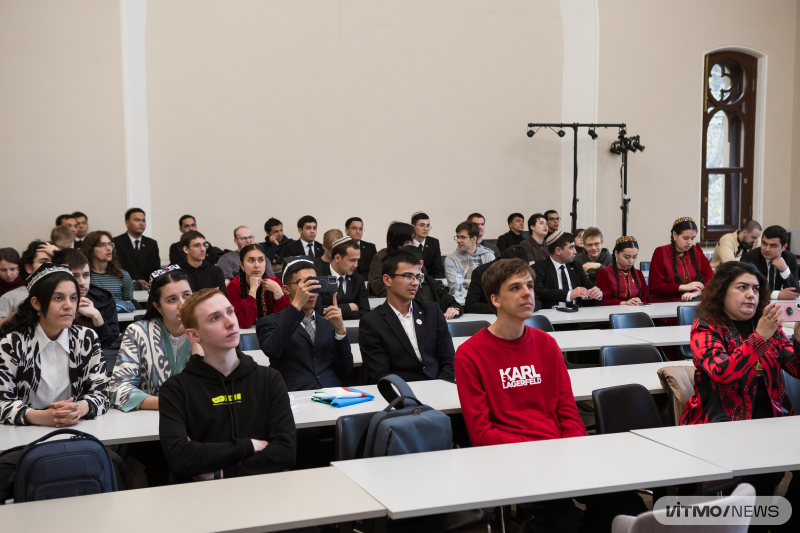
NCUMC 2026. Photo by Dmitry Grigoryev / ITMO NEWS
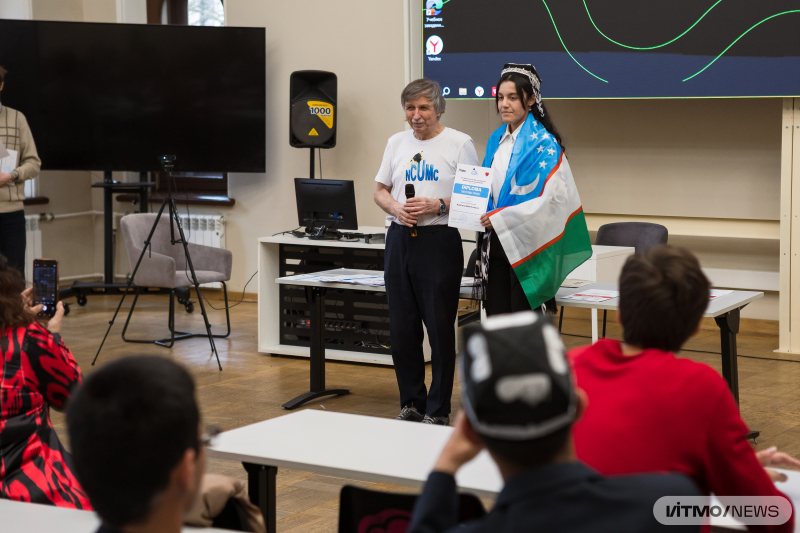
NCUMC 2026. Photo by Dmitry Grigoryev / ITMO NEWS
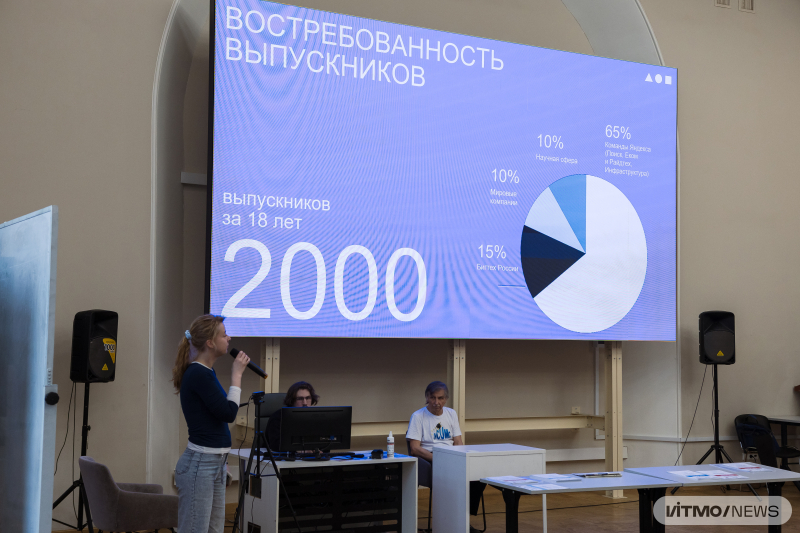
NCUMC 2026. Photo by Dmitry Grigoryev / ITMO NEWS
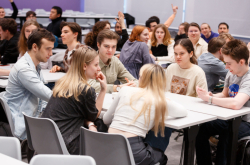
ITMO welcomed 149 students from Moscow, St. Petersburg, other Russian cities, as well as Uzbekistan and Turkmenistan.
Though NCUMC is primarily an individual competition, each university can additionally assemble a team of three people for a separate team leaderboard. Such teams are selected by the university’s administration no later than five days before the start of the competition. On the teams’ leaderboard, the scores are a sum of individual results of the selected three participants.
81 students were named winners and runners-up of the competition; they can now add their diplomas to their personal portfolios when applying for enhanced scholarships or applying to ITMO Master’s programs. These diplomas can improve an applicant’s enrollment chances.
“I joined the competition to try my hand at complex, engaging problems, generate ideas, and interact with other math enthusiasts. I was really excited to participate and as part of a team I also got to boost my communication skills and team work,” says Georgy Galyapin, a student of the Moscow Institute of Physics and Technology and a member of the winning team.
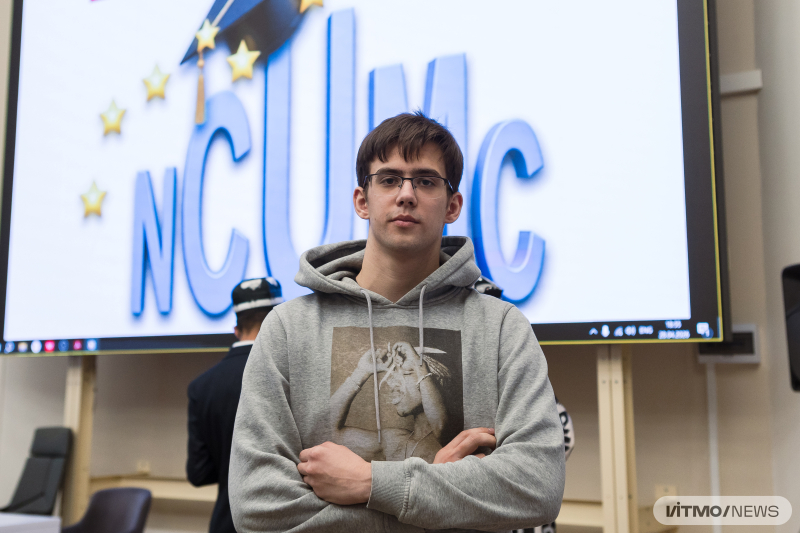
Georgy Galyapin. Photo by Dmitry Grigoryev / ITMO NEWS
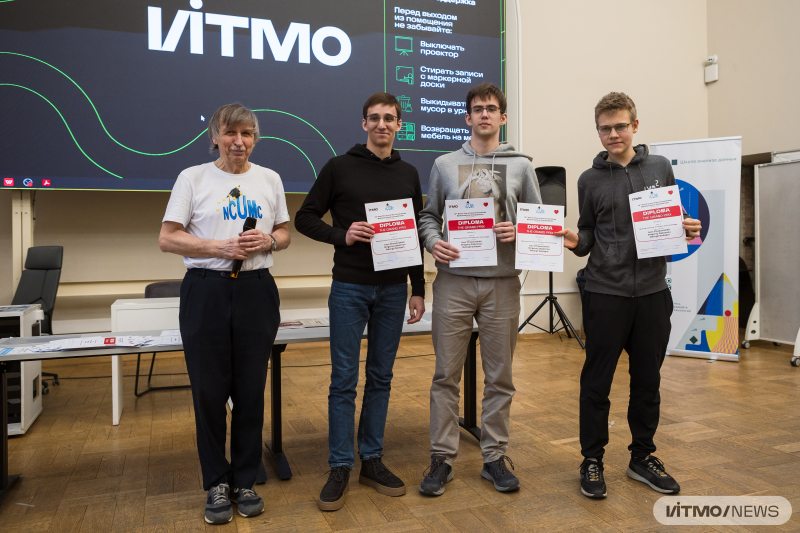
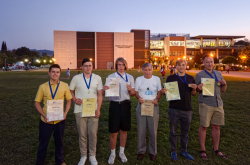
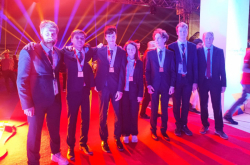
The winning team. Photo by Dmitry Grigoryev / ITMO NEWS
NCUMC will return for another season next year and it’s better to start preparing for it a few months in advance. You can look into problems from previous years to get familiar with the format and fill any knowledge gaps. ITMO students can prepare at the dedicated math competitions club, where training is done by winners of major events.