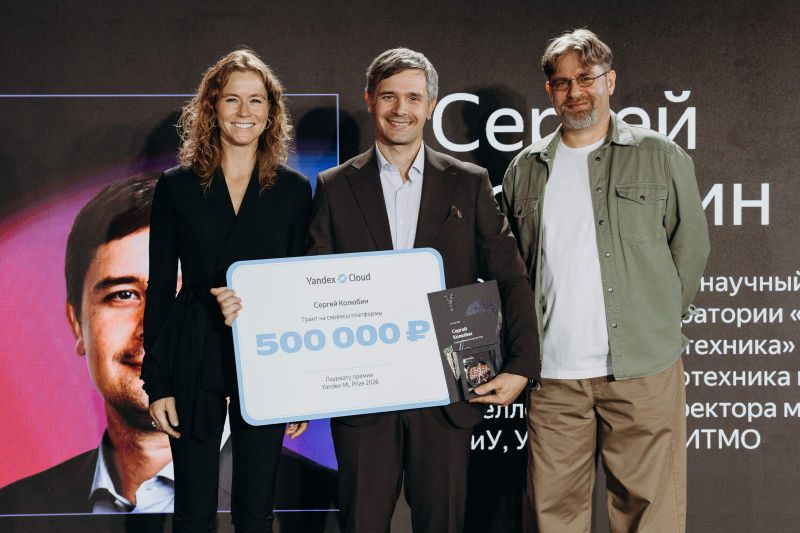
Sergey Kolyubin has transformed a classical Master’s program in robotics into a physical AI one – now called Robotics and Artificial Intelligence. The updated program covers the fundamentals of ML in robotics and robot programming and includes an immersive task-focused course, and the practices of embodied AI. Other courses in the program are regularly updated, as well.
“Receiving Yandex ML Prize is prestigious; it’s also a great responsibility. For me, this means that my colleagues and I have managed to achieve something truly useful and notable and that the robotics field keeps growing, especially when it comes to physical and embodied AI. R&D projects attract solid resources, new markets emerge, and education must not just keep up, but try to stay ahead: there’ll be no breakthrough without people. We were also able to show how to transform a non-ML-native program, and now many will do that at a larger scale. At the same time, preserving the program's identity and strengths is just as important as bringing in new approaches. We indeed need to master technologies that give robots new ‘superpowers,’ but a real roboticist needs to understand the physics and nature of systems they are working with. Without that, tasks lose their meanings, system vision gets lost, and it becomes impossible to tell how and why something is or isn’t working,” notes Sergey Kolyubin.
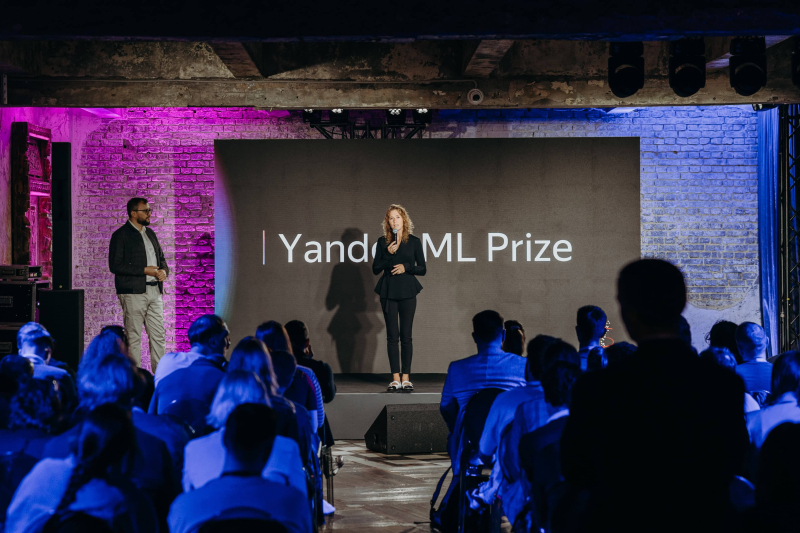
Yandex ML Prize’s awards ceremony. Photo courtesy of the organizers
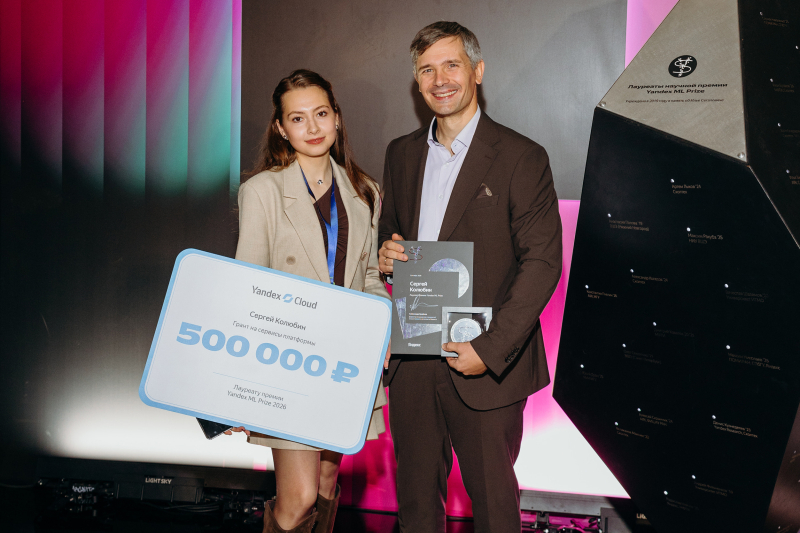
Yandex ML Prize’s awards ceremony. Photo courtesy of the organizers
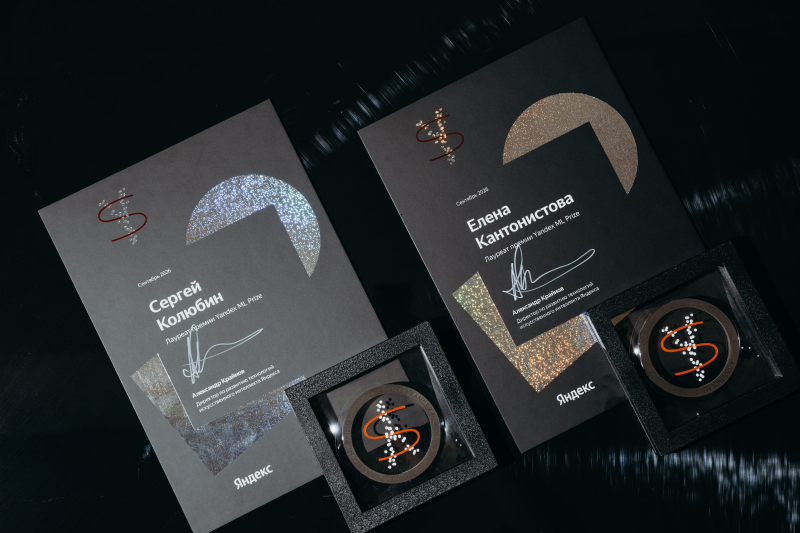
Yandex ML Prize’s awards ceremony. Photo courtesy of the organizers
A key component of the updated curriculum is students’ involvement in hands-on research and engineering tasks. Sberbank has been a partner of ITMO since 2019: with the company’s support and expertise of the Robotics Center, ITMO Master’s students develop in-demand technologies, as well as take part in international conferences and open-code projects. This way, they can combine their studies with research and project activities.
“Each lecturer in the program is a practicing professional. Students learn from cutting-edge research materials and experiences gained in our laboratories. I’m convinced that much of the vital skills and knowledge in this profession can’t be acquired in a classroom – they require real project work: tasks, teams, and infrastructure,” adds the professor.
The next step for the program's development is linked to the fields that have already been actively pursued at ITMO. These are physics-informed learning for robot dynamics description and synthetic data generation based on world models, robust and semantic spatial intelligence methods, multimodal models for sensorimotor coordination, and generative design.
“Clearly, you can’t do that with just a pencil and a paper. We already have a lot in place (robots, sensors, and computers), but to be leaders, we need to constantly expand and update our infrastructure. AI has an insatiable appetite. We’ll be looking for partners and collaboration models that would be beneficial for our program’s hardware,” concludes Prof. Kolyubin.
This year, the award's expert board featured researchers, lecturers, and heads from Yandex, Yandex School of Data Analysis, Moscow Institute of Physics and Technology, and HSE University. Criteria for evaluation included contribution to the creation and development of an educational program, the relevance of its content, the availability of learning resources, and the results of graduates. Each year, more and more industry experts and researchers step into the classroom to share up-to-date scientific and technological practices.
Established in 2019, Yandex ML Prize honors the members of the academic community who have contributed to the development of ML in Russia. Over eight years, 79 lecturers and scientists have become the laureates of the award.