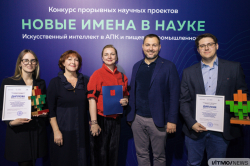
Two teams – one task
100 participants were divided into 12 interdisciplinary teams with 8-9 members in each, including scientists from different fields and science communicators. Another two teams joined the event online.
Participants came from St. Petersburg, Moscow, Tula, Cheboksary, Yaroslavl, and Samara and represented ITMO University, National University of Science and Technology MISIS, LETI University, Tula State University, Chuvash State Pedagogical University, Moscow City University, Moscow Institute of Psychoanalysis, Yaroslavl State Medical University, St. Petersburg State Institute of Film and Television, and Samara University.
The organizers offered six tasks in the form of communication briefs based on real-world scicomm tasks and the objectives of the League of University Science Slams, namely:
- how to make the program of the Congress of Young Scientists intuitive for first-time visitors;
- how to tell those who haven’t been to the congress about it;
- how to help strangers strike up conversations during science slams;
- what do science slam participants leave with after their talks;
- how do scientists look for collaborators;
- how to discuss science when your opinions differ.
The format’s main feature was that each brief was given to two teams, who worked on it separately and didn’t see each other’s solutions. At the final defences, such teams went one after each other to offer two different approaches to the same task.

Science communication school. Credit: ITMO's Center for Science Communication
School experts
Alongside the teamwork, participants were offered a diverse educational program. On the first day at ITMO, lectures focused on AI tools in science communication were held by Daria Denisova, Valeria Prokuratova, and Yulia Volzhina, experts at ITMO’s Center for Science Communication. Denis Nikolaev, a science communicator and host at Mayak radio, gave a talk on science communication as a tool for audience interaction. The next day, the school moved to the Yagodnoe sports and leisure camp, where two educational blocks were held in parallel: University: A Manual by Andrey Voronin, the vice rector for science at the National University of Science and Technology MISIS, and AI as a Research Tool by Daniil Efremov, a project manager in science and education at Yandex Cloud.
Experts didn’t only give lectures, but also offered consultations to every team on scientific accuracy, viability, and effectiveness of their solution for a specific audience. In the evening, participants could sign up for additional consultation to discuss specific questions in terms of contents and production plan.

Science communication school. Credit: ITMO's Center for Science Communication
A day with no internet access
At Yagodnoe, cellular data was very limited. First, the teams worked with their briefs, discussed ideas, and worked on paper; they only proceeded to use AI tools once their concepts were fully developed. This was by design: the organizers wanted the teams to discuss the task first and only use AI to polish their solutions.
“For young scientists, it’s important to break out of their routine and join a new community united by common goals and interests. Such meetings inspire and ignite new collaborations. I first learned about Yagodnoe when organizing a similar school for young scientists in thermoelectric materials with Ioffe Institute. My experience demonstrates that when you collaborate with ITMO, you get out-of-the-box, effective events. The vision, approach, and values of ITMO and MISIS are very close, and I believe it’s a great opportunity not only for participants, but for the teams of our universities,” shares Andrey Voronin, the vice rector for research at MISIS.
Assessment process
Apart from the expert jury, each team’s solutions were assessed by an AI judge based on the same criteria: alignment with the brief’s task and target audience, clarity, content accuracy, feasibility within the event’s constraints, completeness of the materials, and the justification for the role of artificial intelligence.
Importantly, the number of services used and their complexity didn’t give any benefits. A paper solution wouldn’t necessarily gain fewer points because it didn’t rely that heavily on technology. The AI judge also examined how the teams combined human and artificial intelligence at different stages of their work: what the participants came up with themselves, what changed after a model was brought in, where they disagreed with the model, and which task they deliberately left to a human. The organizers emphasized that a good solution is not one in which artificial intelligence did more, but one in which its role is clear, limited, and verified by a human.
The AI judge’s verdict didn’t determine the winner, but offered additional feedback that participants could compare with the experts’ assessment and challenge.

Science communication school. Credit: ITMO's Center for Science Communication
How teams used AI
Several teams separated the tasks they delegated to AI and those that remained human responsibility. For the team Spoiled for Choice, the model analyzed the congress program and suggested phrasing, while the team members created the concept, critiqued suggested phrasing, and were responsible for the final product. The team Context Word Cloud suggested using local models to work with unpublished scientific ideas to prevent them going to external servers.
Other teams used AI to test how the audience might receive their solutions. Several teams used the model to test a reader’s reaction; they honestly declared this step a hypothesis, not a study. The team Is It Normal, who worked online, noted that the AI-generated character was used for a simulation and its reaction didn’t substitute tests on a real audience. Another online team, Vetik, worked with the topic of pet vaccination and introduced an AI agent who acted as a critic; their solution also included verification by a veterinarian expert and a warning for users that the model’s answers aren’t a substitute for a professional consultation.
“The school brought together everyone who wanted to get into science communication and suggest their answers to questions faced by science communicators around the country. Before we started working, we attended very informative lectures on how to adapt complex ideas for various audiences. After that, we started working on our tasks. My colleague and I represented an older generation among the student community, so I saw our role on the team as more of project coaches. It was incredibly exciting to see the team work, guide them with our questions and allow everyone to express their ideas. I also really appreciated the team’s moderators, who are very motivated young professionals! I want to specifically mention the school’s inspiring ecosystem, great organization, and invited speakers. After meeting so many people, I want to say I am open to collaborations. And I believe that’s the secret of science communication. This means the school was a success!” shares Angelina Mironova, a senior lecturer at the Institute of Psychology and Complex Rehabilitation and a curator of the student research association at Moscow City University.
Strictly human responsibilities
The teams who spent their first day offline turned to AI with a finished concept and used it only to add to their ideas, not to come up with them from scratch. That’s why teams with the same brief presented very different solutions at the final defence: they had unique ideas that AI helped take a step further.
“If two teams with the same brief turn to the same AI service with similar prompts, they will get almost identical results, so we’ll have nothing to compare at the defences. We joke that when we planned the day at Yagodnoe, we wanted to take our participants back to the era of natural intelligence – to help them get their initial ideas during facilitated discussions, and only then turn to AI,” explains Yulia Volzhina, the deputy head of ITMO’s Center for Science Communication.

Yulia Volzhina at the science communication school. Credit: ITMO's Center for Science Communication