Master's student, Big Data and Machine Learning
From St. Petersburg to Nizhny Novgorod: A Journey to Russia’s World Youth Festival
When I received my acceptance notification for the World Youth Festival Assembly, I had to read it twice to believe it was real. Out of over 62,000 applications submitted from 175 countries, only 2,000 participants were selected: 1,000 from Russia and 1,000 from abroad. The selection criteria were rigorous: experience in international youth cooperation, participation in Russian and international projects, strong English proficiency, and demonstrated leadership in fields like IT, entrepreneurship, media, and science. Being chosen from such a competitive pool felt like a validation of everything I've worked toward since arriving at ITMO.
The festival took place on September 17−21, 2025 in Nizhny Novgorod, one of Russia's most historic cities. As someone who fell in love with Russian culture during my Master's studies in big data and machine learning at ITMO, this felt like a natural extension of my journey here. In my previous interview with ITMO NEWS, I mentioned how being surrounded by students from all over the world has broadened my worldview and fostered cultural exchange. The World Youth Festival amplified that experience tenfold.
Arrival in Nizhny Novgorod
The three-day program was meticulously organized, starting each morning with breakfast at our accommodation before transfer to various venues across the city. What struck me immediately was the scale of the event. With participants representing over 80 countries from Argentina and South Africa to Vietnam, Indonesia, and my home country Egypt, the diversity was remarkable. The organizers had thought of everything, from translation services to the cultural program that respected our different backgrounds while bringing us together around shared interests.
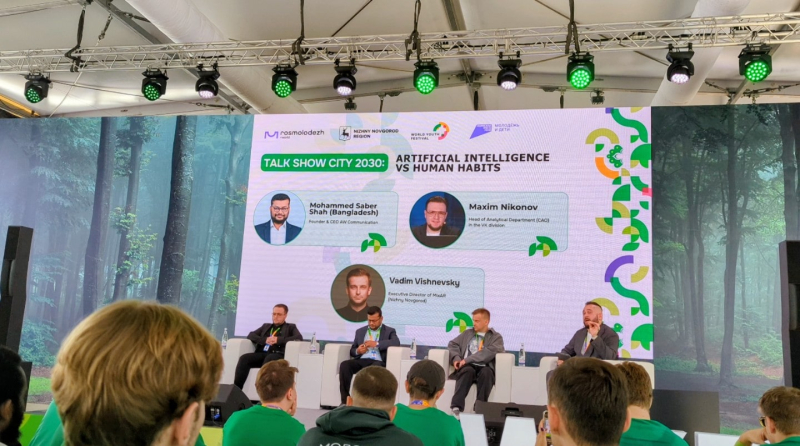
Standing on one of the city's observation points, overlooking the Volga River and Nizhny Novgorod's architectural treasures, I felt the weight of being part of something historic. This wasn't just another youth conference; it was a platform designed to shape global youth cooperation for years to come.
Diving deep into digital futures
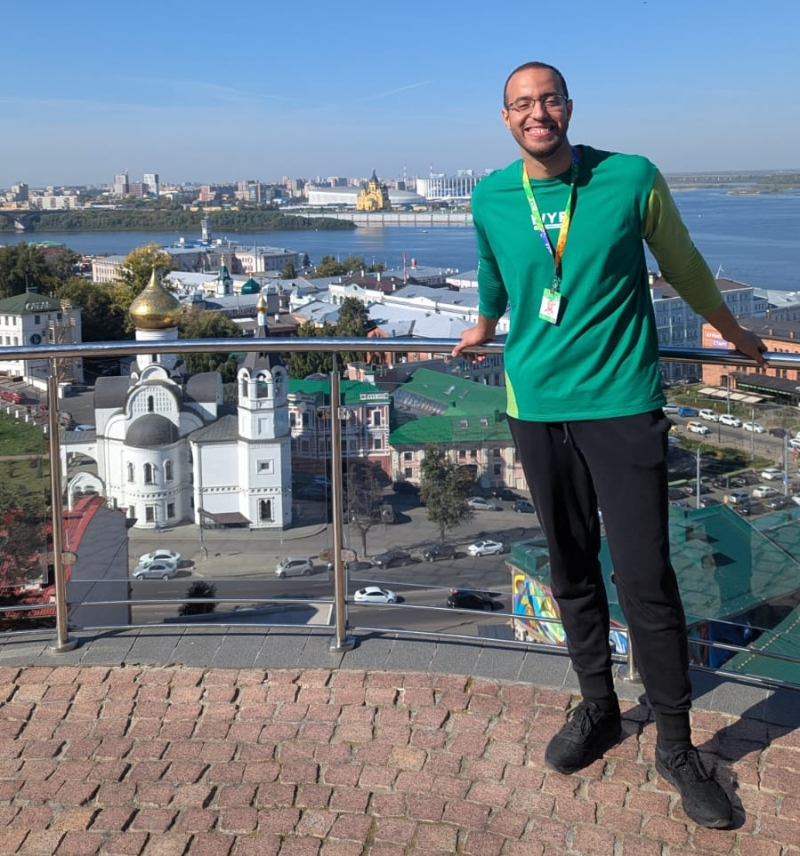
The festival's theme was Digitalization and IT, which aligned perfectly with my research background in natural language processing for medical data. The first day kicked off with an immersive show called Symphony of Time: Feel, Live, Create, followed by a talk show titled City 2030: Artificial Intelligence vs Human Habits. Listening to experts from Bangladesh, Russia, and the UAE discuss how AI is transforming social interactions and urban environments resonated deeply with my own work at ITMO.
One session that particularly challenged my thinking was the talk Digital Sovereignty: An Architecture of Technologies and Strategies. With experts from the UAE, Brazil, Ghana, and China, we explored what digital independence means in an interconnected world. As someone working on healthcare applications using NLP, the discussions about data management, technological independence, and national strategies gave me new perspectives on how my research could contribute to broader societal challenges.
The second day featured an interactive lecture Cybersecurity and AI: Legal Strategies in the Age of Zettascale Computing and a case study session on supercomputers and the challenges of new computing capabilities. These sessions weren't just theoretical, they involved real problem-solving exercises where participants collaborated across national boundaries to tackle complex scenarios.
Practical skills and real connections
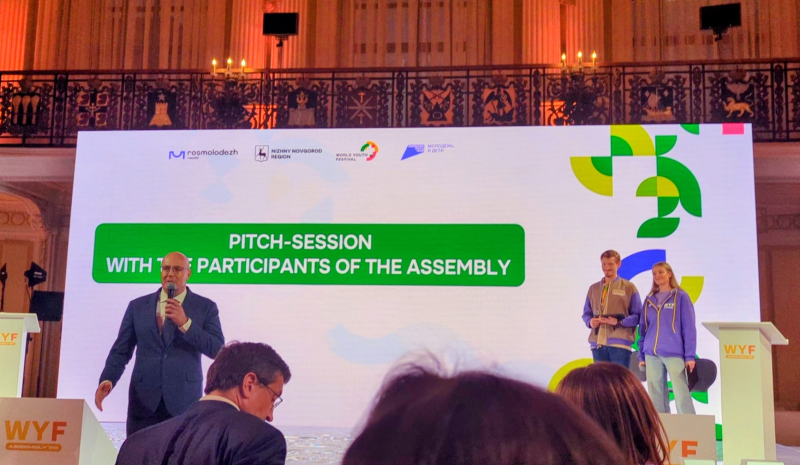
What made the festival special wasn't just the high-level discussions. Throughout the three days, we had access to pitch sessions, entrepreneurship workshops through the Avito School of Entrepreneurship, individual career consultations, and networking opportunities with industry leaders. I participated in a pitch session moderated by Yuri Kuporosov from ITMO's Faculty of Technological Management and Innovations, which felt like bringing my university experience full circle.
The segments called Time of Opportunities allowed us to explore partner pavilions, visit cultural exhibitions like Skin of the Earth and Digital Hopes at the Ermolaeva’s Manor' Hotel, and engage with creative outdoor spaces. These informal settings often produced the most meaningful conversations. I exchanged contact information with data scientists from India working on climate technology, entrepreneurs from South Africa developing educational platforms, and fellow researchers from across Russia.
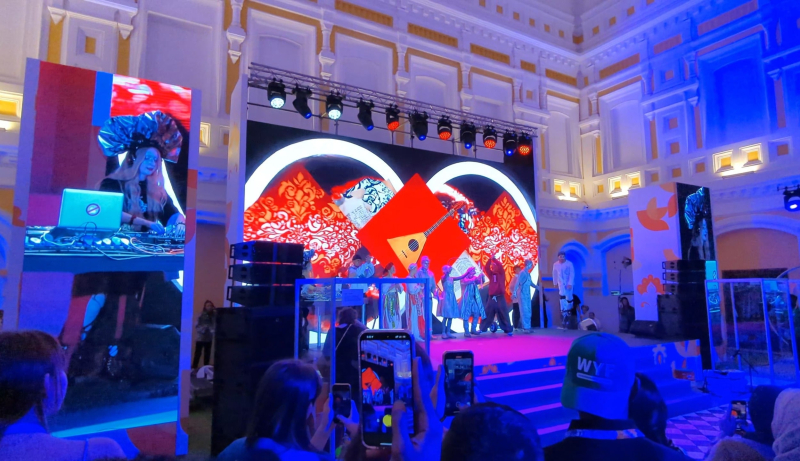
On the final day, we set a Russian record for the largest phygital flash mob, a perfect symbol of how the festival blended digital innovation with human connection. The closing ceremony on September 20th brought together all 2,000 participants on the main stage, and the energy was electric.
Looking forward
As I reflected during the evening sessions back at our accommodation, I realized how this experience complemented my academic journey at ITMO. The festival reinforced what I shared in my earlier interview: that combining research with practical innovation is where real impact happens. Meeting fellow innovators who are already making differences in their countries, whether through AI applications, entrepreneurial ventures, or social initiatives, has expanded my vision of what's possible after completing my PhD.
The World Youth Festival Assembly wasn't just about attending sessions; it was about building a global network of young leaders committed to using technology for positive change. From the competitive application process to the closing ceremony, every moment reminded me why I chose this path. And as someone who found a second home in Russia through ITMO, representing both Egypt and my university at this international platform felt like a profound honor.