
engineer at the Faculty of Applied Informatics
DevOps: Bridging Development and Operations at ITMO University
Before DevOps emerged, the software development world faced significant challenges. Software updates were rare, often taking weeks or months to reach users. Today, modern applications can update multiple times per day, with major companies deploying changes continuously throughout the day. This transformation became possible through DevOps practices.
In the past, when applications broke down, fixing them could take several days, sometimes even longer. Today, such extended outages are rare because companies implementing DevOps have automated monitoring, rapid deployment capabilities, and streamlined incident response processes.
Beyond technical issues, there were problems with how people worked together. Developers and system administrators often found themselves at odds, each speaking their own language and working in isolation. Miscommunication led to deployment failures, with developers writing code that operations teams struggled to deploy, and operations teams setting up infrastructure that developers couldn't easily use. These process failures caused more problems than the code itself.
Out of this chaos emerged DevOps — a methodology that brings together developers and system administrators, combining both technical and soft skills. DevOps practitioners bridge the gap between writing code and running it in production, creating seamless workflows where everyone works toward the same goal. They automate processes, build robust infrastructure, monitor systems continuously, and ensure that updates flow smoothly from development to production.
Today, DevOps engineers are among the most sought-after professionals in the tech industry. Companies across all sectors actively seek these specialists because they make projects significantly better — faster, more reliable, and more efficient. At ITMO University, we recognize the importance of this field and integrate DevOps education into our curriculum, preparing students for successful careers in this rapidly growing area.

Why teaching DevOps at university is important
Why is it valuable to teach DevOps at the university level? Because it's a highly sought-after profession that's changing the IT world for the better, but it requires many different specific skills.
Many universities focus on general technical skills: programming languages, algorithms, databases, and computer architecture. While these fundamentals are important, a successful DevOps engineer needs to understand both software development and infrastructure management. They need to write code, but they also need to know how that code runs in production, how infrastructure is configured, and how systems scale and monitor themselves. This combination of skills is what makes DevOps engineers so valuable in the industry.
Beyond technical expertise, DevOps professionals require strong soft skills. They must communicate effectively with developers, system administrators, managers, and stakeholders. They need to understand how processes work in different types of companies — from startups to large enterprises — and adapt their approach accordingly. They bridge gaps between teams and help organizations navigate cultural and technical changes.

At ITMO University, these requirements are recognized and addressed through a comprehensive curriculum. For example, at the Faculty of Applied Informatics, the programs include foundational courses that develop essential technical skills, as well as specialized DevOps courses where students learn to work with industry-standard tools such as Docker, Kubernetes, CI/CD pipelines, cloud technologies, and monitoring systems. Students gain hands-on experience with the same technologies they'll encounter in real-world DevOps roles.
The results speak for themselves: thanks to this comprehensive approach, many ITMO students successfully work as DevOps engineers by their second or third year of studies, balancing their academic commitments with professional practice. They enter the job market not just with theoretical knowledge, but with real experience and proven skills.
Community-Driven Learning: The Inview DevOps Club
Beyond formal coursework, the DevOps enthusiasts among ITMO University students and alumni have organized the Inview Club — a community that anyone can join. The club brings together people passionate about DevOps, creating a space for learning, networking, and sharing knowledge. Importantly, the club will be beneficial for international students, too, as all cases are available in English.
The club offers several ways to engage with the DevOps community. There's a channel where posts are regularly published about useful tools for DevOps engineers, along with jokes and real-life stories from the field. Beyond that, there's a chat where members can communicate with like-minded people, ask questions, discuss problems, and share experiences. This community support makes learning DevOps more accessible and enjoyable.
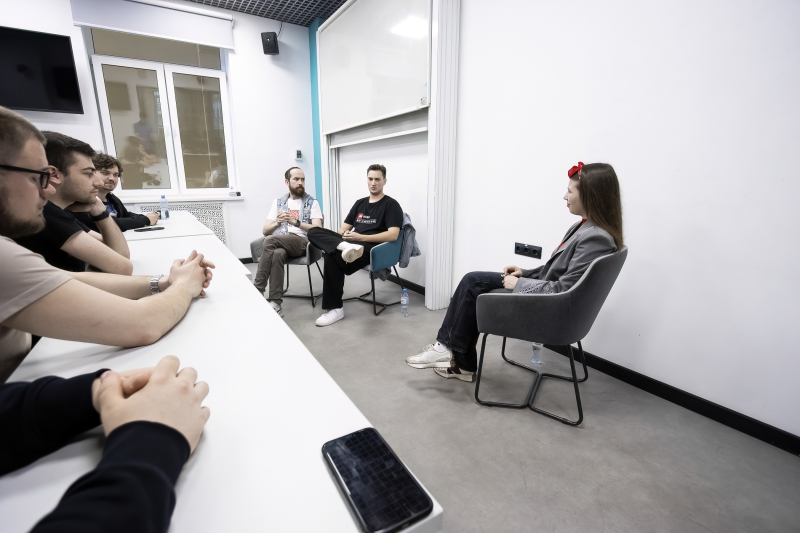
The club also organizes regular meetups with industry representatives from leading bigtech companies, giving members opportunities to learn from experienced professionals and understand how DevOps is practiced in different organizations. We are also planning to host workshops for collaborative exploration of DevOps tools, where participants can learn together and practice in a supportive environment.
Particular attention should be paid to the cases created by the club, available on GitHub. Learning DevOps can be challenging because it's difficult to know exactly what to do — there are many tools to master, and real-world tasks are usually hidden within companies' private repositories and internal systems.
The Inview Club addresses this problem by having active DevOps engineers share tasks from their professional work as open case studies that anyone can solve. These cases are based on real problems encountered in production environments, covering topics such as build isolation, container image optimization, data migration, hot-warm architectures, observability systems, and modern DevOps tooling integration. Each case can be implemented locally, allowing participants to gain hands-on experience with the same challenges they'll face in real DevOps roles.
By making these cases freely available on GitHub, the club enables anyone to study the problems, implement solutions, submit pull requests, and receive feedback from experienced practitioners. Through the Inview Club, anyone can independently acquire DevOps engineering skills while being part of a supportive community that offers guidance, advice, and networking opportunities.