
PhD student, Faculty of Technological Management and Innovation
Academic Visit to Xinjiang: Technology, Innovation, and China’s Rapid Development
As a PhD student and member of the staff of the Faculty of Technological Management and Innovations at ITMO, I had the opportunity to participate in an international academic visit to the Xinjiang region of China, from August 10 to 17. The program brought together scholars, researchers, and university representatives from China and different parts of the world, creating an important platform for academic exchange, international cooperation, and the discussion of technological and social development.The visit was organized by the China Center for International Cultural Communication, which invited me to participate as one of the academic experts in the program. My participation was focused on contributing an international academic perspective on technology, innovation, technological management, and regional development.
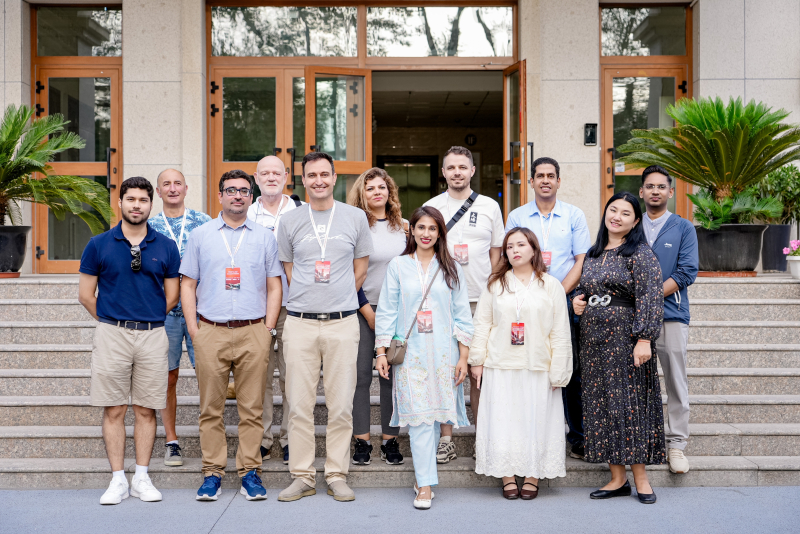
The international character of the delegation was particularly valuable. Participants included academics and researchers connected with Al-Azhar University and October 6 University (Egypt), Ankara University (Türkiye), the University of Tehran (Iran), Tsinghua University, the Chinese Academy of Sciences, and Jilin International Studies University (China), and other institutions from Asia, Europe, Africa, and the Middle East.
Throughout the journey we could also observe the development of the cities of Urumqi, Korla, Bohu, Luntai, and Kuqa, each with their different story. From my perspective in technological management and innovation, one of the most relevant aspects of the journey was observing how technology is incorporated into regional and urban development. The visit to the Yungengji Smart Farm Demonstration Base in Korla provided a concrete example of smart agriculture, technological applications, and the modernization of agricultural production.
Similarly, the trip showed us how technology is deeply intertwined with local needs. Whether we were observing the efforts in ecological restoration at Lake Dahekou in Bohu County, visiting the cultural preservation initiatives, or seeing the urban transformation, the journey emphasized that infrastructure, modernization, and local development are becoming increasingly interconnected. I was particularly impressed by how these developments respect each city's unique cultural identity and character rather than applying a one-size-fits-all model.
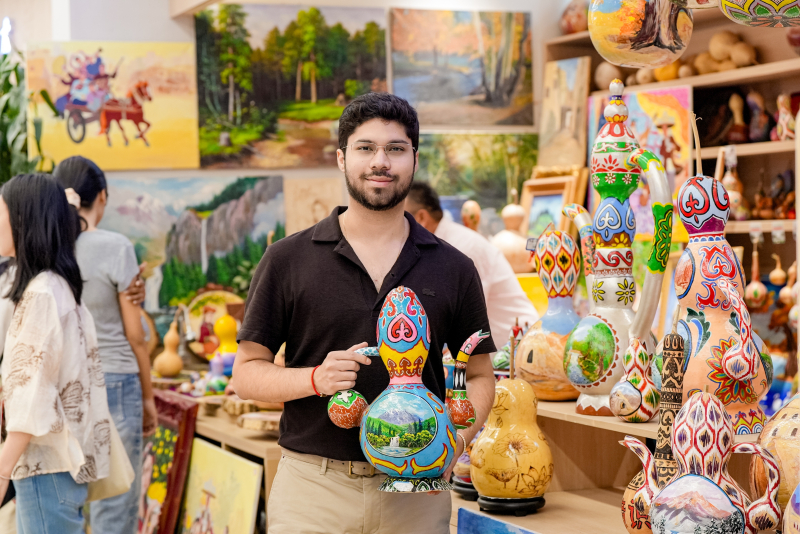
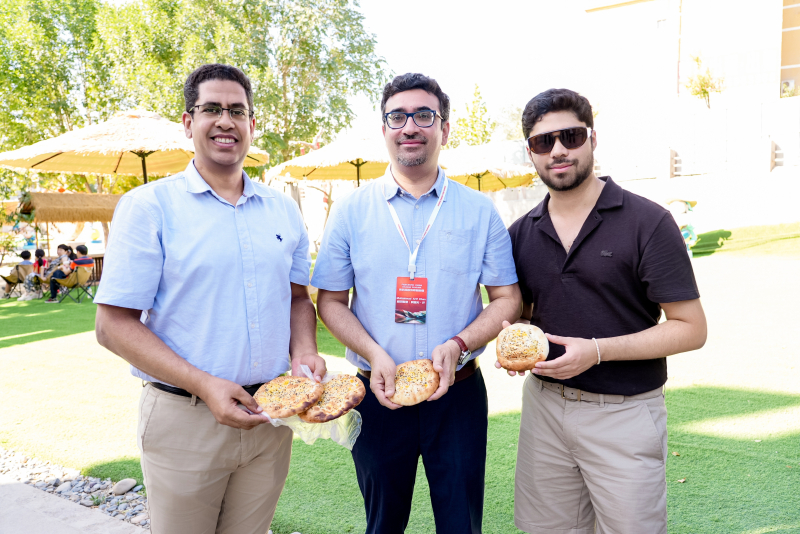
During the academic program, the visit to the Qiuc Intangible Cultural Heritage Workshop in Kuqa provided a practical experience in traditional craftsmanship. The photos capture me holding a decorated gourd that I participated in painting, as well as a moment with two other colleagues enjoying fresh local nang bread from the Kuqa Big Nang City.
The academic component culminated with experts from Xinjiang Normal University, where Chinese and international scholars participated in a symposium for dialogue and exchange. During the forum, I had the opportunity to share my perspective on the importance of China’s rapid pace of development and its capacity to transform ideas into concrete actions. I also emphasized that leadership in development should be accompanied by respect for each city, its particular characteristics, and its own path toward progress. This experience reinforced my interest in understanding China’s approach to innovation, technological development, and international academic cooperation.
I sincerely thank An Le and Ullia Trabskaia for their valuable support, coordination, and assistance throughout this academic journey. Their contribution made this international academic experience especially meaningful and enriching.