You are originally from Peru and you grew up in Spain. How did Russia, St. Petersburg, and ITMO enter your life?
I graduated from the School of Foreign Trade and International Relations in Lima. During my studies, I participated in an academic exchange program at the Areandina University, Colombia, where I also studied international business. While studying in Colombia, I received a scholarship from the Chinese government, which allowed me to travel to Beijing, Zhuhai, and Guangzhou to give seminars. Then the pandemic began, and I had to return to Peru. However, my desire to pursue a Master's degree abroad never left me, and a friend from China suggested I consider Russia. Russian and Chinese universities have long maintained close cooperation, so Russian universities were already well known to me.
I considered several universities, but ultimately chose ITMO. It seemed to me an unusual university that combines theory and practice. Students here not only gain professional knowledge but also have opportunities to gain teaching experience or launch their own startups, and the faculty are open to change and keep up with new technologies. I had a strong academic record during my Bachelor's studies, so I was able to apply for a scholarship from the Russian government. This happened during the pandemic; I won the competition and arrived at ITMO in 2022.
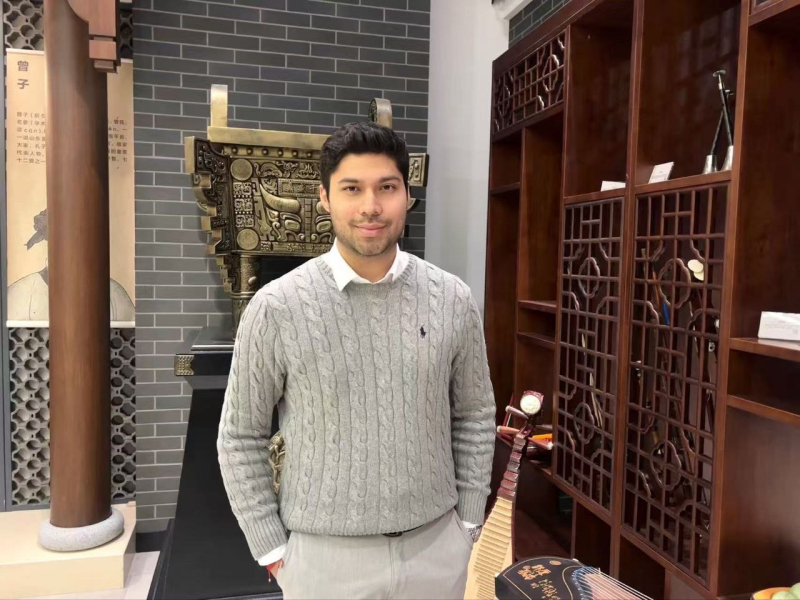
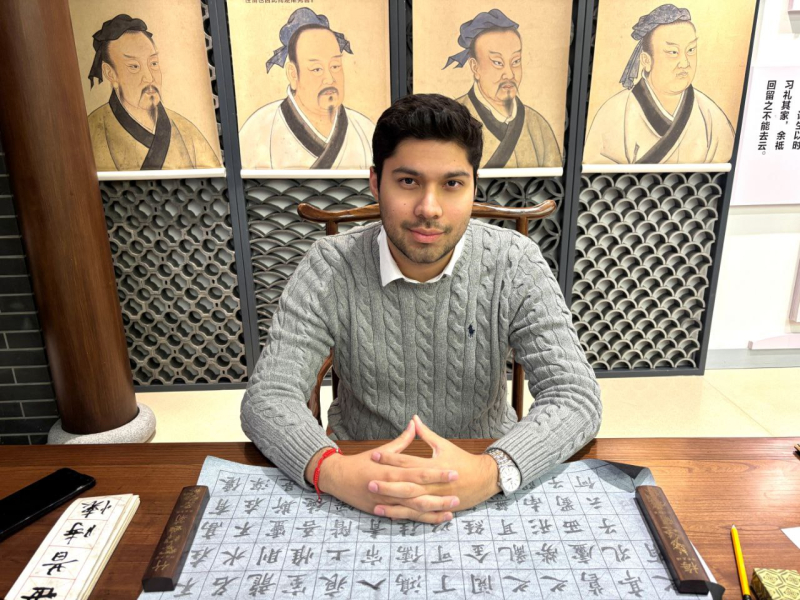
Diego Arbildo. Photo courtesy of the subject
What were your first impressions of Russia?
I remember snow most of all. It doesn’t snow in Peru and Colombia, and I visited China in spring and didn’t see it. At first, I enjoyed this winter weather because it was so new to me. But now I think that it wouldn’t be great to be caught in the snow, plus it gets quite cold in St. Petersburg in the winter.
At ITMO, on the contrary, the atmosphere is warm and welcoming. My Master’s studies were in English. There was one other international student in my group, all others were Russians. Back then I didn’t speak Russian as I hadn’t taken the preparatory course, but both my lecturers and my classmates supported me, they even helped me with private matters, like when I needed to visit a hospital. I stayed at the apartments for international students and got to hang out with students from Iran, Russia, and China.
What did you study in your Master’s program at ITMO?
I studied in the program Innovative Entrepreneurship in the specialization Creative Industries. It focused on technologies and innovations in the fields of culture, new media, design, and sustainable development. In the program, we studied business strategies, creative economy, and the creation of innovative projects. The soft skills taught at the university turned out to be very useful for me – I learned to quickly make and change business decisions, listen to and understand partners, organize schedules, and comprehend different cultural contexts.
At ITMO I also got the chance to gain some teaching experience. My supervisor Iuliia Trabskaia, the deputy dean of the Faculty of Technological Management and Innovations, suggested I assist a lecturer for a semester. At this position, I helped write educational curricula, took part in interdisciplinary discussions, developed and delivered lectures in international business management and the use of AI and new technologies in the field.
In a way, I became a link between cultures and suggested an analytical perspective and a neutral assessment of decisions based on my experience of interaction with the Latin American and Eurasian markets. Thanks to that, I was invited to give lectures at other universities in Moscow and St. Petersburg, including HSE University, Moscow State Institute of International Relations, and Lomonosov Moscow State University. There, I conducted an in-depth analysis of the implementation of AI into the educational, business, and governmental sector in Brasil, Mexico, and Peru, as well as taught the students to build strategic partnerships and enter the markets of these countries. Moreover, I was a guest speaker at events held by universities in South America, the Middle East, and Asia. There, I presented the talk “An Innovative Ecosystem in Latin America: Lessons in AI and Technology Commercialization.” In it, I talked about the achievements of Colombia, Peru, and Chile. Thanks to my experiences of working with Russian and international audiences, I embellished my portfolio and got ready for entering a PhD program.
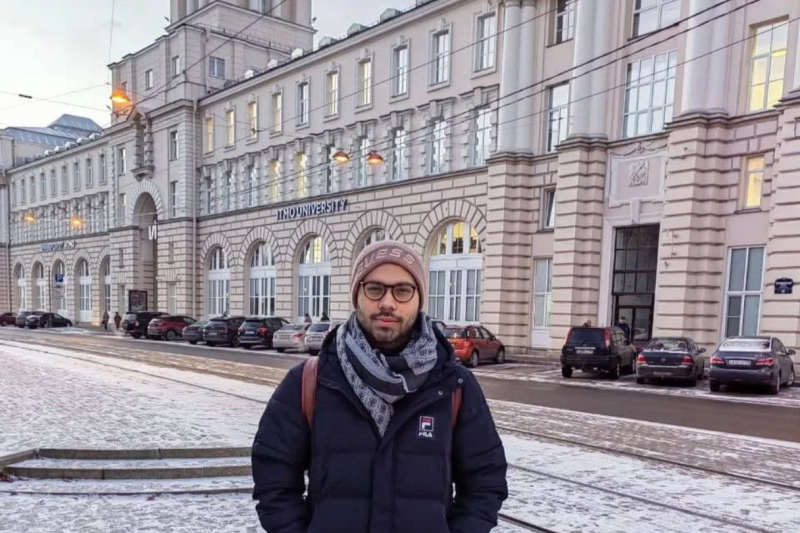
Diego Arbildo. Photo courtesy of the subject
You are now a Professor at Jilin International Studies University. What changed in your life? And how are the students in two countries different from each other?
The two cultures are so different that sometimes it feels like there are two personalities living inside me: one understands Chinese students better, the other understands Russian students better. First, a Chinese group usually has 40-60 students, while a Russian group has about ten. It is, of course, easier to work with fewer students. Second, many ITMO Master’s students study and work at the same time, whereas in China this is not common – first comes education, then work. That is why in classes with Chinese students, I shift the focus from the traditional “study first” approach to “apply now.” It involves solving practical cases and running simulations.
But no matter whom I teach, I try to convey the following idea: getting good knowledge and an honors diploma is important, but it is even more important to remain a good person. Education is not a competition, but an exchange of experience and mutual help. That is why for my classes I design practical cases and simulations in which students practice fundamental values and interpersonal skills. For example, in a simulation exercise on presentations, I carefully evaluate not only the quality of the business idea, but also the speaker’s character. Clarity and confidence during public speaking, modesty and resilience when responding to harsh criticism from “investors,” as well as mental flexibility for quick decision-making are crucial indicators.
In addition, I use cases with complex ethical dilemmas that have no clear-cut answers. For example, choosing between profitability and user privacy when developing AI. During group discussions, I observe how students demonstrate empathy and social responsibility, and whether they opt for a long-term vision instead of short-term gain.
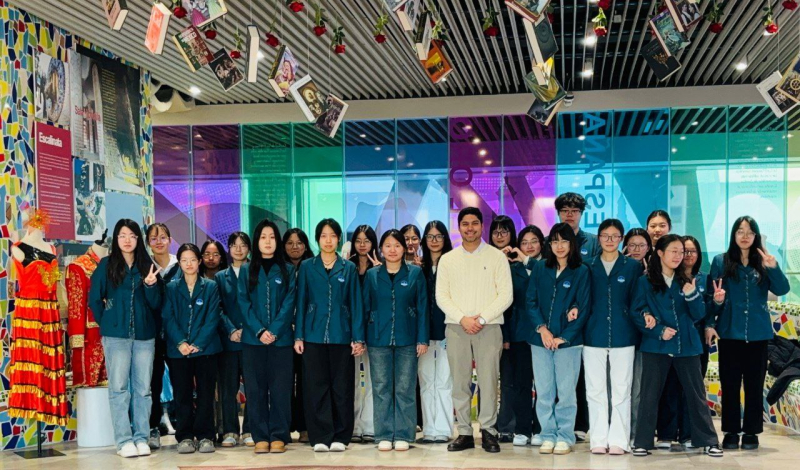
Diego Arbildo and students from China. Photo courtesy of the subject
You’ve been recently named Best Foreign Professor at Jilin International Studies University. Was it your innovative teaching approach that was noted by the jury?
I was honored with this award for several reasons. First, for developing and implementing teaching methods that replaced passive textbook learning with a dynamic model. These are the methods based on immersive cases and practical simulations. This approach increased student engagement and their readiness to solve real-world project management tasks related to AI on international markets. Second, I believe I was recognized for successfully integrating the teaching of soft skills and ethical principles into the core curriculum. After all, it’s great to be a good student, but even better to be a good person.
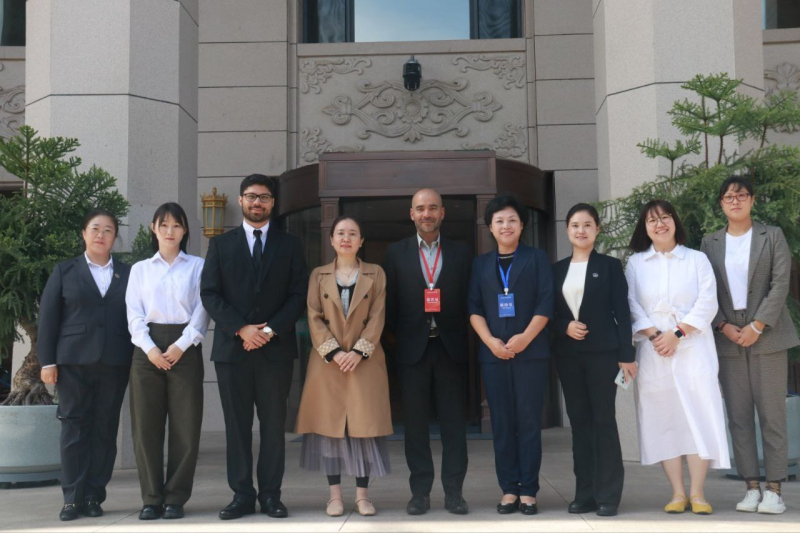
Diego Arbildo, the dean of the School of Engineering at Pontifical Catholic University of Peru, and the dean of the School of Artificial Intelligence, Innovation, and Entrepreneurship at Jilin International Studies University. Photo courtesy of the subject
How do you switch between different contexts and what did you learn from both cultures?
I have always been very curious and I strived for personal and professional growth, so I never saw such challenges as risks. For me, working in different countries with people from completely different cultures is primarily a valuable educational experience and an opportunity to learn something new. To switch between cultural contexts, one must be able to show empathy, adapt behavior to the interlocutor, and, of course, let go of stereotypes and biases. It is always important to remember that a person’s way of acting in a culture different from mine is not wrong, just different. Only this way can one learn something new.
Talking of something specific that I have adopted from different cultures… From the Russian culture – the incredible resilience, depth of friendship, and powerful strategic thinking. Once you earn trust, you will always have support. From the Chinese culture, I learned the immeasurable power of discipline, the effectiveness of collective efforts, and the importance of long-term strategic vision.
You rely on this knowledge and experiences in your work at the International Projects Center of the Faculty of Technological Management and Innovations. What are your responsibilities there?
We arrange international conferences, joint studies and institutes, double degree programs, and other forms of collaboration with universities from around the globe. For instance, in a year we established contact with 24 universities in China, the Middle East, and South America. In 2025, we also held the international online school Disruptive Unicorn Lab, where over 1,100 students from 37 countries developed their tech startup ideas, learned to use AI in product development, and practiced applying to international accelerators. Among the school’s mentors were experts from China, Thailand, the Philippines, Brasil, Peru, Argentina, and other countries.
What is next on your agenda?
I continue my studies as a second-year PhD student at ITMO under the supervision of Iuliia Trabskaia, as well as my work at the International Projects Center, though both remotely. Last year, I accepted the offer to become a Professor at Jilin International Studies University. This is my second year of teaching in-person classes in entrepreneurship, innovations, and corporate communications to students here.
In general, I plan to continue serving as a kind of bridge between China and Russia and around the world and I'm grateful to Dr. Song Dandan for her support and advice. I am planning to develop solid, sustainable, and mutually beneficial partner relations between the countries, be that technological collaboration, joint research, or student exchange.