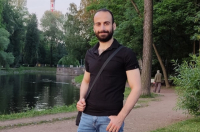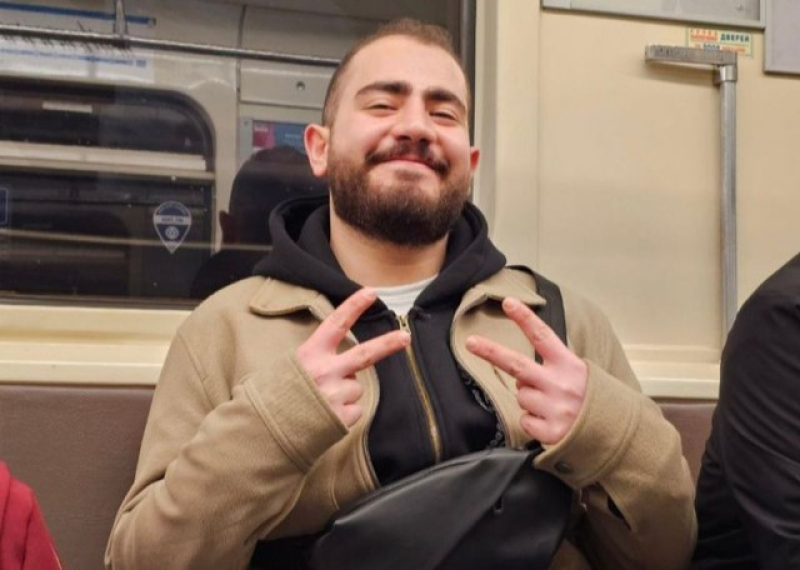
Hi, Rami! Please, tell our readers a little about yourself.
I am Rami, I’m 24 years old, and I come from a small coastal city in Syria called Tartous. It’s a beautiful city by the sea, and I’ve always loved the coast!
What first sparked your interest in molecular biology and biotechnology?
I am a very curious person, and most of my curiosity was answered through understanding how living systems work on the molecular level. Then, I realized that I could understand many of these complex mechanisms if I specialized in this field. At this point, I see myself capable of understanding a lot more about these systems and potentially contributing to this knowledge in the future.
What excites you most about working in this area today?
As much as we know about cells, biology, organs, and diseases, it’s really just the surface of the truth. This is one of the reasons why designing drugs and cures isn’t as easy as people might expect. Uncovering this hidden knowledge is the spark that I hope to follow for the rest of my academic career.
You recently won a grant for your research project. Congratulations! Could you tell us what the project is about?
Thank you! The project is mainly about studying one gene out of more than 20,000 functional genes that humans have, which already shows how complex biological systems are. This particular gene is known to help repair DNA, which carries our genetic information. However, through experimentation, I began to notice that there might be signals responsible for regulating this gene; in other words, controlling when it is active and when it is not.
This is part of a deeper field called epigenetics. It focuses on understanding how gene activity is controlled without altering the DNA sequence itself. This is something I aim to experiment with, understand more deeply, and highlight its importance in biological research.
What has been the most challenging or surprising part of working on this project so far?
Epigenetics is still poorly understood, not because scientists aren’t interested in it, but because it involves extremely complex datasets that researchers can spend decades interpreting. In other words, it is very difficult.
The same applies to me. I had to learn the basics from scratch (and I’m still learning), plan complex experiments, and understand why each experiment should be conducted in a particular way. All of this often happens with minimal guidance, so it has definitely been a very challenging process.
What does your research team look like, and how do you collaborate in the lab?
Our lab includes researchers from multiple disciplines, one of which is called bioengineering of stress resistance. Many different research ideas are being explored in the lab, and people are working on a variety of projects.
For my specific project, the team currently consists of just me and my scientific supervisor. However, I hope that by the time I finish my Master’s degree, other Master’s students will join the project so that we can work together and uncover more as a team.
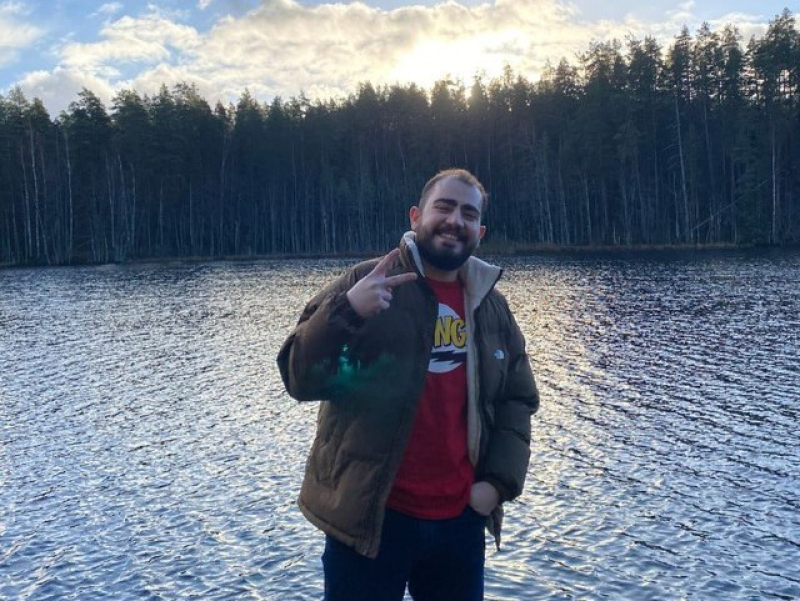
Rami at Yagodnoe. Photo courtesy of the subject
How did you feel when you found out you had won the grant?
Many people think that science is only about doing experiments, reading papers, and writing results. That’s only partly true. As much as gaining knowledge is important, being able to explain the value of your research to people who can fund it is equally important.
Achieving this as an international student, and without even having a Master’s degree yet, felt like a huge accomplishment. It may not be the largest grant out there, but as I continue learning how the scientific system works, I see it as a perfect start.
How would you describe the research environment at ITMO so far?
Like most places, there are good times and challenging moments. Personally, I prefer to focus on doing my research and trying to increase those “good times” for the people around me, especially in our lab.
When you’re not in the lab, how do you like to relax or recharge?
That doesn’t happen very often, but I do have a few hobbies that help. I enjoy taking trips to nearby towns and talking with local people. I also like camping in nature and going to the gym. But what helps me the most is music. I listen to music about 99% of the time. It has a strong influence on my mood and productivity throughout the day.
Read also:
What advice would you give to international students who are considering studying biotechnology in Russia?
First, having a degree is important, but you also need to understand the real purpose of having one. What are you planning to do with it? What will happen after you earn it? These may seem like simple questions, but you need clear answers before starting such an experience.
Second, biotechnology is a challenging field. It tests your resilience more than almost anything else. But if you truly want it, you will find yourself growing through those challenges. So don’t be afraid of them.
Finally, what motivates you to keep pushing forward in such a demanding scientific field?
Research doesn’t really rely on motivation; it requires commitment. Without commitment, it becomes passive research rather than active discovery. You need to be involved in multiple projects, collaborate with others, work hard, and stay present in your institute. That’s how you stand out. Not through motivation alone, but through dedication and consistent effort.