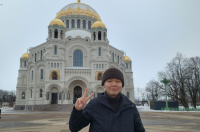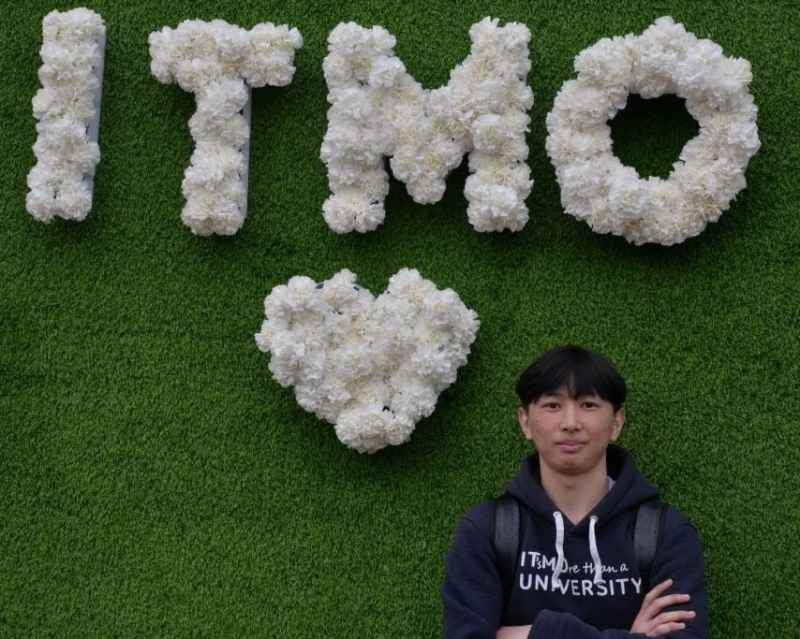
Could you introduce yourself and tell us where you’re from?
Hi, my name is Byeibitkhan Khalifa. I’m from Ulgii, Bayan-Ölgii in Mongolia. I have a background in neuroscience and programming, and I’m currently pursuing a Master’s degree in design and development of AI systems.
What motivated you to transition to AI from neuroscience?
I’ve always been fascinated by how the human brain works, how we learn, make decisions, and recognize patterns. AI felt like a way to explore that curiosity through technology and create systems that can think, in some ways, like humans.
Do you see AI more as a tool, a collaborator, or something else entirely?
I see AI as a collaborator. It’s more than just a tool because it can help humans analyze data, generate ideas, and solve problems, but it still requires human guidance and creativity.
If you could design an AI system with no limitations, what would it do?
I would design an AI system that understands people’s needs and helps make knowledge and services more accessible. For example, improving education, legal services, and decision-making, especially in Mongolia.
What has been the most exciting or unexpected thing you’ve learned so far in your program?
I’ve been amazed at how concepts from neuroscience translate directly into AI models. Seeing how ideas like learning, adaptation, and pattern recognition work in machines has been both exciting and unexpected.
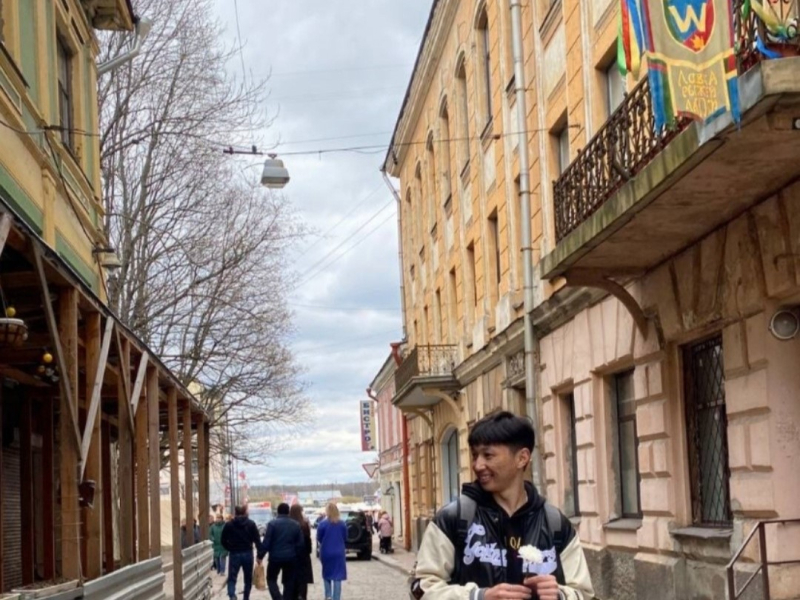
Byeibitkhan in Vyborg. Photo courtesy of the subject
Are there any courses, projects, or tools that have really changed the way you think about AI?
Working on real AI projects, especially chatbots and automation systems, has really changed my perspective. It showed me that AI isn’t just theoretical; it can directly solve real-world problems.
What was your first impression of St. Petersburg and student life at ITMO?
St. Petersburg is a beautiful and historic city. Student life at ITMO is dynamic and challenging, and I really enjoy it. The environment pushes you to innovate, think critically, and apply what you learn in real projects.
Have you noticed any interesting cultural differences between Mongolia and Russia?
Yes, there are some differences. Russia feels more structured and fast-paced, while Mongolia is more flexible and community-oriented. Experiencing both cultures has been very enriching.
When you’re not coding or studying, how do you like to spend your time?
I like staying active and challenging myself. I play basketball, enjoy chess, and sometimes play video games like Counter-Strike 2. These activities help me relax while also keeping my mind sharp. Additionally, I enjoy listening to music. Sometimes. I go for a run or draw when I want to relax or clear my mind. I also enjoy watching K-dramas.
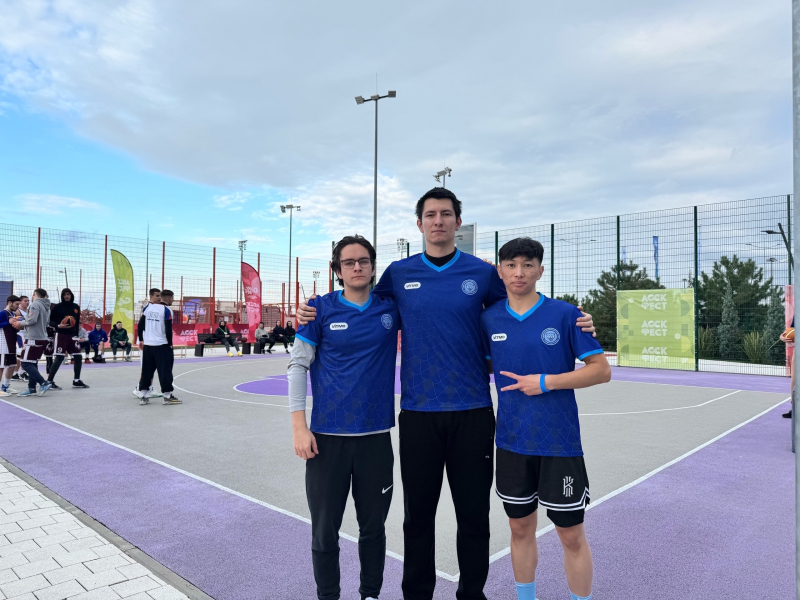
Byeibitkhan with his ITMO KronBars teammates. Photo courtesy of the subject
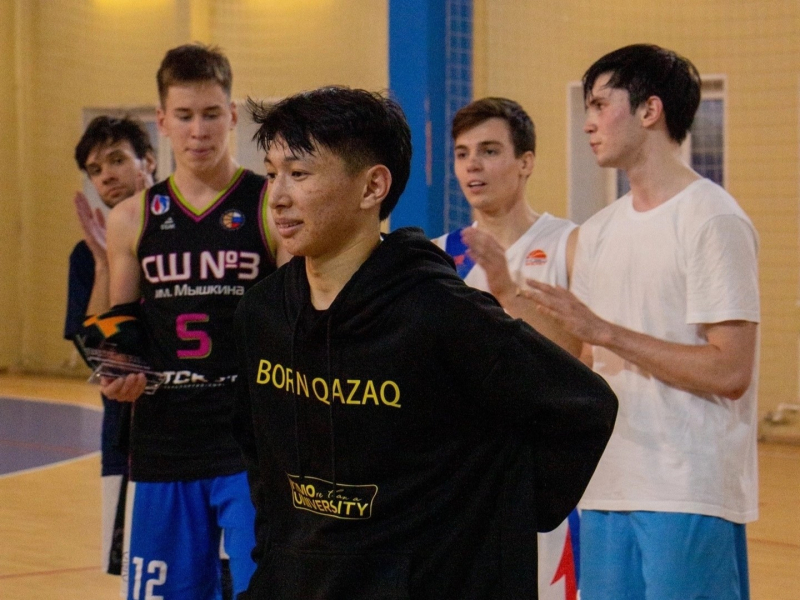
Byeibitkhan at a KronBars game. Photo courtesy of the subject
Where do you see yourself in the next 5-10 years?
I see myself leading projects or startups in AI, developing systems that combine neuroscience and technology to improve people’s lives, especially in areas like education and legal services.
What advice would you give to students who are interested in AI but don’t know where to start?
Start simple and stay consistent. Learn programming, especially Python, and begin with small projects. Explore different fields and combine your knowledge, such as neuroscience or mathematics, with AI to develop a unique perspective.
Finally, if you had to describe your experience with AI in one sentence, what would it be?
AI is where human intelligence and technology meet, opening endless possibilities to create solutions that can change the world.