Responsibilities: senior researcher at the Faculty of Physics, head of the Laboratory of Low-Dimensional Quantum Materials.
Research team: around 20 people.
Projects: the team develops projects at the intersection of optics and two-dimensional semiconductors and invents new concepts and devices based on quasiparticles, excitons, and exciton-polaritons. The lab’s solutions enable faster and more reliable data transmission and processing, and make AI computations more energy-efficient.
From studying mathematics to physics discoveries
I’ve been a scientist for over 20 years. My path started at a school focused on physics and mathematics; I went on to study at the Faculty of Physics of Lomonosov Moscow State University, worked in the industry, continued my studies abroad, and, finally, headed my own lab.
As a school student, I loved math but physics seemed difficult. However, I chose the Faculty of Physics for my further studies because I wanted to get to know this subject better. Before starting university, I didn’t really understand what physics research was about: the problems we solve in school usually have answers and specific solutions that students just need to work out. At university, I joined a research team and realized that there are problems no one knows the answer to – and this is what appealed to me the most; I stayed with the same research team until my graduation. It was a great experience: my research was at the intersection of optics and ecology, and in particular water spectroscopy for contamination detection.
After graduation, I decided to get more applied skills and spent a few years working as an engineer, developing electronic components for various devices. This time was enough to take a respite from science, try something new, and realize that I enjoy doing research – I saw that scientific studies pave the way to applied technologies.
I returned to academia with a challenge: I got into the University of Colorado Boulder. It’s a well-known university specializing in optics, quantum physics, and semiconductors, precisely the fields I wanted to grow in. The university is also notable because four winners of the Nobel Prize in Physics worked there: Eric A. Cornell and Carl E. Wieman (2001), John L. Hall (2005), and David J. Wineland (2012).
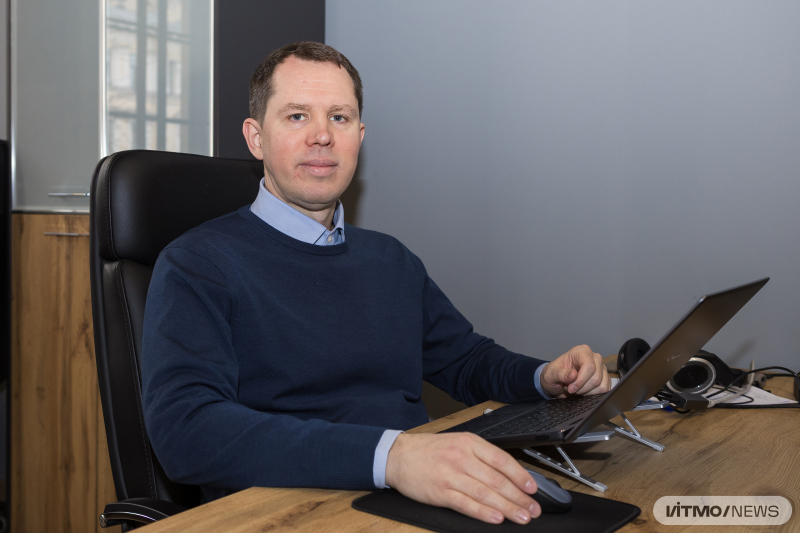
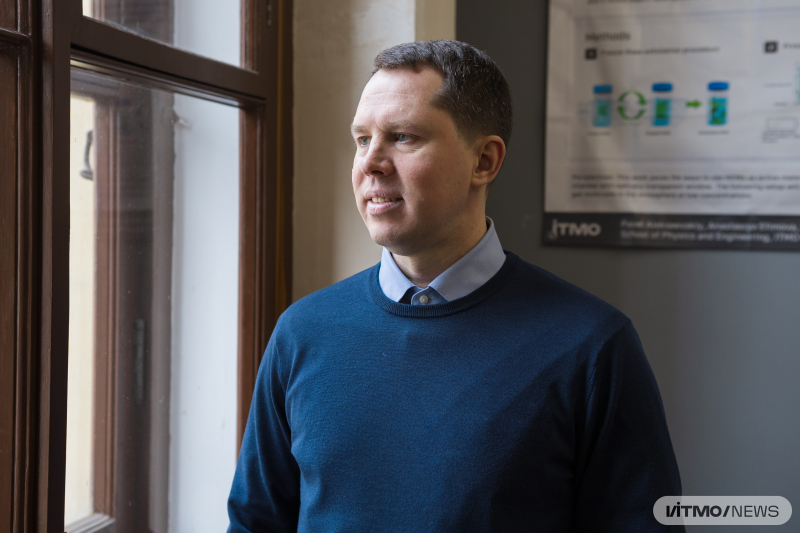
Vasily Kravtsov. Photo by Dmitry Grigoryev / ITMO NEWS
At the university, I joined the team working in nanophotonics and began working on plasmon nanofocusing. To explain what that is, imagine an electrode shaped like a sharp needle that concentrates light very strongly at its tip. It occurred to me that such a needle could be used to probe graphene and then semiconductors to study their physical properties using external radiation. Thanks to this probing, we achieved a nonlinear optical response: I would shine one frequency of light and get back its doubled or tripled frequency. Based on nanofocusing, I developed a technique that helps study how very fast processes occur at the nanoscale in different materials, for example how energy is transferred in space and time. This technique is still used to study the decay effects in quasiparticles, plasmons and excitons. The resulting knowledge helps create faster and more energy-efficient optoelectronic devices for data transfer and processing, including for AI computations, as well as quantum communications components.
Having completed my studies in the US, I considered different universities in Spain, Switzerland, and the UK, but eventually I found the topic I’d like to pursue at ITMO.
Namely, I am talking about 2D semiconductors and materials, nanophotonic structures, and strong light-matter interaction. At that time, ITMO won a megagrant for research into hybrid light-matter states in low-dimensional materials for optical data transfer and computations. The project was headed by Prof. Maurice Skolnick from University of Sheffield and my current colleague, Prof. Ivan Shelykh from ITMO’s Faculty of Physics. I reached out to Prof. Skolnick, he invited me to join the team, and that was how I came to St. Petersburg.
Here, five years ago, I started supervising PhD students – two of them are now graduates. This became a logical continuation of my career. These days, I am mostly dealing with administrative work: applying for grants, reviewing articles, or presenting our work at conferences. In order for my research to continue, I need assistants – my PhD students. I enjoy teaching them everything I know and seeing them grow into independent researchers ready to take on responsibility.
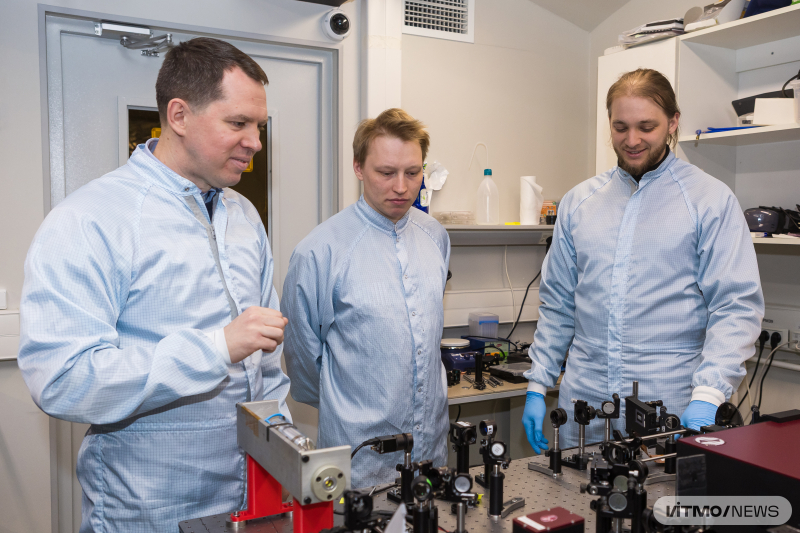
Vasily Kravtsov, Artem Abramov, and Ivan Kalantaevskii (left to right) optimizing an experimental optical circuit for laser spectroscopy of quantum materials. Photo by Dmitry Grigoryev / ITMO NEWS
For instance, one of the research achievements I am proud of was possible thanks to Artem Abramov, a fourth-year PhD student at the Faculty of Physics. We studied and described the mechanism for creating single-photon sources based on a monolayer of a two-dimensional semiconductor. Generating single photons is a crucial task that helps strengthen the security of data transmission in quantum communication, computing, and cryptography. A pair of photons increases the risk of data leaks, but if a single photon is intercepted, the particle is destroyed and the data disappears – this means a single photon cannot be intercepted covertly.
Research at the lab
I am a co-head of the Laboratory of Low-Dimensional Quantum Materials. Here we conduct research at the intersection of optics and 2D semiconductors that I started researching as a PhD student. For instance, we study the way light interacts with 2D semiconductors and based on the effects we discover and design new concepts and devices that can make data transfer and processing, AI computations, and quantum communications faster, more secure and energy-efficient.
At the moment, we are focusing on three fields:
Optics and optoelectronics of 2D semiconductors and heterostructures. We are working on compact quantum optoelectronic devices for faster and more secure data transfer and processing. Recently, together with my PhD students Ivan Kalantaevskii and Artem Abramov, we became the first to discover a new effect that amplifies exciton current by 80 times (excitons are neutral quasiparticles formed from a negatively charged electron and a “hole,” a positively charged quasiparticle), and created a dedicated platform for controlling such current at the nanoscale. It will enable energy-efficient, faster, and more compact excitonic integrated circuits at the nanoscale for data transmission and AI computations.
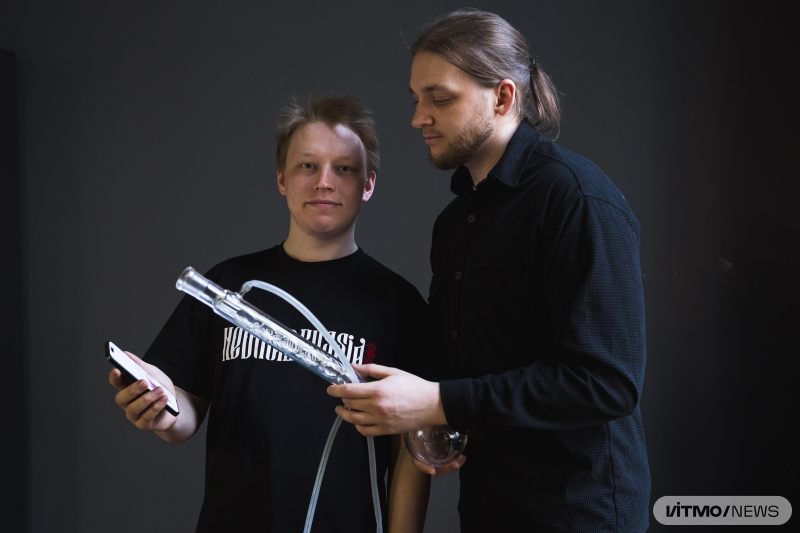
Artem Abramov and Ivan Kalantaevskii. Photo by Dmitry Grigoryev / ITMO NEWS
Exiton-polaritons in semiconductor structures. Currently, researchers use electrons as data carriers for information encryption, transfer, and processing. However, due to diffusion such particles may lose their spin (particle momentum) and thus part of the information. As an alternative, we suggest using mixed-state particles, exciton-polaritons. As I’ve mentioned, excitons are neutral quasiparticles formed from a negatively charged electron and a “hole,” a positively charged quasiparticle; polaritons, on the other hand, are hybrid quasiparticles that result from a strong interaction of an exciton and a photon in a microresonator. The thing with exciton-polaritons is that they demonstrate the qualities of light and matter meaning that they combine the speed of light with spin resistance. This makes the process of working with information more stable and robust. For instance, using exciton-polaritons, we’ve already come up with a way to control light in integral photonic waveguides in an efficient, ultra-fast way using a laser instead of mechanical or electric impact. This work can be used to create ultra-fast optical chips that would accelerate AI computations.
Light-matter interaction in quantum materials. Here, together with my PhD student Artem Abramov, we are developing integrated devices where 2D-semiconductor-based single photon sources are connected to resonant nanophotonic structures. Such devices can be used in quantum communications, quantum computers, and secure quantum cryptography. We are also developing quantum simulators, a specialized subset of quantum computers focused on solving a specific class of tasks that they can solve much more efficiently than conventional information processing systems. For instance, they can model quantum physical processes – the movement of electrons in a crystalline lattice, atom interaction, or the birth of neutron stars.
Just now we are also starting to venture into 2D magnetic materials. They can be magnetized with a laser and thus change their magnetic order characteristics – for instance, their own magnetic field. Using 2D magnetic materials, we could increase the reading and writing speed, as well as the density of information compared to existing solutions. This opens the way to next-gen memory devices, such as solid-state drives, and the memory elements at their core, such as SSD and HDD.
These projects are supported with funds from the national program Priority 2030, as well as five Russian Science Foundation grants (No. 25-72-20029, 25-42-01019, 25-22-20038, 25-12-00119, and 25-72-20030).
This year, our lab will receive around 30 million rubles in funding.
Moreover, we collaborate with different partners, among them are St. Petersburg Academic University, St. Petersburg State University, Ioffe Institute, Moscow Institute of Physics and Technology, Russian Quantum Center, Rosatom, Pohang University of Science and Technology (POSTECH) in South Korea, and Tongji University in China.
PhD supervision
At the laboratory, I supervise both experimental and theoretical physicists – that is around 20 people in total of different academic levels (Bachelor’s, Master’s, and PhD) and fields of study (optics, materials science, and even chemistry). When I welcome a new student, the first thing I look at is where their interests lie and then, if they can work with their hands; here, they need to not only generate ideas but also assemble, set up, and repair experimental installations.
The faculty’s laboratories and equipment are available to different research groups so we don’t have any problems with conducting different types of research. Some experiments require unique, specialized equipment: for example, a helium cryostat, which can cool magnets and materials to up to 6K, or a laser system, which can be tuned over a wide energy range and thus generate short laser pulses with a desired wavelength.
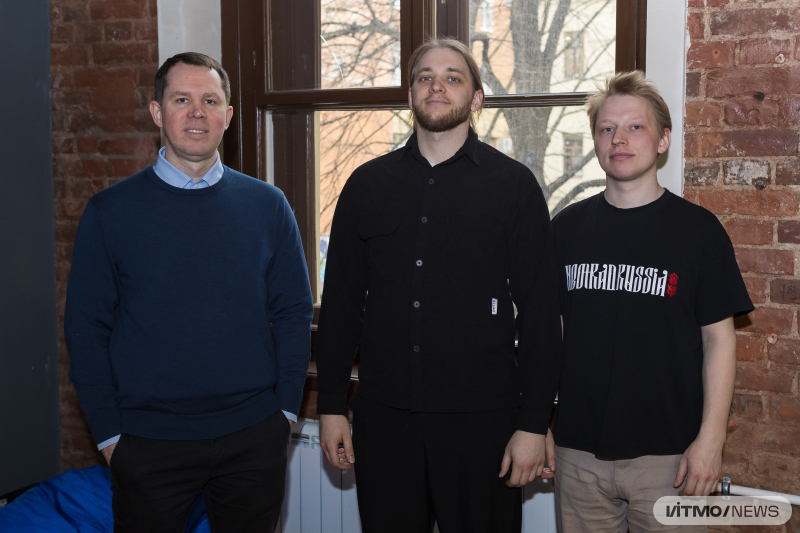
Vasily Kravtsov, Ivan Kalantaevskii, and Artem Abramov (left to right). Photo by Dmitry Grigoryev / ITMO NEWS
PhD students have access to all these setups, as well as many other opportunities at ITMO. For instance, they can:
Apply for ITMO's practice-oriented research and R&D projects competition. If successful, teams will be granted 2.5 million rubles annually for two years and have access to the university’s research facilities and assistance with documentation, testing, and defect tracking of prototypes. Two students and researchers from ITMO’s Faculty of Physics won the competition in 2025.
Implement an interdisciplinary project with ITMO Collab. PhD students can lead a student team from different ITMO schools, pitch their idea, which aligns with the university’s strategic projects, and receive up to one million rubles to bring their project to life. In 2024-2025, two PhD students from ITMO’s Faculty of Physics, including my student Artem Abramov, were named the winners of the ITMO Collab contest.
Join a program by the Foundation for Assistance to Small Innovative Enterprises (FASIE). Winners of the FASIE-sponsored UMNIK grant competition, for instance, receive grants of up to 500,000 rubles for their commercially-oriented research and engineering projects. The program is open to young scientists at the age of up to 35 years.
Work at the laboratories of ITMO’s partner universities. For example, Tatiana Oskolova, a second-year Master’s student at ITMO’s Faculty of Physics, spent about a month at Pohang University of Science and Technology in South Korea doing an experiment on the deformation of 2D heterostructures. Now, we’re writing a paper based on the results she obtained there. Another PhD student, Ivan Kalantaevskii, spent two weeks at Tongji University in China conducting experiments on the control of magnetic exciton-polaritons in the 2D material CrSBr. He’s planning another research trip soon.
If you want to join a research team at ITMO’s Faculty of Physics (including mine), you need to:
-
Select and contact a supervisor of your choice. You can find a list of all ITMO supervisors and their contact information here. In your email, you should mention your education, scientific papers, patents, participation in conferences, research interests, and plans for your PhD;
-
Take a tour of the laboratory and see it in person. As a rule, applicants are invited to tour their future laboratories, but if not, you can ask about a possible tour when talking to your supervisor.
-
Complete an internship at ITMO’s Faculty of Physics. Master’s students from ITMO and other universities planning to pursue an academic career can select their laboratory, thesis topic, and supervisor at ITMO beforehand within the PhD internship program. Moreover, program participants will also obtain maximum points for individual achievements when applying to a PhD program.
Read more about how to become a PhD intern in this article.