Contents
What’s a PhD intern?
Launched in 2024, the program offers Master’s students planning to pursue a career in academia a chance to get a head start as researchers. While still doing their Master’s degree, they can select their future laboratory, thesis topic, and supervisor and also receive a top score for personal achievements when applying for a PhD program. Over two years, 60 students were enrolled in ITMO’s PhD programs via this initiative.
Who is it for?
The program is designed for Master's students at ITMO and other Russian universities.
Opportunities
Maximum score for personal achievements. PhD interns gain 20 additional points to their applications – the highest possible score for personal achievements as stated in the 2026 admission regulations.
Other grounds for receiving points are publications in peer-reviewed journals (2-4 points), research grants (up to 3 points for a personal grant), or an invention patent (up to 2 points). You can find the full list of personal achievements on ITMO’s PhD website. PhD interns, however, don’t need to collect them one by one – they can lock in the top score right away and no longer worry about their portfolio.
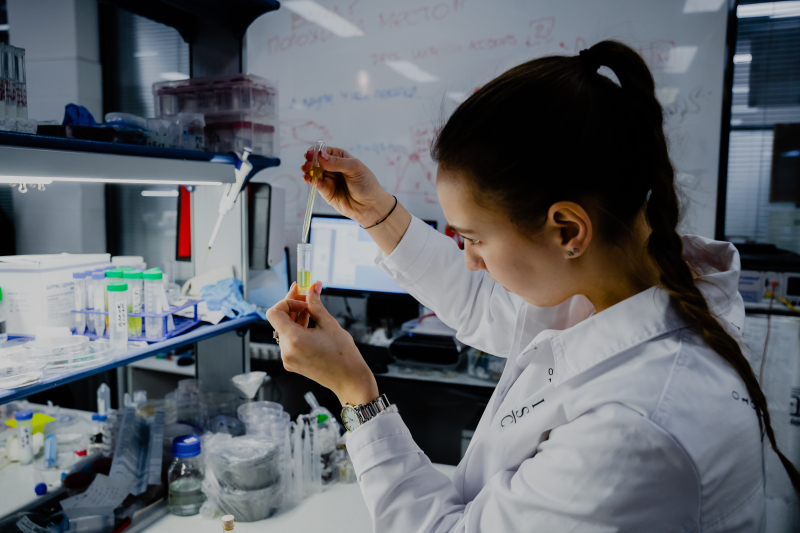
Early start in academia. For students, the program is also a chance to have an inside look at ITMO’s PhD system before applying: they can tour the university’s departments and laboratories, gain practical experience in research, explore the scientific fields on offer, and pre-select their supervisor and thesis topic. In the long run, PhD interns have a higher chance of successfully defending their PhD theses.
Credit: ITMO University
How to apply
The status of a PhD intern is granted to Master’s students involved in research and R&D projects that receive funding from the state or the industry. These are, for instance, projects by the Russian Science Foundation (RSF) or the National Technology Initiative (NTI), government contracts, or collaborative projects by ITMO and its industrial partners. Keep in mind that points are not awarded for in-house university projects – Master’s and PhD research, ITMO Collab, and some others.
To confirm the status, you need to be employed by ITMO as a researcher; the contract must be signed no later than on April 1 of the year of your planned admission.
If you want to get a research job at ITMO, you need to contact the laboratory, center, or any other department you study or do your practical training at. You can do that via email or by visiting them in person. When you do, offer your help, ask about ongoing projects you can join, and tell them about your skills and research interests. If you’re not an ITMO student, you need to also send them your CV and portfolio. If you have any questions, feel free to email the PhD Office at aspirantura@itmo.ru.
Student insights
Ilia Doroshenko, a first-year PhD student at ITMO:
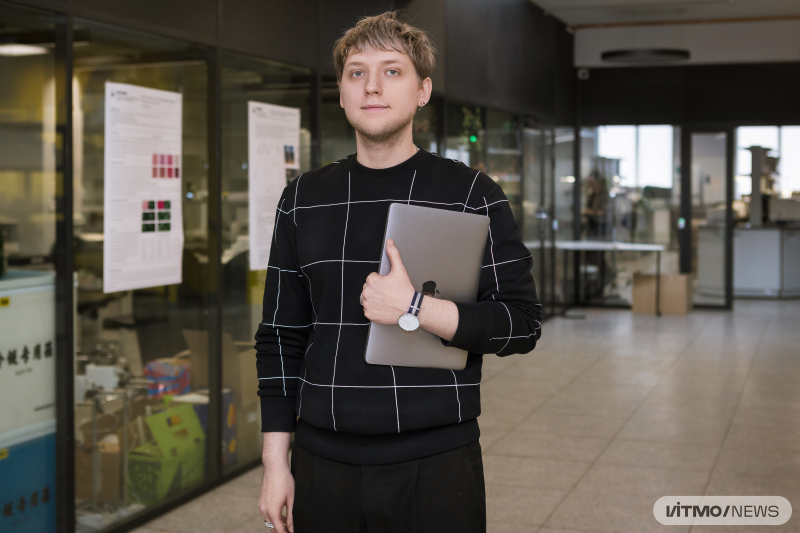
Ilia Doroshenko. Photo by Dmitry Grigoryev / ITMO NEWS
How I applied. In the second-year of my Master’s, around October or November, I made the final decision to pursue my PhD at ITMO because I wanted to continue my research and bring it to the application stage as a joint project with an industrial partner.
I studied sustainable chemistry for energy technologies and got a job as an engineer at the university’s Energy Lab. As part of a government contract, my teammates from the Smart Membrane group and I worked on a technology for lithium extraction; lithium is a crucial metal for green energy currently used in electronics. For that, we developed and tested membranes that selectively extract lithium from brines and analyzed how different coatings affected its selectivity.
When applying for a PhD program, I emailed the PhD Office and submitted my application with all the necessary documents via the university’s admission website. Then, the university published a list of students who received additional points for the PhD intern status – I was one of them. At the same time, I passed my physical chemistry exam and used my international English certificate to pass my English one. Thanks to my good grades and personal achievements, I found myself on top of the enrollment list and got into a PhD program tuition-free.
If you’re from another university but plan to study at ITMO, I’d recommend taking an internship while you’re still in your second year of Master’s studies to get to know the research team and find a field of study you’d like to pursue later on.
My takeaways. Thanks to my job at an ITMO laboratory, I mastered all the practical aspects of applied chemistry for the energy sector: namely, I learned to work with scientific literature and operate complex equipment (a scanning electron microscope, an atomic emission spectroscope, etc.). My job also allowed me to meet the research team in advance and gain experience of working in a team. What’s more, I was able to switch my research field since I got my Bachelor’s degree in a different field (oil and gas engineering). Apart from practical skills, I also gained extra points that helped me top the lists and enroll in my PhD program tuition-free.
Also, my job helped me choose my thesis topic. For my PhD, I opted to continue my research – currently, we’re working on a paper that will highlight the practical applications of our lithium technology.