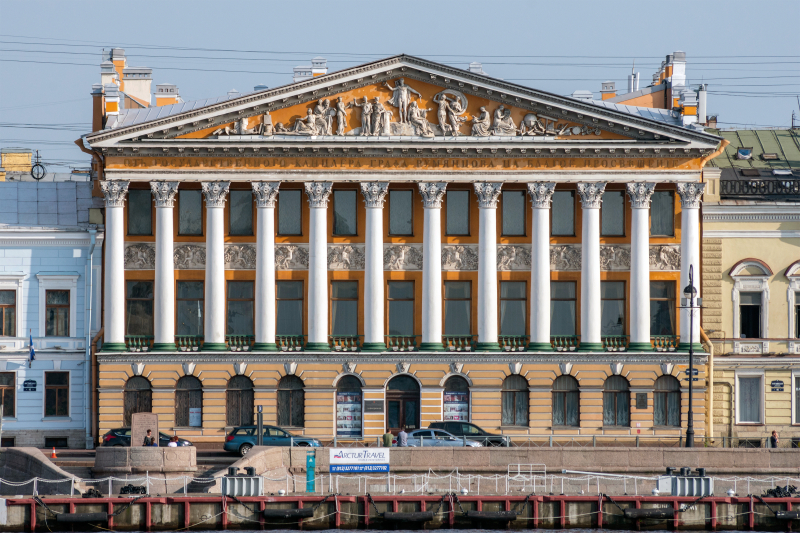
Rumyantsev Mansion
Named after one of its owners, Nikolay Rumyantsev, the Foreign Minister under Catherine the Great, this building has changed several hands and appearances since the early 19th century. Today, it stands as a fine example of Neoclassical architecture, with a symmetrical faсade of twelve columns topped with a portico.
What’s inside
Now a branch of the State Museum of the History of St. Petersburg, it hosts quaint yet fascinating exhibitions: from a glimpse into the Soviet economy to the historic communal apartments that once existed here. Part of the mansion remains untouched so you can walk through the rooms that once hosted grand dancing parties and enjoy the view of the Neva River. As for the designs, don’t miss the city’s largest mirror and a grand oak staircase.
Kshesinskaya Mansion. Credit: Alex 'Florstein' Fedorov, CC BY-SA 4.0, via Wikimedia Commons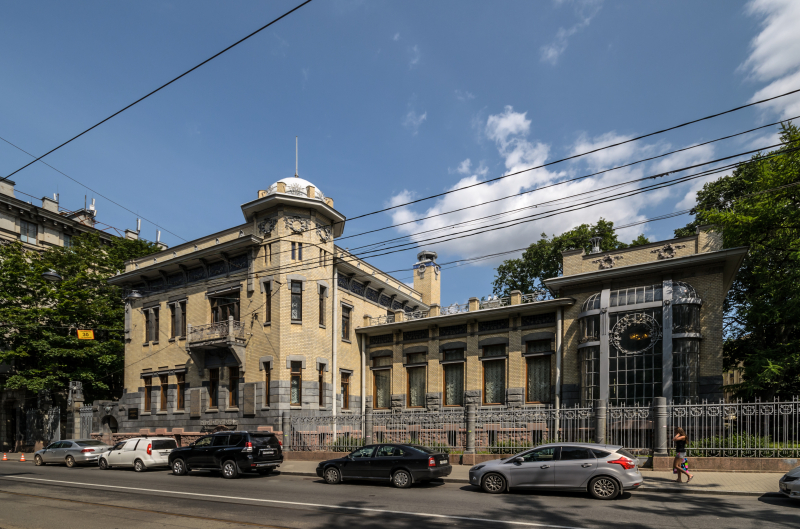
Kshesinskaya Mansion
A gem of the Petrogradskaya Side, this mansion is a striking example of Art Nouveau – you get to see it in its floral ornaments, asymmetrical composition, and walls of brick and granite. It was built in 1906 for the renowned ballerina Matilda Kshesinskaya, a star of the Imperial Ballet. However, she spent little time here, leaving Russia in 1917 after the Revolution, and the house was soon occupied by the Bolsheviks.
What’s inside
Today, it houses the Museum of Political History of Russia. Exhibitions cover Russian history from Alexander I to the present, and also give a glimpse into the life of Matilda herself. Despite its bold exterior, the interior retains a Neoclassical elegance, although partly lost. The point of attraction is the main staircase and a stunning winter garden.
Brusnytsyn Mansion. Credit: Pavel Kirillov from St.Petersburg, Russia, CC BY-SA 2.0 , via Wikimedia Commons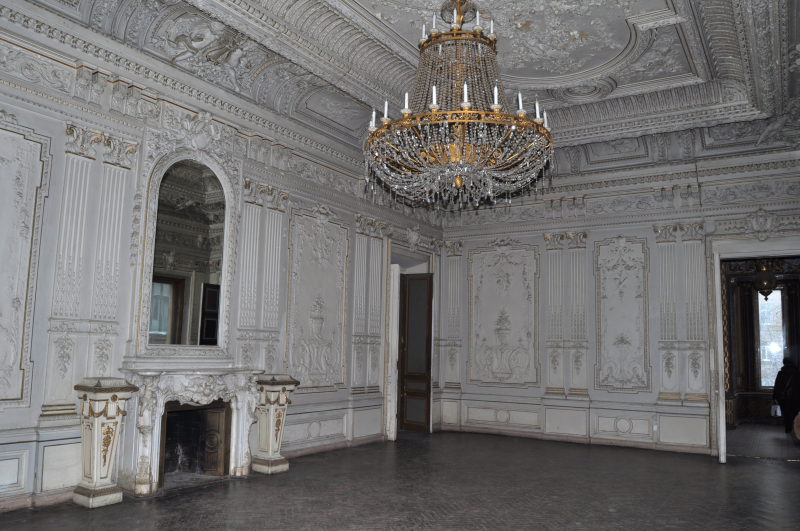
Brusnytsyn Mansion
Tucked away in the industrial quarters of Sevkabel Port, the Brusnitsyn Mansion stands out among the surrounding red-brick buildings with its eclectic architecture. The house we see today was built in the 1880s for the wealthy merchant Nikolay Brusnitsyn, the owner of a nearby leather factory. This mansion was one of the first cases in the city where a businessman chose to live close to his workplace rather than in the city center. During Soviet times, part of it was incorporated into the leather factory.
What’s inside
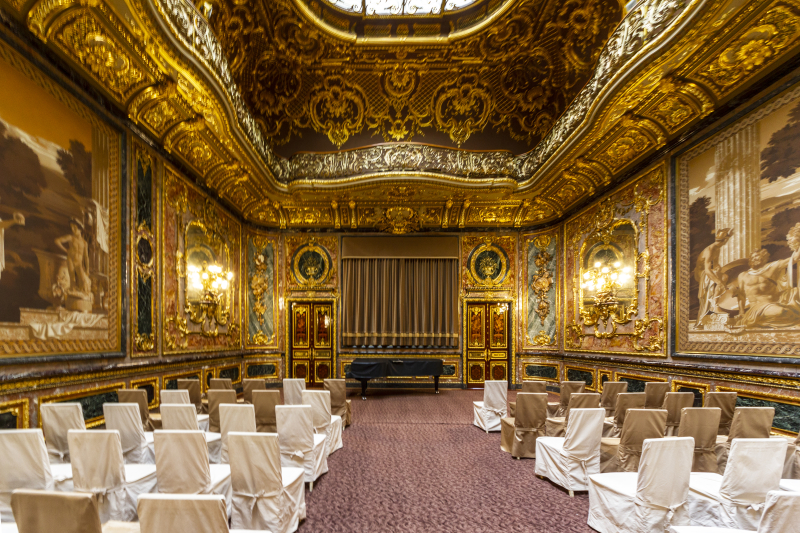
Now privately owned, the mansion is accessible only through guided tours, which remain popular even years after they’ve been launched. It is especially famous for its opulent Mirror Hall. Its richly decorated interiors, inspired by Renaissance and Baroque styles, are now popular filming locations, probably thanks to the mystical aura of a haunted home.
Myasnikov Mansion. Credit: GAlexandrova, CC BY-SA 4.0, via Wikimedia Commons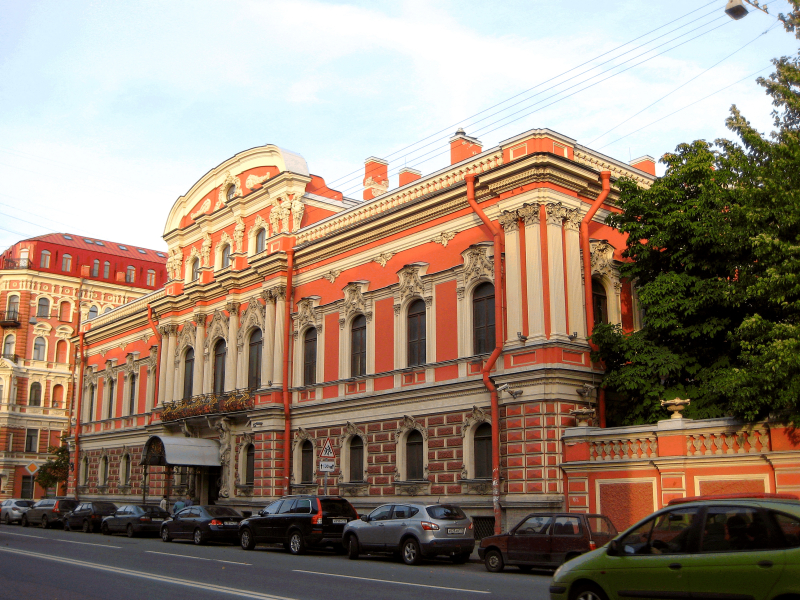
Myasnikov Mansion
The Neo-Baroque mansion was built in the 1850s for the wealthy merchant Ivan Myasnikov. Under its subsequent owner, it became a hub of cultural life: the home theater hosted performances by opera singer Fyodor Chaliapin and the abovementioned ballerina Matilda Kshesinskaya. In the 1920s, the house was converted into a hospital.
What’s inside
In the early 2000s, it underwent restoration and is now considered one of the most beautiful buildings in the district. The new owners of the mansion transformed it into a cultural space bearing the same name. Today, it hosts concerts, lectures, workshops, balls, and art brunches.
Polovtsov Mansion. Credit: Lion10~commonswiki, CC BY-SA 4.0, via Wikimedia Commons
Polovtsov Mansion
The Polovtsov Mansion is famous for its richly decorated interiors influenced by Renaissance and Baroque traditions. Built in the mid-19th century, it was named after Alexander Polovtsov, a prominent statesman and arts patron, who transformed the residence into an opulent private mansion.
What’s inside
Today, the mansion houses the House of Architects and is open to visitors through guided tours and cultural events. Guests can explore its lavish interiors, including the picture-worthy halls, and attend concerts, lectures, and balls.