The technology
Historically, many areas of St. Petersburg have been created by hydraulic filling, a process in which a stream of water is used to transport sand or soil and then emplace it in a desired location. It can be used, for instance, to build new land or raise its level for subsequent construction. Since St. Petersburg stands on a river and marshy land, filling was often necessary to fortify the land or reclaim new territories. For instance, the land for the famous Summer Garden, the 300th Anniversary Park, and the area around the Primorskaya metro station were all created in this way.
The most recent of such projects is the намывные территории (namyvnye territorii – lit. “areas created by hydraulic filling”) or намыв (namyv – lit. the process of hydraulic filling) on the western part of Vasilyevsky Island. Having started in the early 2000s as an ambitious project involving a new passenger port and premium-quality business and residential real estate, at the moment the area seems to be somewhere in the middle of its development. Just like the Lakhta Center in its time, since its conception, namyv has received polarizing reviews among locals – which is the perfect reason to explore it yourself to make up your mind about it.
What to see
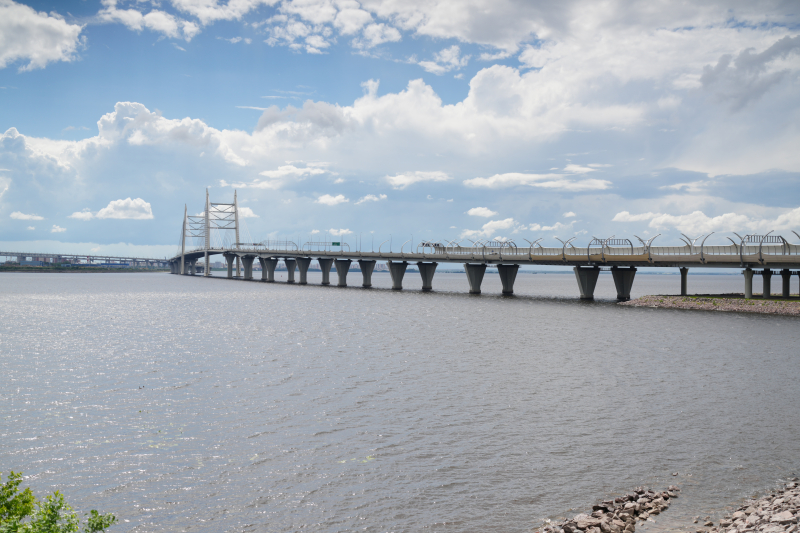
As it’s a new district, its main attraction isn’t historical significance – you won’t find any museums here yet. What you do get is an unobstructed, panoramic view of the Gulf of Finland that is quite hard to find without leaving the city. From the district’s embankments, you can see the cable bridge of the WSD to the left, watch Peterhof-bound boat tours pass by, and even spot the dome of the cathedral in Kronstadt shining in the sun on the horizon on a clear day.
To get to the views, you’ll need to walk through the concrete jungle: there is a bunch of new construction and the residential complexes seem to be trying to outdo each other with their design choices. You’ll spot brightly colored apartment blocks, buildings in peculiar shapes, the characteristic golden-topped apartment complex Golden City, and even a giant camel made of glass (the reason why it’s there is a mystery). One perk of the new district, though, is its recently constructed roads that include bike lanes – that’s why the district is quite popular with cyclists, fans of electric scooters, and even runners. In the afternoon and evening, you are also likely to spot many dog owners with their happy furry friends.
If you get hungry while exploring namyv, you won’t have to suffer, either. Even though you could call it a relatively “remote” location, there are already a few coffeeshops quite up to downtown standards, such as Surj and AV Coffee, not to mention chains like Etlon and Baggins. If you are more of a bakery lover, there are also Tsekh 85 and the soon-to-open Volcheka bakery (a much-awaited development by yours truly, a namyv resident), as well as smaller local bakeries.
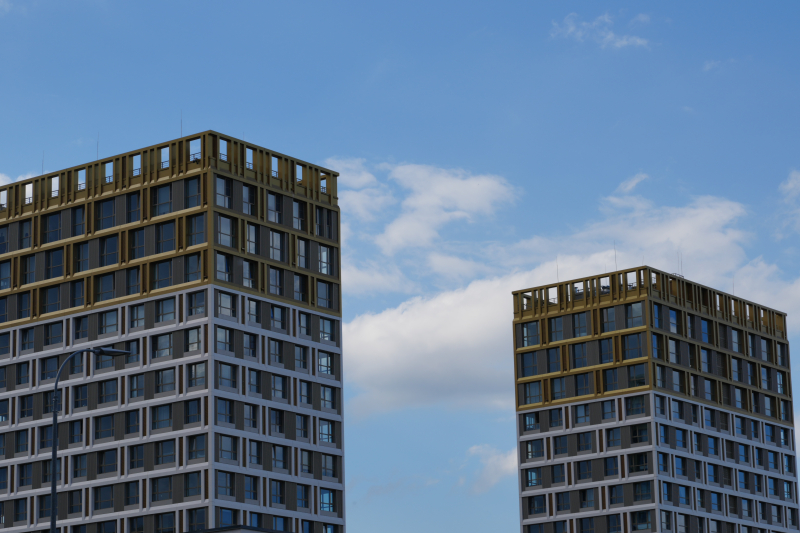
Photo by Ivan Miakishev for ITMO NEWS
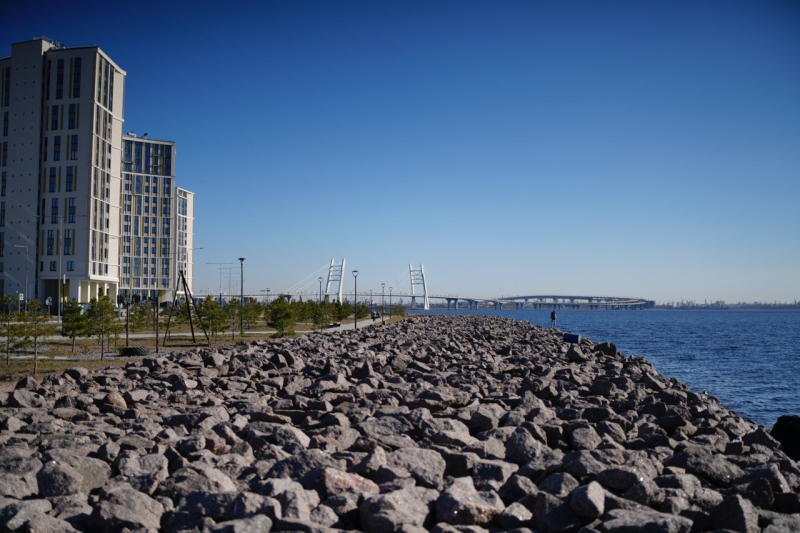
Photo by Ivan Miakishev for ITMO NEWS
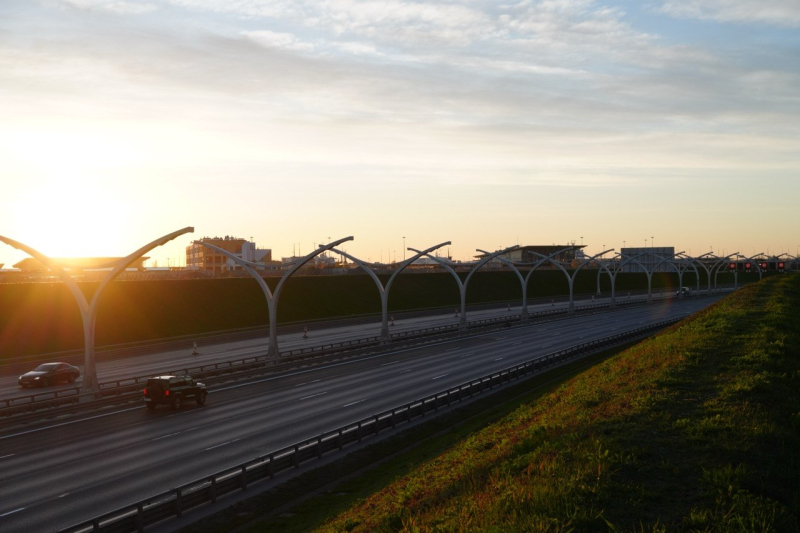
Photo by Ivan Miakishev for ITMO NEWS
For an unusual experience, sports enthusiasts can also take a yoga class with a view at No Mad People, a yoga studio overlooking the Gulf of Finland, or explore MVPilates and L.A.B. space, two fitness studios located a little further down the embankment.
While exploring the area may not be enough for a walk in itself, it can be a great extension to our earlier route around the Primorskaya metro station.
How to get there
From Nevsky Prospect, catch bus 7 or trolleybus 11 and travel to Pribaltiyskaya Hotel on Vasilyevsky Island. The namyvnye territories start just behind the hotel, as you cross the bridge over the Western Speed Diameter (WSD).
From Primorskaya metro station, you can take bus 261 to get to the WSD; additionally, buses 168 and 220 to get onto the “namyv” itself.
Looking for more ways to make this summer memorable? Check out this story about the city’s photobooths, or fill up your calendar with sports events, festivals, and social activities.