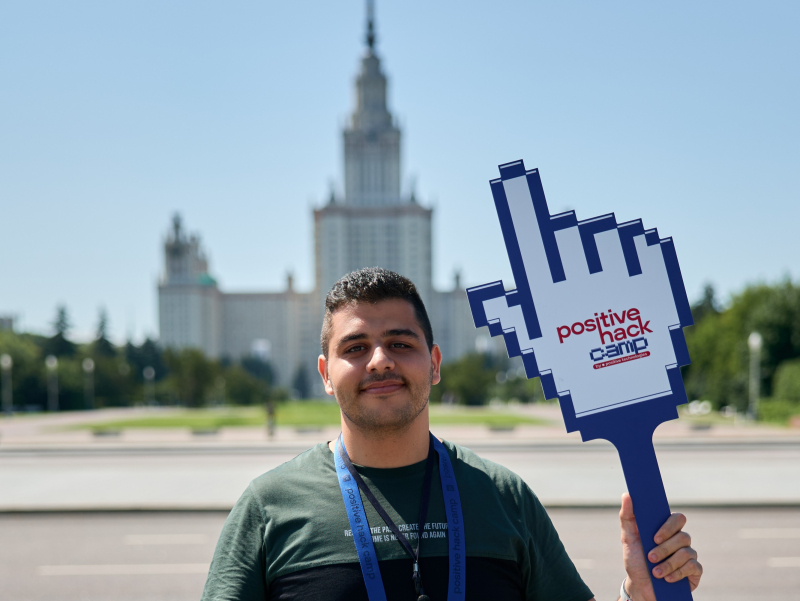
Moayad, how has your life changed since the last time we talked?
So much has changed in the last 4-5 years. I’ve grown a lot, definitely for the better. Being at ITMO, surrounded by ambitious people, it’s almost impossible not to change the way you see the world and how you think. There’s always something new to learn, and I’ve realized the world is much bigger than I imagined five years ago. During my studies, I gained the knowledge I’d always been looking for, and I’m still learning every day. This journey has truly been the best decision I’ve ever made.
What is the Positive Hack Camp all about, and what’s your role there?
Positive Hack Camp is organized by Positive Technologies (a prominent Russian cybersecurity company – Ed.) with support from the Russian Ministry of Digital Development. It’s held in Moscow and brings together cybersecurity experts from around the world for two weeks. The goal is to learn from leading Russian specialists in IT infrastructure protection, share experiences, and connect with each other. I’m here as a participant, just like everyone else, representing both ITMO and Syria.
In that role, how does it feel to be connecting with cybersecurity engineers from over 22 countries?
It’s an incredible feeling. I’m proud to share Syrian culture while also showcasing ITMO, one of the most innovative and unconventional universities in Russia. I’m surrounded by extraordinary people, each with their own skills, stories, and ways of solving problems. It lets you see both the similarities and the differences in how we think and work. It also makes you realize how far humanity has come, and how much further we can go, especially as engineers working to secure our digital world.
Going back to your journey so far: what first sparked your interest in cybersecurity, and how did that lead to a PhD?
After earning my Bachelor’s degree in IT engineering in Syria, I started working as a software developer at one of the country’s biggest companies. That’s when I began to notice gaps in our digital security systems and services that could be better protected. I wanted to be part of the solution, so I started digging deeper into cybersecurity. Later, after completing my Master’s degree at ITMO, my professors encouraged me to pursue a PhD to combine both the theoretical and practical sides of the field. My research now focuses on tackling information security problems through innovative approaches.
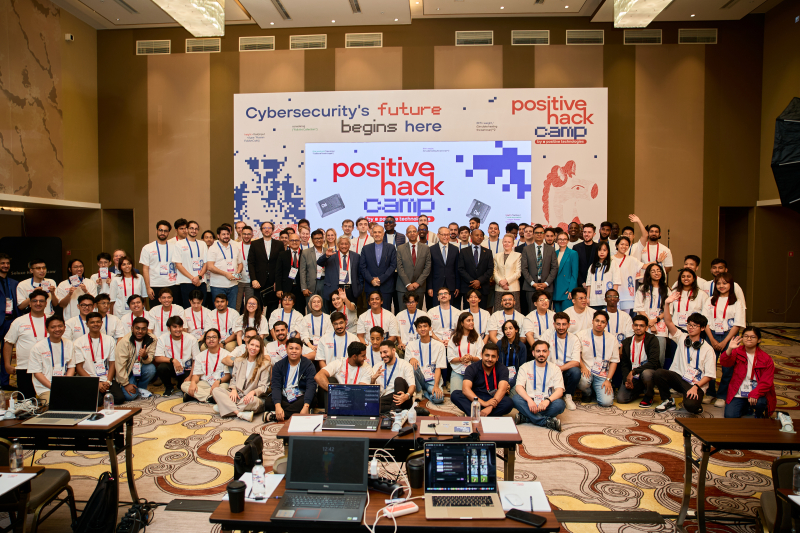
Moayad at the Positive Hack Camp in Moscow. Photo courtesy of the subject
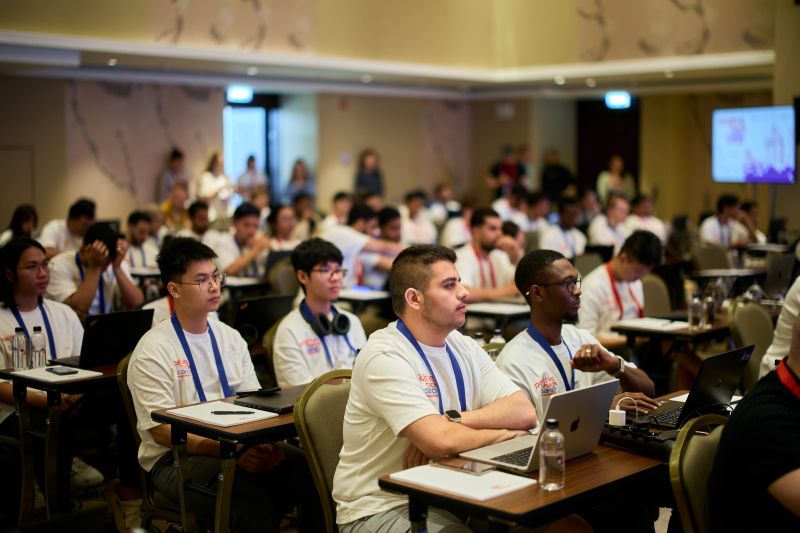
Moayad at the Positive Hack Camp in Moscow. Photo courtesy of the subject
You completed your Master’s with honors at ITMO. What helped you thrive academically?
Earning the red diploma was a proud moment for me, not only because of the academic value, but also because of what it represents. In Russia, it’s well known how hard it is to achieve. It shows people that I’m committed, hardworking, and serious about my field. Being able to speak Russian fluently also helped me connect better with professors, classmates, and the local culture, which made a big difference in my academic life.
PhD life can be intense. What’s the focus of your current research, and what real-world problem does it aim to solve?
My research is about using AI to scan a codebase and detect vulnerabilities in the source code before it even goes into production. The goal is to catch potential security issues early in the CI/CD pipeline, saving time, resources, and, most importantly, reducing risks before they reach the end user.
Information security is constantly evolving. What’s one trend or threat you find especially urgent right now?
Like many other areas of IT, we’re now in the AI era. Specialists are beginning to focus on core problems while letting large language models, like GPT, assist with research and development. Some applications of AI are so unexpected that even the creators of the technology couldn’t have predicted them. That’s both exciting and a little concerning. It shows how quickly the landscape can shift.
How do you balance deep technical research with global collaboration opportunities like this camp?
I believe that focusing only on theory leaves you blind to the real world, and focusing only on practice leaves you without a strong foundation. I try to balance both. My goal is to be a true ethical hacker, someone who understands how attackers think but also knows how to defend systems and infrastructure through rigorous research.
In your view, what sets ITMO’s Information Security program apart globally?
ITMO’s English-language program is one of the most advanced and innovative in Russia. It offers the chance to work alongside people from many different countries, build global connections, and grow both professionally and personally. ITMO changes the way you live, not just the way you study.
Let’s rewind for a moment. What was your proudest moment as a Master’s student?
Without a doubt, graduation day. Receiving my red diploma brought back all the memories of the challenges and hard work I’d gone through. It was proof that every difficult moment was worth it.
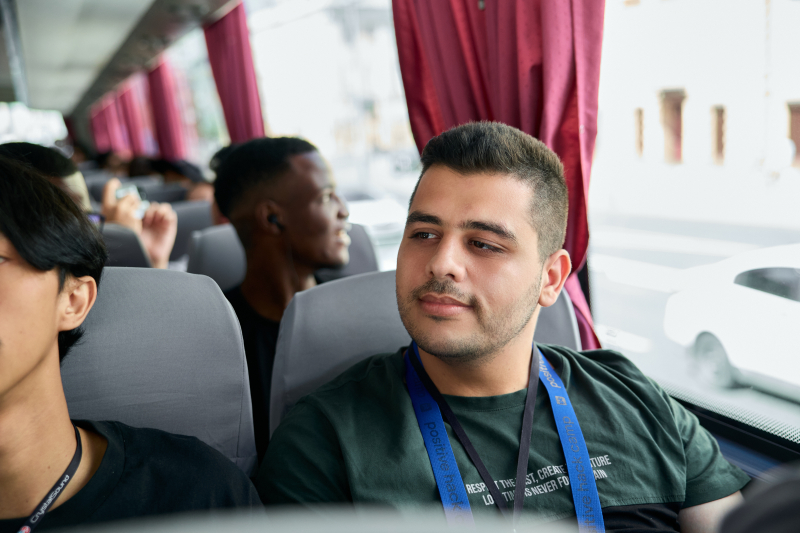
Moayad in Moscow. Photo courtesy of the subject
Where do you see your path going after the PhD?
I want to take all the knowledge I’ve gained here and bring it back to Syria. I feel at home in Russia, but my original goal was always to contribute to my country’s development. I hope to start my own business that fosters collaboration between Russia and Syria, creating opportunities and benefits for both sides.
Finally, what advice would you give to students dreaming of a PhD in cybersecurity?
It’s challenging, no question about it. You might doubt yourself or wonder if it’s worth the struggle. My advice is to go for it without overthinking every detail. If you enjoy the work, the struggle will feel like part of the adventure. And remember, you’ll regret missed opportunities more than the difficulties you faced taking them.