Research
Six times faster and 15% more resource-efficient: this, in a nutshell, is what the new electrolysis reactor developed at ITMO University brings to the table. Hydrogen, an element crucial to the function of many industries – including nuclear power – can be produced in a more eco-conscious manner, but at a cost. This new technology, however, promises to change things. With prototype testing completed, the researchers are already setting the stage for industrial testing.
Read more: ITMO Scientists Develop New Cheap and Quick Way to Produce Green Hydrogen
***
To a regular PC user, a 20 Gbit/s (2.5 GB/s) connection might sound like pure bliss; for a humble space satellite, it’s simply not enough. With the help of “twisted” light, researchers at the School of Physics and Engineering have masterminded a new method of transferring data in outer space – at a high rate and without data loss.
Read more: “Combing” Light: ITMO Researchers Find Reliable and Fast Way to Transmit Data in Space
***
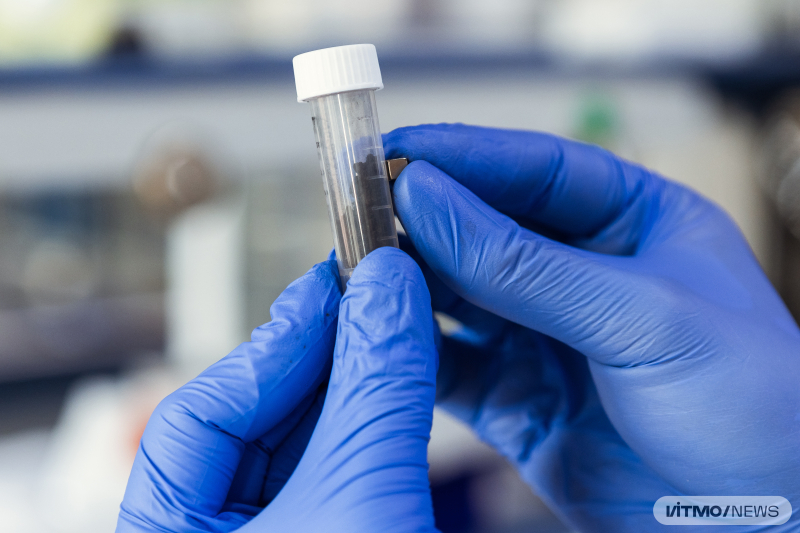
Spider webs are known to be incredibly strong… but what if they were even stronger? That’s what science is for! An international research team recently described the use of nanoparticles in production of spider silk that’s both highly resilient and magnetically sensitive. The most immediate applications of such a material would include “soft” robots and other flexible electronics.
Read more: Real-Life Superpower: Researchers Use Magnetic Nanoparticles to Improve Spider Web Strength
***
A rare blood disease has gained a new adversary: scientists at ITMO have completed clinical trials on a biosimilar – a cheaper analog of a costly drug – for patients with immune thrombocytopenia. The treatment has already been registered and will soon become available via a national program.
Read more: GEROPHARM and ITMO Test New Treatment for Blood Disease
AI
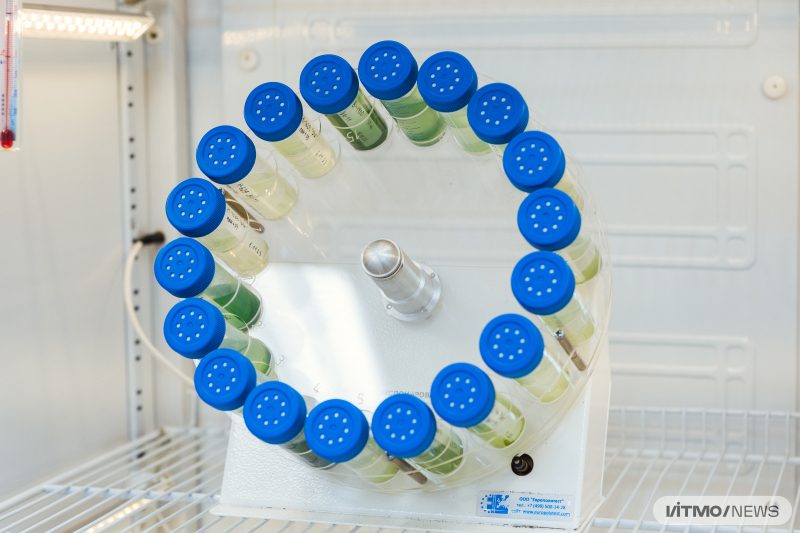
The setup for automatic calculation of microalgae cells concentration. Photo by Dmitry Grigoryev / ITMO NEWS
Microalgae are surprisingly versatile organisms: nowadays, they are used in everything from food to medicine and even power generation. To produce enough of these tiny helpers, it’s vital to closely monitor their growth and concentration. Usually, this is done via a time-consuming 20th-century method. But now, PhD students from ITMO have developed a neural network able to accurately produce the same results 60 times faster than humans.
Read more: ITMO PhD Students Train Algorithms To Count Cells in Microalgae Images With Computer Vision
Read also:
ITMO Researchers Produce Artificial Optical Synapse for Enhanced AI Performance
University
What is the future of urban living? What lessons are there to be learned from the growing megapolises of the Arab world? And what does an accomplished urban planner think of St. Petersburg? To get the answers, ITMO.NEWS spoke to Dr. Ali Alraouf, an architect and UN expert who visited the university as part of the ITMO Fellowship program.
Read more: Urban Planner Ali Alraouf on Arab Megalopolises, Beauty of St. Petersburg, and Cities of the Future
Culture
From the 19th century to present day, the history of Russian-language science fiction is a fascinating mirror of the nation’s own history. If you’d like to understand it better and get a taste for the unique flavor of Soviet and Russian sci-fi, check out our quick guide to the cinematic essentials of the genre.