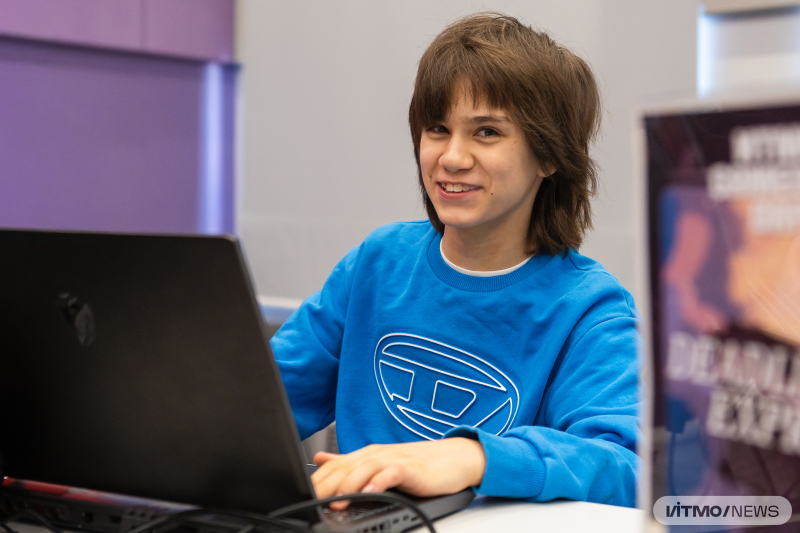
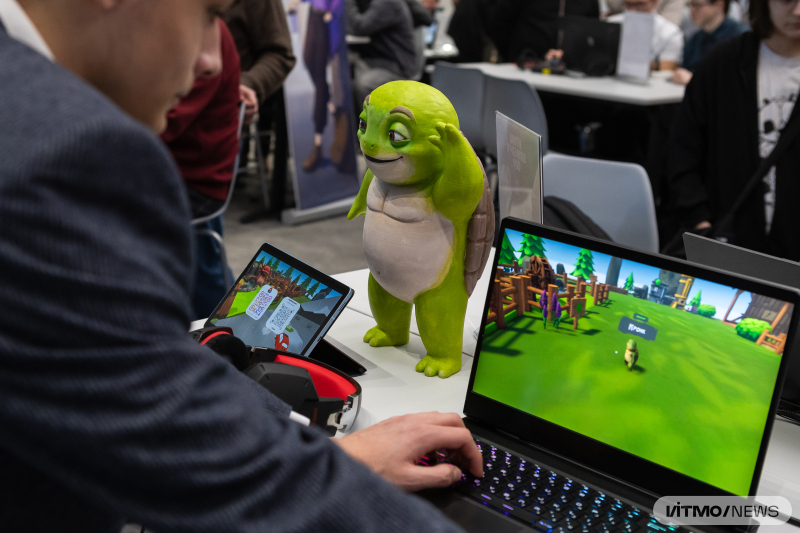
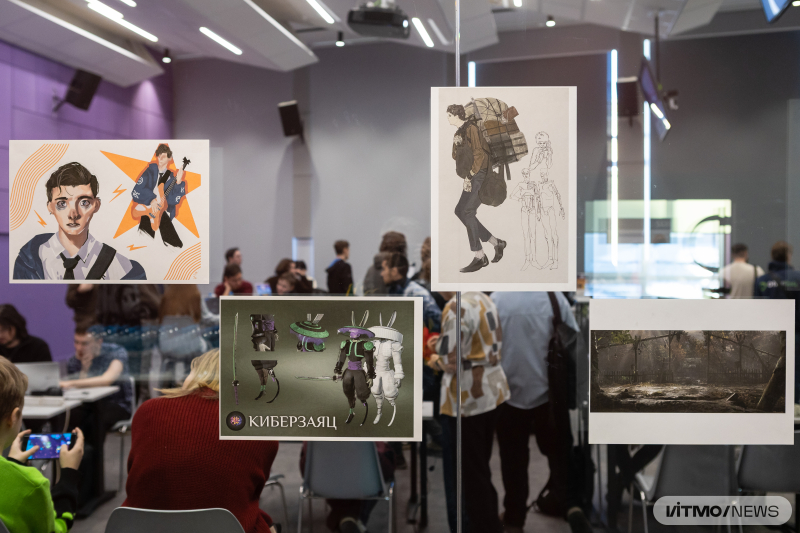
ITMO GameDev Day offers fledgling developers the opportunity to present their projects, find their first players, and receive feedback from users and industry experts. This year, the student showcase at the event broke a record, receiving over 100 applications, 2.5 times more than last year. Participants and guests tested dozens of games – from tactical shooters to cozy simulators. Teams presented their projects, mingled with guests, played, and competed for prizes from the event’s partners. Artists and designers could join a special art competition of concepts, illustrations, and 3D projects.
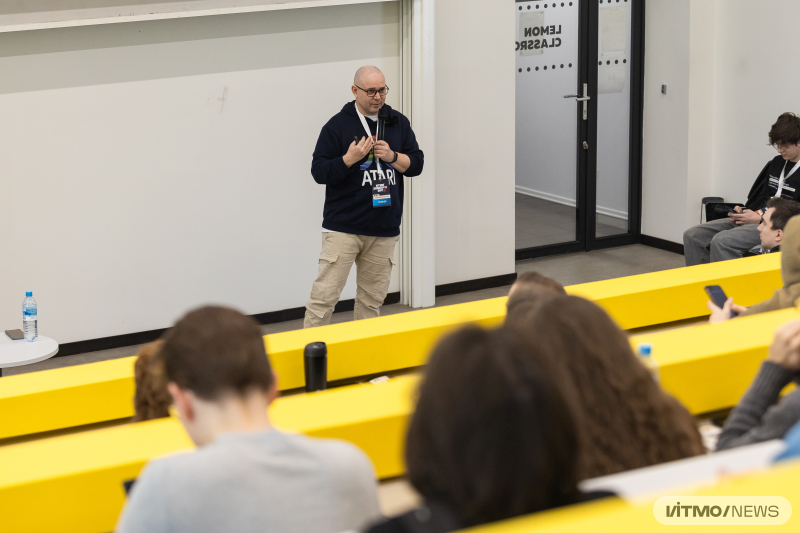
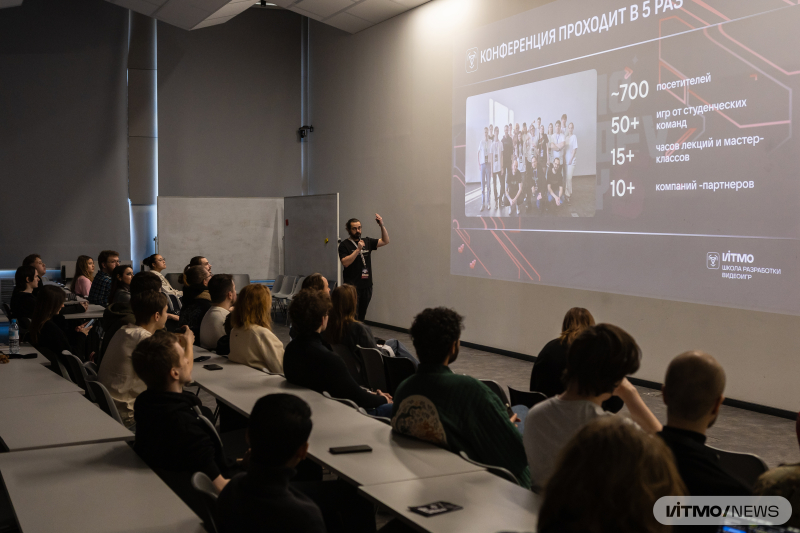
Alongside the exhibition, lectures were held at three halls. The majority of expert talks addressed practical matters: metrics, monetization, and promotion. Sergey Gimelreikh, the founder of the Indicator creative space for game creators and a co-founder of the Game Developer’s Cuffs blog, suggested taking a broader look at the industry. He believes that games are a new step in the evolution of art after cinema and music, because games add an element of interaction. Viewers turn from mere spectators into active participants. The speaker also mentioned socialization in games: according to Mr. Gimelreikh, the popular online game Roblox is not unlike a sandbox, where kids now act out the same scenarios that previous generations explored while playing outside.
Moreover, the expert offered advice to developers at the start of their career. He recommended making their characters stand out with positive or negative qualities to allow players to relate to them emotionally. Mr. Gimelreikh also demonstrated how much of an effect design and interface have on the atmosphere: even seemingly insignificant visual details can either strengthen the immersion or destroy it.
ITMO GameDev Day 2026. Photo by Dmitry Grigoryev / ITMO NEWS
ITMO GameDev Day 2026. Photo by Dmitry Grigoryev / ITMO NEWS
ITMO GameDev Day 2026. Photo by Dmitry Grigoryev / ITMO NEWS
ITMO GameDev Day 2026. Photo by Dmitry Grigoryev / ITMO NEWS
ITMO GameDev Day 2026. Photo by Dmitry Grigoryev / ITMO NEWS
ITMO GameDev Day 2026. Photo by Dmitry Grigoryev / ITMO NEWS
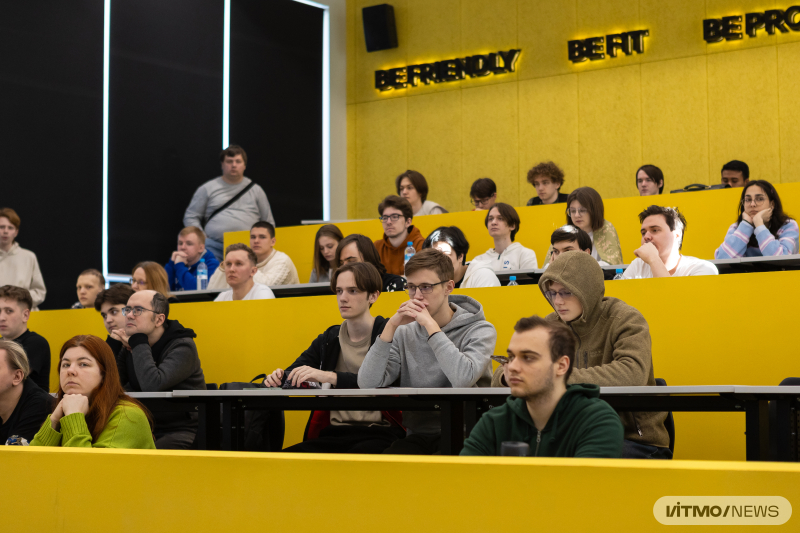
Also at the event, speakers from VK Play, HeroCraft, Boutique, ZAVOD Games, and other studios discussed project management, game promotion, AI applications, interface design, and common mistakes of indie developers. Some focused on the financial aspect by delving into calculating the income and losses of a project. Others mentioned community-building on social media as a way to grow an audience without investments. There were also applied lectures: for instance, one on interface structure based on Warface, and another on the benefits and pitfalls of using AI in development.
At the student coworking, there was a special stand called Finish the Game. This project by the Game Development School helps student teams complete and release their games by attracting expertise from industrial partners. Four demos were available for testing at the event:
- Eternal Troops, a tactical top-down shooter set in WWI with a soldier cloning mechanic;
- Chess Walkers, a puzzle where the main character moves inside a dungeon like a chess piece;
- Zombutcher, a stealth action game about a butcher with a double life and a moral dilemma;
- Frogguccino, a surrealist game on making coffee inside a frog.
Another highlight of the event was the announcement of Game Design and Production, a new Bachelor’s program by ITMO’s Game Development School. The presentation was led by Andrey Karsakov, the head of the school; Vitaly Agafonov, the head of the educational program; Mikhail Kitaev, the head of Plus Studio; and Danila Lychkin, the creative director at Lesta Games. Applicants will need to provide Unified State Exam scores in Russian language, mathematics, as well as physics or computer science.
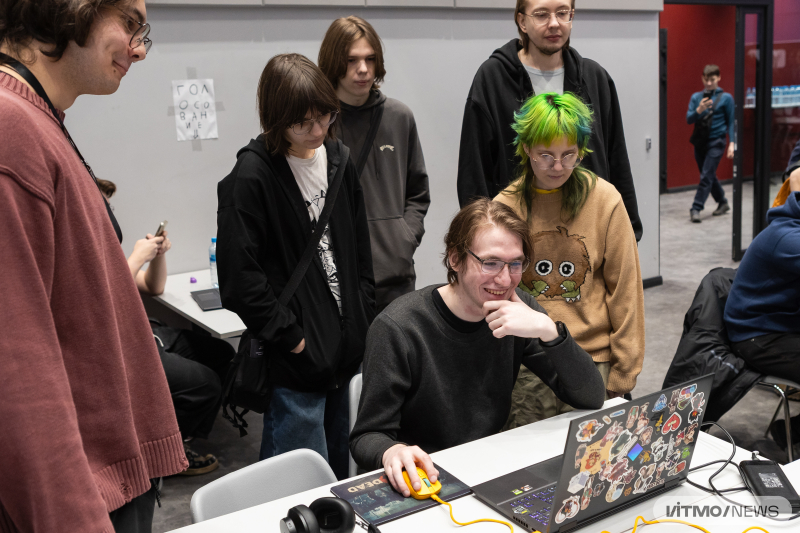
ITMO GameDev Day 2026. Photo by Dmitry Grigoryev / ITMO NEWS
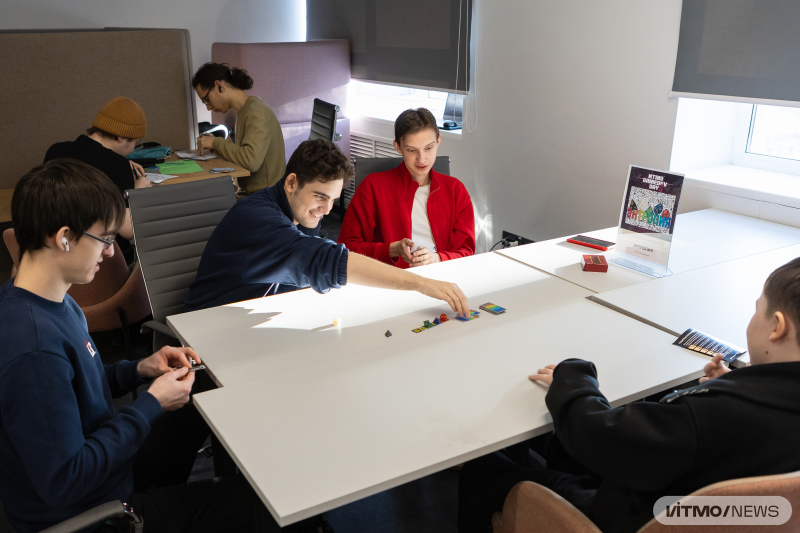
ITMO GameDev Day 2026. Photo by Dmitry Grigoryev / ITMO NEWS
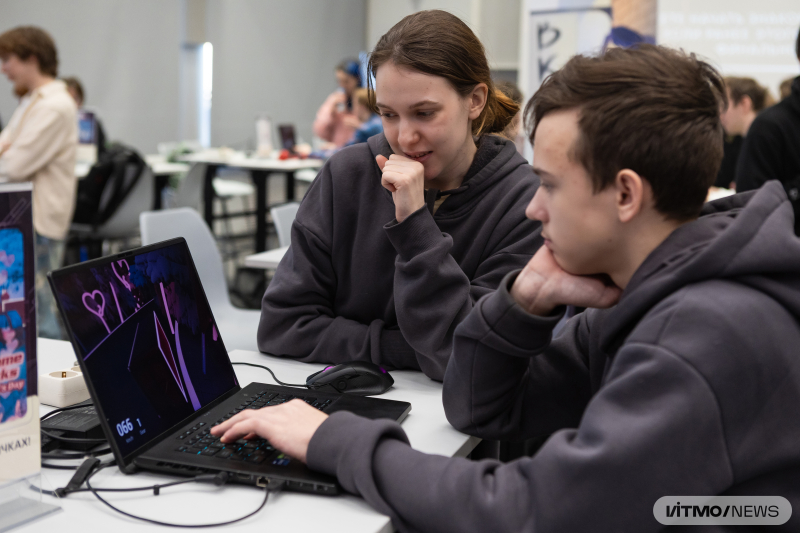
ITMO GameDev Day 2026. Photo by Dmitry Grigoryev / ITMO NEWS
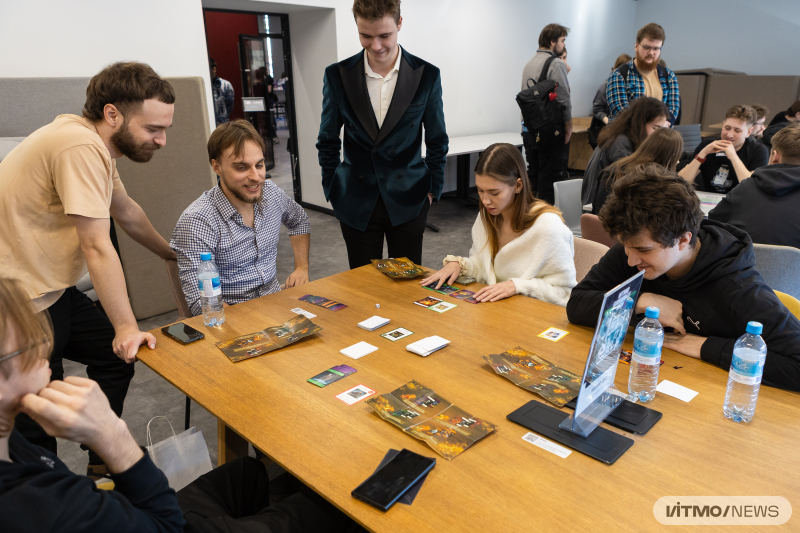
ITMO GameDev Day 2026. Photo by Dmitry Grigoryev / ITMO NEWS
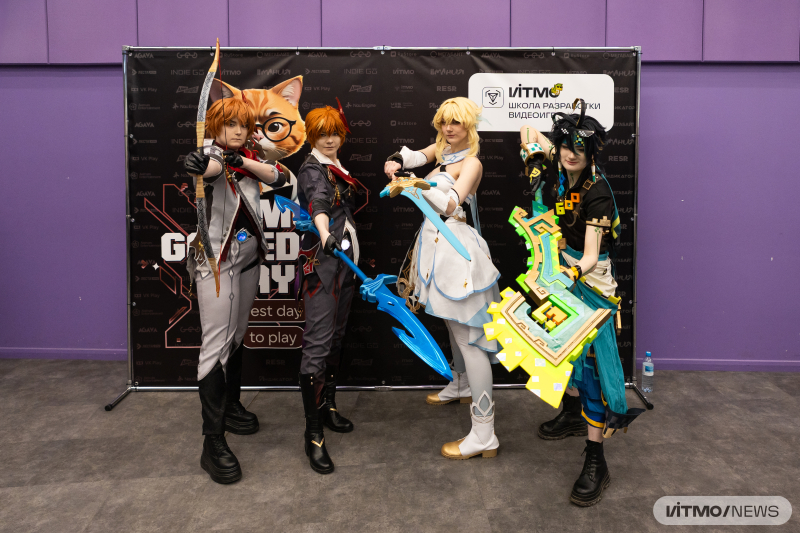
ITMO GameDev Day 2026. Photo by Dmitry Grigoryev / ITMO NEWS
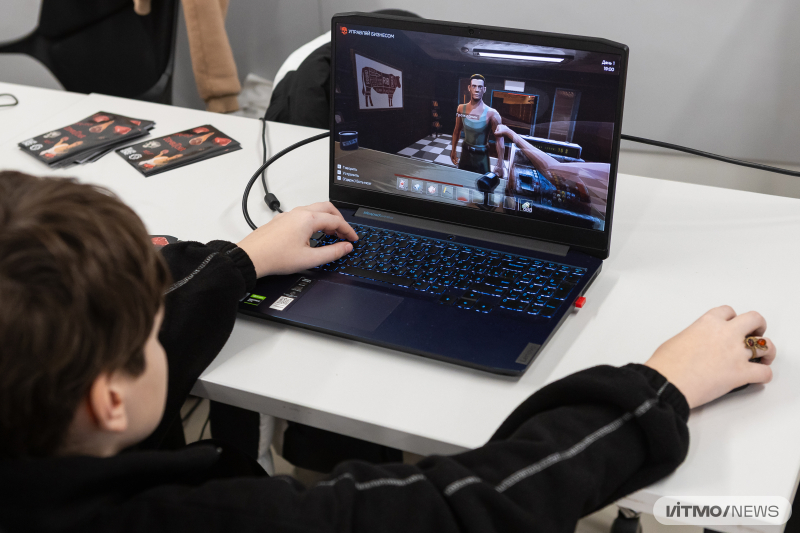
ITMO GameDev Day 2026. Photo by Dmitry Grigoryev / ITMO NEWS
The program will train game designers who understand production processes, have a high level of engineering and math competencies, and have practical experience of project implementation.
Students of the new program will receive broad engineering training in gaming experience design and applied development of interactive applications. The program covers many game design aspects, paying special attention to practical training and fundamental mathematical education. Graduates will demonstrate considerable context-related managerial skills: from team building and development planning to economic predictions and product management throughout its lifecycle, from launch to operation.