Melanoma is one of the most aggressive and rapidly-spreading forms of cancer, with more than 1.5 million new cases and nearly 60,000 deaths worldwide in 2022, according to a World Health Organization report. One of the main treatments for melanoma is chemotherapy, which uses antitumor medications to stop cancer growth; however, it damages healthy skin cells, as well.
Natural bioactive compounds are showing promise for treating melanoma. For one, curcumin – a polyphenol and the main component of turmeric (Curcuma longa) inhibits the growth, invasion, and metastasis of various types of cancer, induces apoptosis (programmed cell death) in cancer cells, and reduces oxidative stress that causes DNA damage and mutations. Another example is usnic acid – a natural compound found in some species of lichens that is known for its anti-inflammatory, antibacterial, antiviral, anticancer, antioxidant, and photoprotective properties; additionally, it decreases the viability of melanoma cells and enhances the activity of certain antitumor drugs (e.g., doxorubicin).
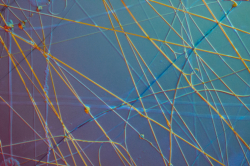
However, on the other hand, both curcumin and usnic acid classify as hydrophobic bioactive compounds and therefore have poor solubility and low bioavailability. In order to enhance their efficacy, these compounds are typically encapsulated, or, in other words, loaded into hydrophilic polymer matrices, such as a polymer-based matrix. Another factor to be taken into account is the molecular weight of a polymer. Further research in this field will allow scientists to produce an optimal system design that will improve both the efficiency and safety of the treatment. Earlier on, a group of ITMO researchers became the first to obtain nanofibers based on hyaluronic acid with introduced curcumin and usnic acid and no additional toxic polymers and catalysts.
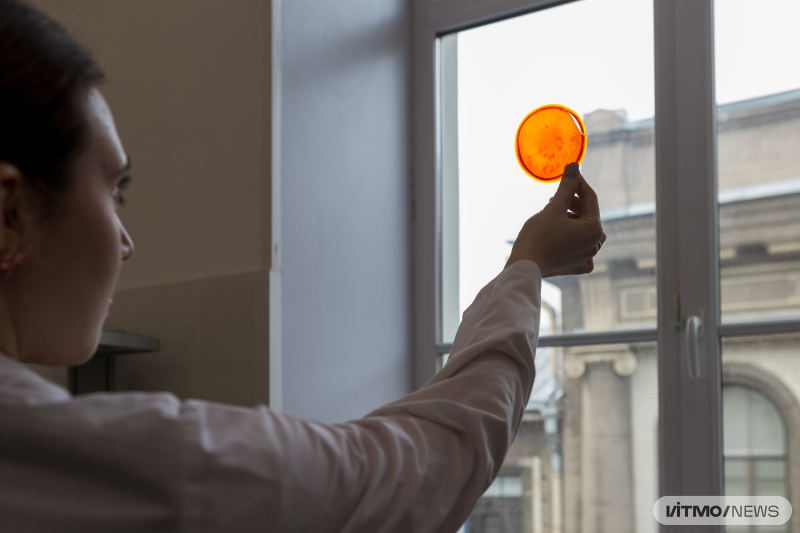
Scientists from ITMO University and their colleagues from Immanuel Kant Baltic Federal University continued the research and produced a polymer-based drug delivery system for selective treatment of melanoma. The system consists of a thin hyaluronic acid-based film loaded with two natural bioactive compounds – curcumin and usnic acid.
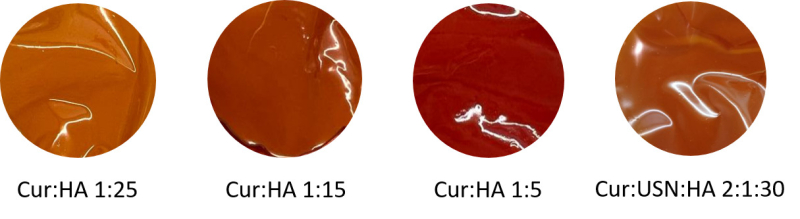
Samples of hyaluronic acid-based films loaded with natural bioactive agents. Photo by Dmitry Grigoryev / ITMO NEWS
“We observed a synergism between these two agents and their selective effect on two cell lines: namely, CVCL-7036 (unpigmented or amelanotic melanoma) and SK-MEL 28 (lightly pigmented melanoma). Polymer films, on the contrary, didn’t cause harm to healthy cells (keratinocytes HaCaT.); instead, they helped wounds heal faster,” says Kateryna Levada, the leader of the research team at the Immanuel Kant Baltic Federal University and the head of its REC Smart Materials and Biomedical Applications.
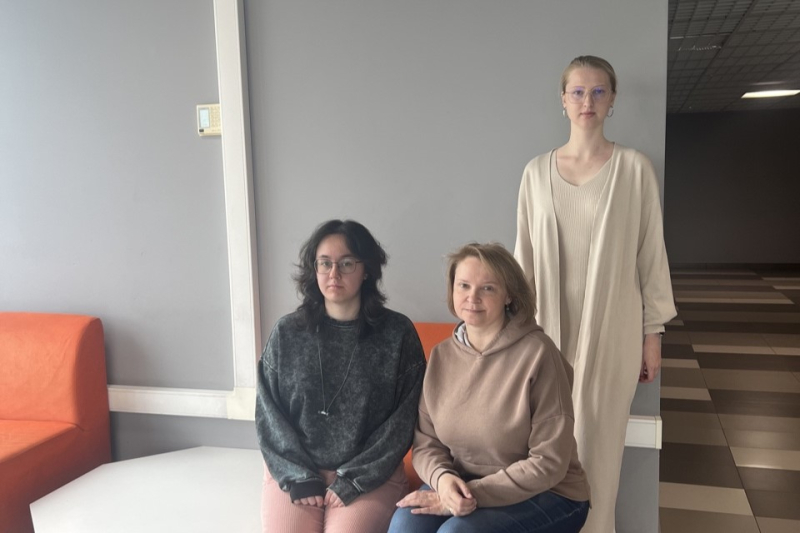
The research team at Immanuel Kant Baltic Federal University (left to right): Ksenia Zavkibekova, Kateryna Levada, and Anna Motorzhina. Photo by Stanislav Pshenichnikov
Due to its module-based design, the system will find use for various therapeutic tasks; that is, it can be loaded with other pharmacologically active agents with antitumor, anti-inflammatory, antibacterial, or other properties.
“What sets our technology apart is that it can be used with any bioactive compounds, both hydrophilic and hydrophobic ones, and polymer films contain no toxic catalysts (N,N'-Dicyclohexylcarbodiimide or 4-Dimethylaminopyridine) or toxic solvents, so they are fully biocompatible and safe for living organisms,” notes Petr Snetkov, the lead researcher of the study and a senior researcher at ITMO’s Institute of Advanced Data Transfer Systems.
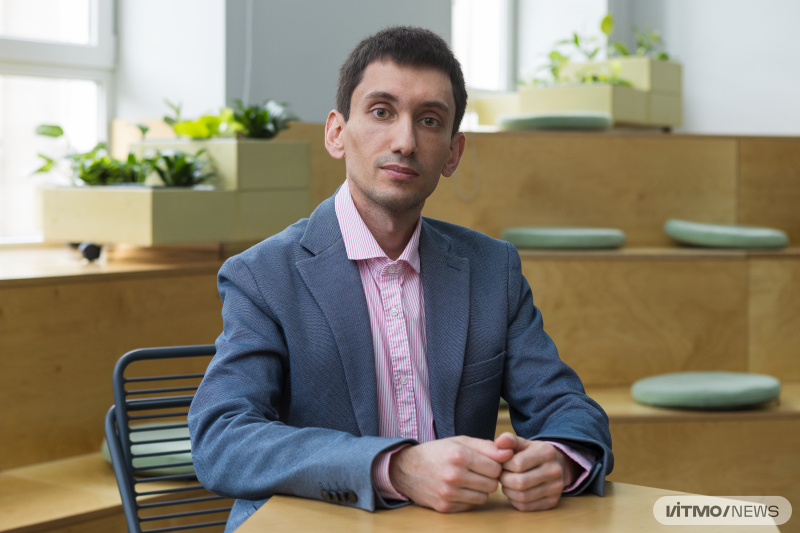
Petr Snetkov. Photo by Dmitry Grigoryev / ITMO NEWS
To produce polymer films, the researchers experimentally determined the optimal ratio of the initial components within the system and selected the appropriate molecular weight of hyaluronic acid. They ran a cytotoxic test to show the effectiveness of the developed films against melanoma and safety for healthy skin cells and a cell migration study – to demonstrate the effect on the initial stages of wound healing.
“When we placed the two samples of hyaluronic acid (1.3 and 2.5 megadaltons) into a polymer matrix, the cytotoxic test showed that the system, which was loaded only with curcumin, had no cytotoxic effect on cell line SK‑MEL 28, yet reduced the growth of CVCL‑7036. A combination of both curcumin and usnic acid proved to exhibit significant antitumor activity against SK‑MEL 28. The samples of films with highest molecular weights, in their turn, were most efficient against both cell lines,” emphasizes Polina Serbun, an author of the study and a laboratory assistant at ITMO’s Institute of Advanced Data Transfer Systems.
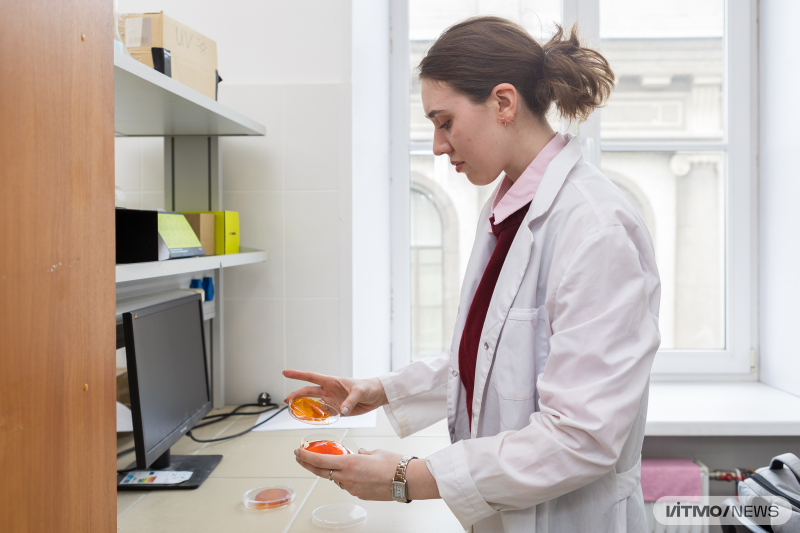
Polina Serbun with samples of hyaluronic acid-based films loaded with natural bioactive agents. Photo by Dmitry Grigoryev / ITMO NEWS
The films developed by the team can potentially be used locally or as a supplement to primary cancer treatment. For example, the system can help reduce the dosage and, consequently, minimize side effects during chemotherapy. Alternatively, it can serve as a regenerative wound dressing after the surgical excision of melanoma. In this case, the dressing with a flexible, polymer-based film needs to be placed on the site of the removed tumor to accelerate healing and prevent the migration of cancer cells that might remain at the wound site.
“Our films are quite flexible and so can be applied directly to the affected area or act as an active layer on a dressing, as a bactericidal pad on a bandage. This, however, isn’t the only form of usage. Our technology can be used to produce nanofibers, nanoparticles, and gels and thus can be adjusted for each clinical case specifically,” notes Roman Shaikenov, an author of the study and an engineer at ITMO’s Institute of Advanced Data Transfer Systems.
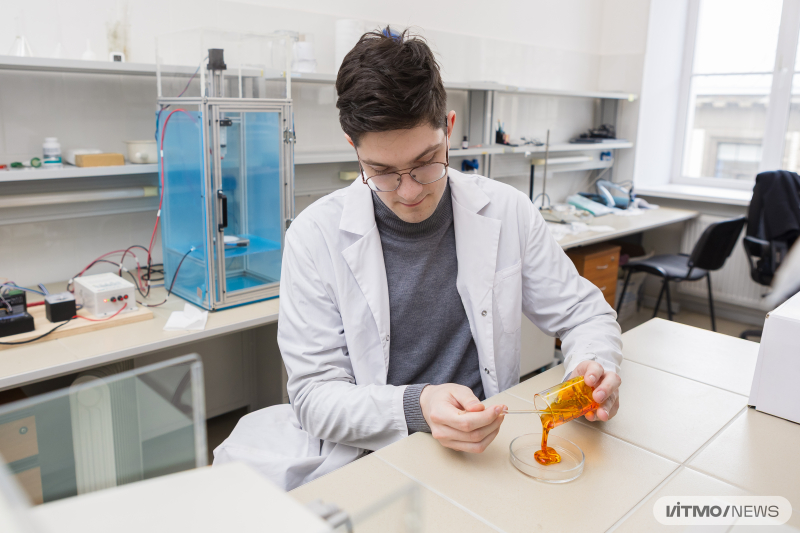
Roman Shaikenov pours a polymer-based solution into a Petri dish. Photo by Dmitry Grigoryev / ITMO NEWS
The researchers will continue their experiments. As for their agenda, the team wants to ensure non-toxicity and safety of polymer films for other healthy cells, for example, fibroblasts; determine whether bioactive agents can penetrate deep into the skin layers; and explore the mechanisms behind the synergistic phenomenon and how therapeutic agents selectively affect cancer cells without harming healthy ones.
This study was supported by the Russian Science Foundation's grant No. 24-23-00269