Contents
What is a CAIO?
Generally, companies approach AI implementation in one of two ways. Some integrate the technology into already existing processes. By doing so, they improve productivity and even reduce the cost of some routine operations – but this doesn’t lead to noticeably larger revenue or profit growth because the overall processes still move at “human” speed.
Others opt for the so-called AI-first strategy – they build new products and processes around AI from the start. Such companies have to rebuild everything from scratch: AI is no longer a tool; it’s the core of each product, team, and workflow. And that’s exactly where a chief AI officer, or CAIO, comes in. According to IBM, organizations with CAIOs see a 10% higher return on their AI investments.
A CAIO isn’t just a tech lead; it’s a manager who can:
-
identify which business problems can only be solved using AI;
-
build an architecture and understand what infrastructure it needs;
-
utilize ontologies (structured descriptions of data, tasks, and how they relate to one another) to collect all information needed for future AI operations;
-
manage risks (monitor model hallucinations, guarantee accurate outputs, prevent data leaks, and ensure AI is used responsibly);
-
navigate the economics of AI (calculate the cost of AI inferences, measure the ROI of the solution, and evaluate financial gain);
-
integrate AI into the company’s culture.
Why should a company hire a CAIO?
CAIOs are most needed at companies that process massive datasets, perform numerous routine tasks, and create innovative products.
Example: if a business has to process terabytes of data daily, doing it manually becomes impossible, and no analysts can handle it. In this case, a CAIO needs to build pipelines (a clear, step-by-step sequence of steps) for AI to start finding patterns on its own rather than generating reports for the previous month. Nevertheless, a CAIO isn’t just a manager who recruits analysts; they need to choose a technology that matches speed and cost requirements, establish an MLOps pipeline to move from once-a-year to automated updates, calculate the ROI of AI, and manage changes – meaning ease employees’ fears and train them to successfully implement AI.
Without a skilled professional, a company risks buying AI for the sake of AI – an expensive “toy” that won’t solve any business problem.

Pavel Podkorytov. Credit: Skolkovo
“A CAIO’s true value isn’t their expertise in neural networks but their responsibility for an organization’s bottom line. There's a peculiar paradox in the market today: technologies are being implemented, but the payoff is often missing. One survey reports that while 86% of major companies in Russia use or test large language models, almost half of them (46%) see no lasting financial effect. The problem is rarely the technology itself; as the implementation process is scattered between IT, data services, and business, there’s no single specialist who’s responsible for the impact. A CAIO is the one who can bridge this gap: instead of chasing different initiatives, they will select several projects with measurable impact on revenue, margins, costs, and inventory. They will track the metrics before and assess the results after, redesign processes, take successful projects into production, and close unsuccessful ones,” notes Pavel Podkorytov, CEO of Napoleon IT and AI Talent Hub's co-founder.
What does a CAIO do?
Depending on the company’s goals and business specifics, a CAIO’s focus may vary: product, economics, finance, corporate policies, or tech infrastructure. However, unlike specialists responsible for certain fields, CAIOs have the mandate to incorporate AI into all areas.
Key functions of CAIOs include several tasks. Primarily, they evaluate how generative models can transform internal processes at various levels: from automating meetings and customer inquiries to managing workflows. They also work with accumulated data and seek ways to transform it into new products – rather than stick to what the company has been doing in recent years.
How does one become a CAIO?
The most common backgrounds for CAIOs are chief technology officers (CTOs), chief data officers (CDOs), and chief product officers (CPOs). They often have a tech background and experience with AI products – for instance, deploying models into services or building data-based solutions. Yet tech expertise alone isn’t enough; to manage AI efficiently, a specialist needs to understand what data and potential value the company has and view the technology through a product and business lens.

Nikolay Verkhovskiy. Credit: Skolkovo
“While a tech background is a solid foundation, the CAIO’s role isn’t merely to bring AI into the company but to leverage it for increased productivity and economics. Their job is to redesign business activities by figuring out which ‘human’ tasks can be offloaded to AI and shaping their future interactions. That’s why CAIOs need to have economic and systems thinking – they should be able to explain how the company may spend less or earn more. No less important is systems thinking: local optimization doesn’t always boost the company’s overall performance. And last but not least, specialists should know how to manage risks and deal with uncertainty, namely, define the limits of AI and human responsibility for solutions made with AI,” emphasizes Nikolay Verkhovskiy, the director for programs in AI, data, and product approach at Moscow School of Management SKOLKOVO.
Future CAIOs can apply for the joint program for IT leaders by ITMO University, Moscow School of Management SKOLKOVO, and Yandex. The program combines the competencies and experience of all the partners: a profound tech and research background (ITMO), an applied expertise in AI infrastructure and contemporary generative technologies (Yandex), and a strategic and management framework (SKOLKOVO).
The program takes nine months to complete and includes nine modules: “Agentic Transformation Strategy,” “AI Agent Engineering,” “AI Platform Economics,” and more. Over the course of their training, students will work on an AI strategy, including a roadmap, a solution architecture, and a financial model – for their company. Yandex will offer grants for cloud resources and access to Yandex AI Studio. To complete the course, students will need to defend their AI strategy to the expert board. Graduates will receive a retraining certificate from Moscow School of Management SKOLKOVO.
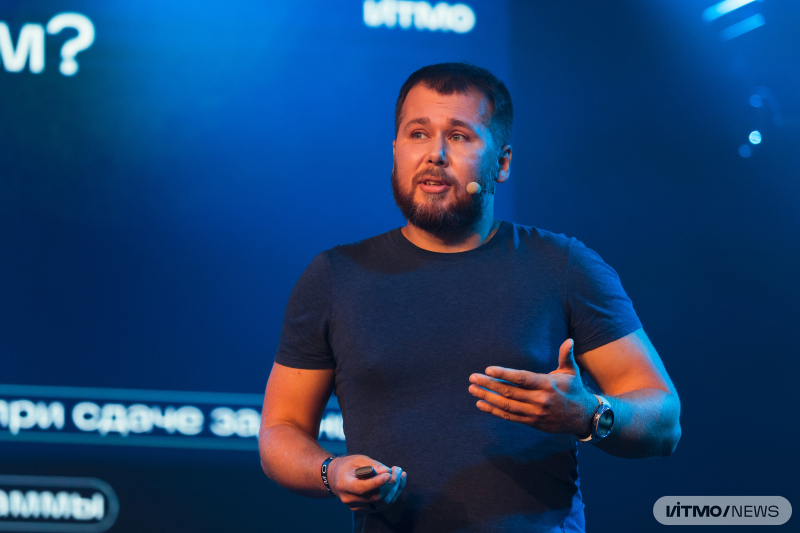
Anton Kuznetsov. Credit: Dmitry Grigoryev / ITMO NEWS
“Technologies today are evolving faster than when the first computers appeared, which means that companies that don’t use AI may risk falling behind. In the future, teams are likely to follow a human + AI approach: while automated agents and support tools will perform certain tasks, humans will make the final decisions. Therefore, CAIO’s role will continue to grow. Companies will need specialists who can keep pace with advances and efficiently incorporate them in business,” says Anton Kuznetsov, the director of ITMO’s Institute of Applied Computer Science.
Russian companies spent 257 billion rubles on AI adoption in 2025, as stated at the DataFusion Forum. Since the technologies continue to evolve, Pavel Podkorytov expects the demand for CAIOs to rise over the next three to five years.
Applications for the program can be submitted via the website until November 19.