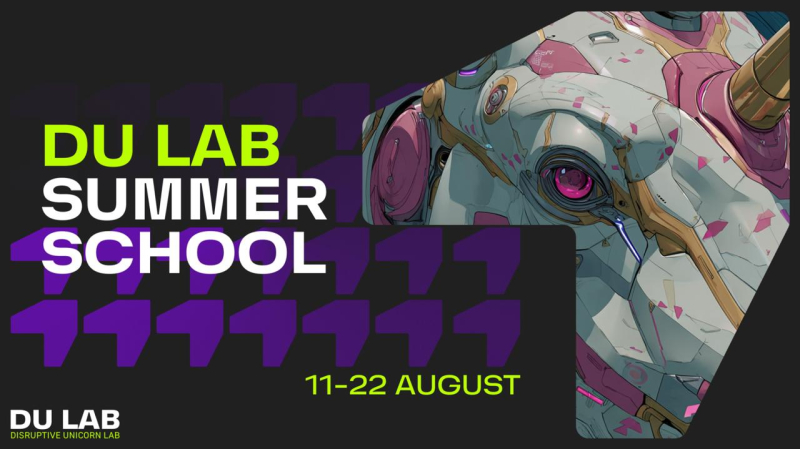
DU Lab united Bachelor’s and Master’s students, as well as startup founders and international members of the technology community, around the common goal of building a platform where young entrepreneurs can turn their startup ideas into businesses with global ambitions.
The school, organized by the Center for International Projects of ITMO’s Faculty of Technological Management and Innovations, received over 1,100 applications from young entrepreneurs in 37 countries, including Brazil, Peru, Chile, China, India, Turkey, Malaysia, Indonesia, Nigeria, Sudan, and Egypt.
Out of all the applicants, 120 were selected for the school’s practical track, which included an AI track supported by ITMO’s AI Talent Hub and international partners: the National University of Entre Rios (Argentina), Nexum PUCP Business Incubator at the Pontifical Catholic University of Peru, Start-Up Chile, B5 Research lab (UAE), and others.
The school also collaborated with Game Design Practice. A creator and executor of game projects and educational programs in gamedev, the company was responsible for a gamedev track with over 200 participants.
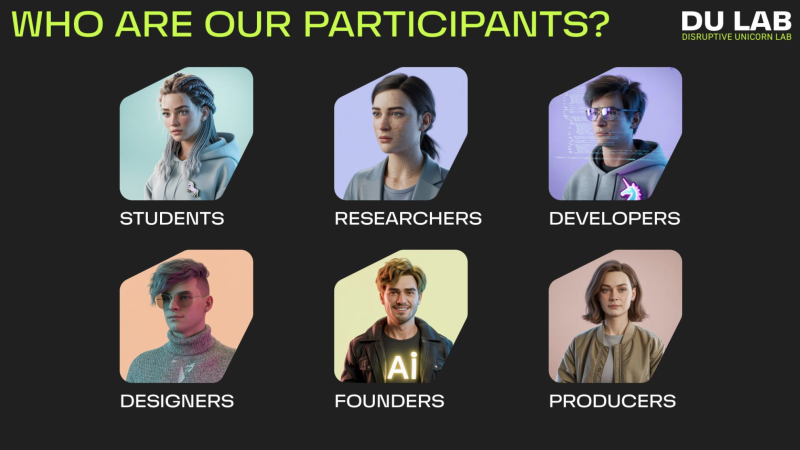
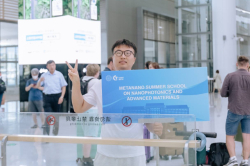
Participants at DU Lab. Photo by Lev Bakharev / ITMO’s Faculty of Technological Management and Innovations
How to build a startup: step by step
The school focused on a set of high-demand fields such as AI, gamedev, startup development, and global entrepreneurship. Its program featured lectures, practical classes and workshops, as well as the practical track for selected participants to work on their projects under the guidance of mentors.
Within the Startup Blueprint track, participants attended lecturers and workshops on the fundamentals of startup development: they learned to identify problems, analyze the market and competitors, test hypotheses, and shape monetization strategies.
Those who passed the selection were invited to join the school’s practical track as part of international teams. Since day one, they were gradually filling out unified applications similar to those for international accelerators.
In the AI track, participants learned to apply AI to develop products and businesses. In particular, they mastered prompts, created their own AI agents, studied methods for analyzing user data, and built value maps. A substantial part of the discussion focused on AI ethics.
Students of the Global Thinking track got to analyze global trends and study startup ecosystems in Southeast Asia and Latin America. The organizers highlighted the direct access to global business experience as a specific feature of the track; experts from around the world shared their practices, and thanks to the special format of the meetings, participants were able to network and take part in an intercultural exchange. While Startup Blueprint offered insights into how to complete an application for worldwide accelerators, Global Thinking focused more on the application process itself: what programs students can get in, what the process is like, and who they should contact after they complete the school.
The special Gamedev track served as a starting point into the world of modern-day gamedev. There, participants learned to make design documents, build core loops, and create mechanics and visuals using AI. The track also included game jams, which combined theory and practice – plus, a giveaway from Game Design Practice. At game jams, participants attempted to make their first games. There were also regular workshops and online Q&A sessions with industry experts.
“Entrepreneurs should not only develop products but also know how to launch them in international markets, which have higher investment potentials, and reach a wider audience. All this calls for additional effort – you need to test your idea in different cultural and economic environments. That’s why at DU Lab, we focused on building entrepreneurial competencies and the ability to speak the language of global business in our students. Hundreds of people from dozens of countries acquired new knowledge, acquaintances, and prospects for international growth. For us, this is a major step towards getting actively involved in the global agenda,” notes Andrey Anfinogenov, an organizer of DU Lab and the dean of ITMO’s Faculty of Technological Management and Innovations.
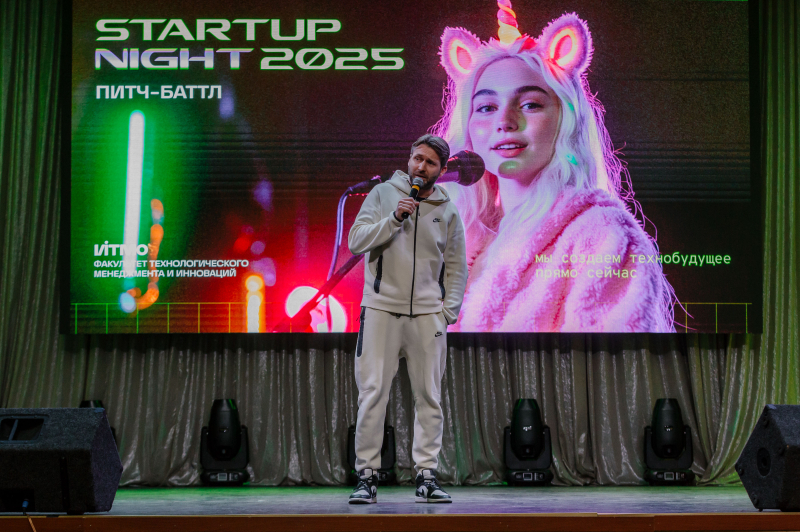
Andrey Anfinogenov at StartUp Night 2025. Photo by Maria Bakina / ITMO Mediaportal
Global community
The school’s mentors and experts were both Russian and international entrepreneurs. Thus, nuances in the application process and the issues of business scaling in an international cultural and social context were covered by experts from the Pontificia Universidad Javeriana (Colombia), the Asia Pacific University of Technology & Innovation (Malaysia), Nexum PUCP Business Incubator at the Pontifical Catholic University of Peru (Peru), Bedayat Business Incubator (UAE), Start-Up Chile, and National University of La Plata (Argentina). Additionally, the ambassadors of Mexico and Argentina in Russia shared their expertise on startup ecosystems and the business landscape in Latin America.
“I enjoyed how well-organized the event was; English-speaking participants actively asked their questions during Q&A sessions. It’s really fulfilling, and it also speaks for both gamedev’s popularity among international participants and the quality of content offered by the school. We even found a developer we’d like to collaborate with during a game jam. For our part, we’ll continue to develop gamedev with ITMO and our international partners. I hope the initiative will grow into an international accelerator where development teams could find new knowledge, support, and investments for their projects,” notes Yuri Sirotkin, a producer, a game designer, and the founder of Game Design Practice.

Yuri Sirotkin. Photo by Aleskandr Khamov / khamovphoto.ru
Additionally, the school featured themed days with lectures and workshops about business and science, as well as countries in Latin America and Asia; at the final day, participants discussed with experts and mentors the latest trends in AI, gamedev, and digital entrepreneurship.
Projects
On the final day of the school, the teams of the Gamedev track presented their first-ever game builds. The winner became the team Nyx from India that came up with Submerged – a post-apocalyptic first-person shooter in which the player fights a massive sea creature that has flooded the city. The second place was taken by SOAP or UNICORNS – a fairytale game by Maria Turabova where the player has to save Princess Carmen from the clutches of the Soap King. And the third place went to Rainbowcop by the team Fanera – an action game about the police officer Wick Horseman who confronts a gang of rainbow unicorns.
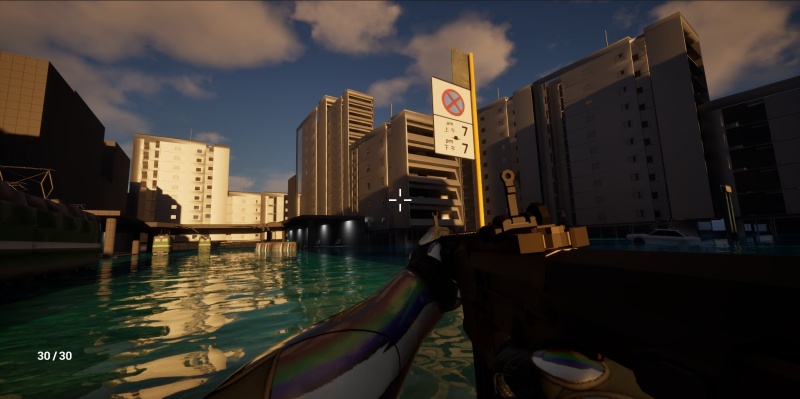
Submerged. Credit: IMS Creators
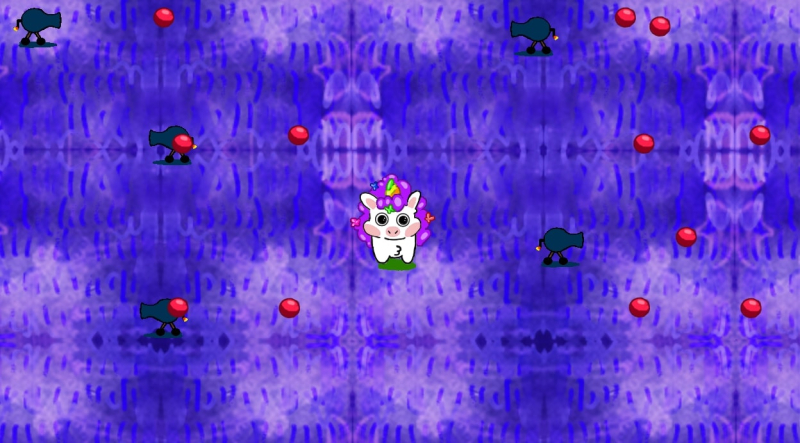
SOAP or UNICORNS. Credit: IMS Creators
Participants of the Startup Blueprint track presented their ideas for startups that will help address pressing problems. For example, the team UniGlobe from Indonesia, Malaysia, Ecuador, and Russia showed an AI-based platform that assists international students in adapting to life in a new country – from visa issues to searching for accommodation and mental care. BioBalls from India, Uzbekistan, Chile, Pakistan, Indonesia, and Russia presented a new format of functional food – probiotic “yogurt balls” that retain up to 80% of living bacteria and are great for taking on the go. And ElevateX from Malaysia and Sudan developed a prototype of a gamified app for career growth in IT: users complete quests to gain knowledge, “fight” bosses with their portfolio projects, get advice from an IT mentor, and unite into guilds to study together.
All the teams received expert feedback, and the best ones presented their projects at the closing ceremony. Participants who attended at least 40% of classes and completed practical assignments will additionally be granted academic credits and certificates of participation in ITMO’s DU Lab.

Ahmed Mohamed. Photo courtesy of the subject
“This is my first time participating in an international entrepreneurial school, and the DU LB School has been an incredible introduction. What stands out is the practical, hands-on approach combined with international collaboration. The diversity of participants and mentors has broadened my perspective on global entrepreneurship. At DU Lab, I developed stronger skills in pitching, business model development, and cross-cultural communication. I also gained a better understanding of startup ecosystems and innovation processes. I plan to apply these skills by launching a social impact project at my university and mentoring fellow students in entrepreneurial initiatives,” shares Ahmed Mohamed, a Bachelor’s student at the University of Technology Malaysia.